Other yellow daisies
Check the entire rosette and unbranched flower stalk; yellow flowers alone are insufficient.
Use the botanical sourceTaraxacum officinale
Also found as Lion’s tooth · Common dandelion
A familiar rosette plant with food uses for its leaves, flowers and roasted roots.
Sources checked 9 September 2026 · Specialist field review pending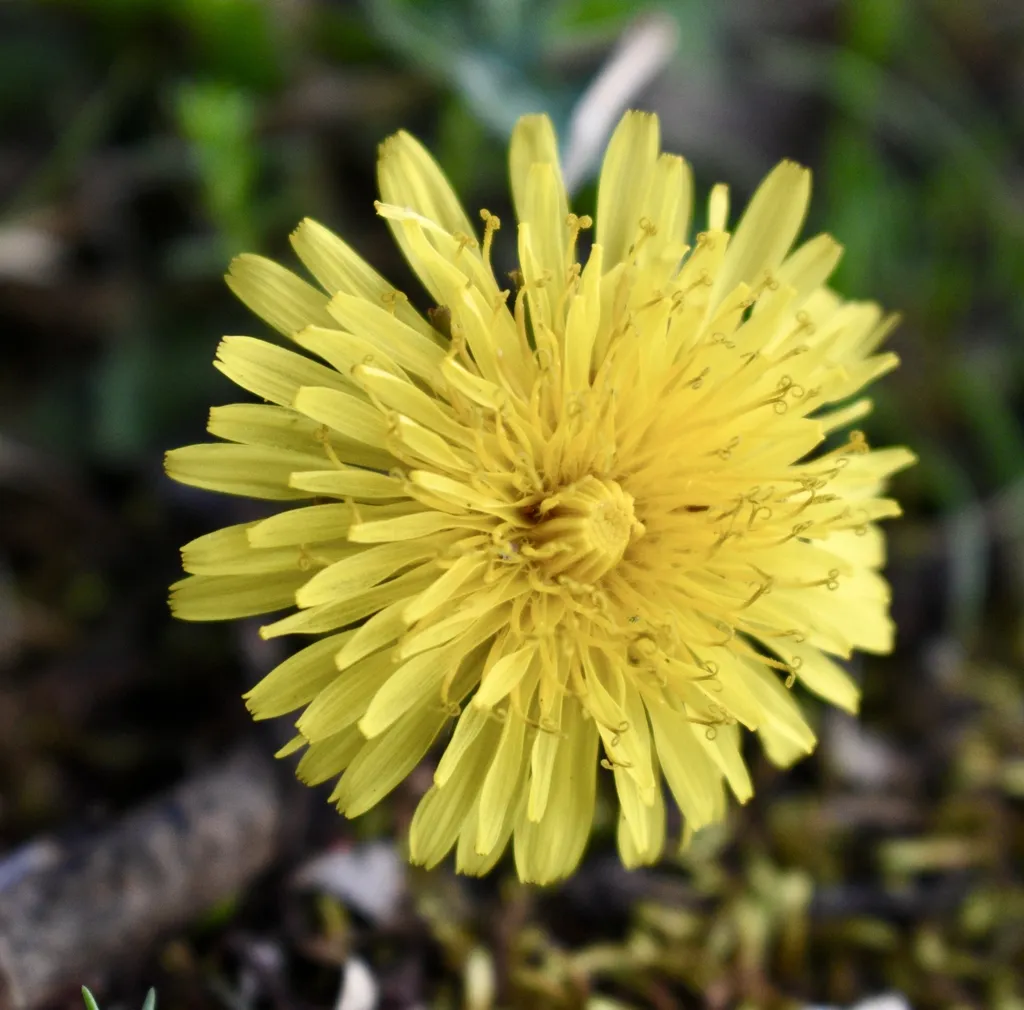
Sap may irritate skin. Food use does not establish the safety or effectiveness of concentrated products.
Where it grows
| January | 2028 |
|---|---|
| February | 2714 |
| March | 7843 |
| April | 38596 |
| May | 27387 |
| June | 10595 |
| July | 6642 |
| August | 5390 |
| September | 5754 |
| October | 5594 |
| November | 3343 |
| December | 2176 |
| January | 374 |
|---|---|
| February | 446 |
| March | 461 |
| April | 1433 |
| May | 790 |
| June | 344 |
| July | 422 |
| August | 551 |
| September | 765 |
| October | 757 |
| November | 643 |
| December | 360 |
Research-grade iNaturalist records, snapshot Aug 27, 2026. The growing zone combines areas where different people have repeatedly verified it. Records show where people looked and found it, not current abundance or permission to gather.
01 / Learn to see
Toothed leaves form a basal rosette.
Each leafless, hollow, unbranched stalk carries one yellow flower head.
Milky sap and a round seed head; neither feature alone proves identity.
These are study prompts, not a complete identification key. Confirm the full plant with a regional flora and an experienced local identifier.
02 / Resolve the differences
Check the entire rosette and unbranched flower stalk; yellow flowers alone are insufficient.
Use the botanical sourceSelected comparisons only. Other lookalikes may occur locally.
03 / Meet the place
Eurasian origin; widespread introductions. Taraxacum contains difficult species groups.
Young leaves during fresh growth; flowers at full opening. Root gathering destroys the plant.
Stage guidance is not a local forecast. Check your climate, elevation and a regional source; no month-shift formula is used here.
04 / Gather with care
Parts discussed: Leaf · Flower · Root
Use confirmed leaves and flowers in food; roots have a roasted beverage use.
Choose unsprayed ground and leave flowering plants for pollinators.
Preparation & storage essentials05 / A named folk-herbal lens
European folk herbalism · contemporary lunar gardening
Persistence, adaptation, and medicine close at hand.
Meet this familiar plant without treating it as disposable. Thank the whole rosette before choosing leaf, flower, or root.
Let the part determine the season: young leaf and flower above; root during the plant’s inward turn.
This optional spiritual lens does not establish identity, edibility, dosage, lawful access, or medical safety. Follow a teaching more deeply through its named people and lineage rather than treating it as universal.
Open Ways of Gathering06 / Follow the evidence
Checked 9 September 2026. Original editorial synthesis; source institutions have not reviewed or endorsed this guide. Independent botanical field review is pending. Photos illustrate specimens; they do not certify the identity of a plant you find.
Suggest a correction