Bilberry
Culinary referenceBilberry is a low shrub with small leaves and blue berries without a star-shaped calyx.
Atropa bella-donna
Also found as Belladonna
A shade-loving nightshade with dull purple bell flowers and glossy black cherry-like berries that are highly poisonous.
Sources checked 27 September 2026 · Specialist field review pending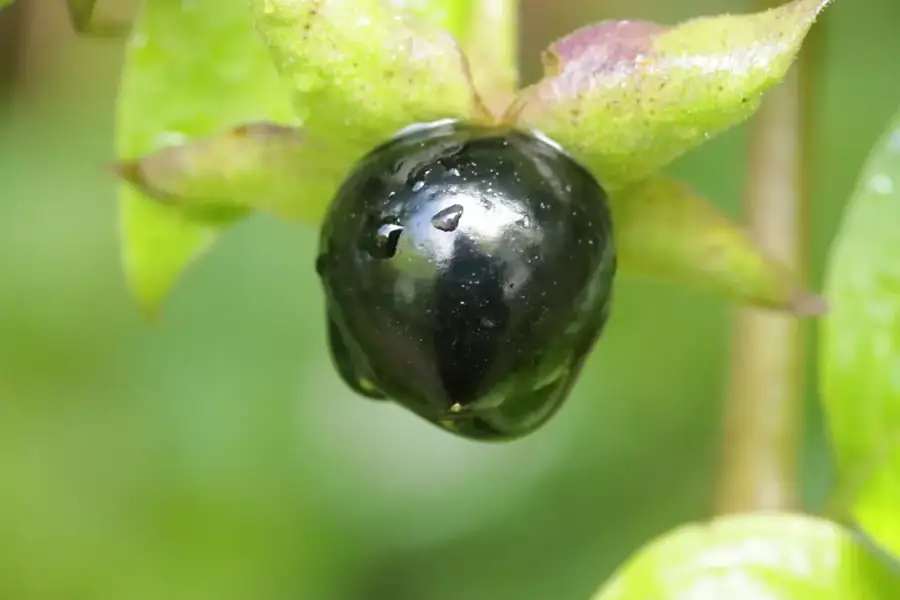
All parts contain tropane alkaloids. A few berries can seriously poison a child. Seek urgent poison-service advice after any exposure.
Where it grows
| January | 6 |
|---|---|
| February | 1 |
| March | 12 |
| April | 249 |
| May | 954 |
| June | 1575 |
| July | 1336 |
| August | 1316 |
| September | 527 |
| October | 324 |
| November | 129 |
| December | 16 |
Research-grade iNaturalist records, snapshot Aug 27, 2026. The growing zone combines areas where different people have repeatedly verified it. Records show where people looked and found it, not current abundance or permission to gather.
01 / Learn to see
Branching herb with large, soft, oval leaves, often in unequal pairs.
Dull purple to brownish bell-shaped flowers in leaf axils.
Shiny black berries sitting on a green, five-pointed star-shaped calyx.
These are study prompts, not a complete identification key. Confirm the full plant with a regional flora and an experienced local identifier.
02 / Resolve the differences
Bilberry is a low shrub with small leaves and blue berries without a star-shaped calyx.
Solanum nigrum has small white flowers and clusters of small black berries; also toxic when unripe.
Use the botanical sourceSelected comparisons only. Other lookalikes may occur locally.
03 / Meet the place
Native to Europe, North Africa and western Asia; naturalized locally elsewhere.
Hazard exists at every growth stage.
Stage guidance is not a local forecast. Check your climate, elevation and a regional source; no month-shift formula is used here.
04 / Gather with care
Do not eat, brew, taste or collect for the pantry.
Do not handle berries with children present; report plants in play areas to land managers.
Preparation & storage essentials05 / Follow the evidence
Checked 27 September 2026. Original editorial synthesis; source institutions have not reviewed or endorsed this guide. Independent botanical field review is pending. Photos illustrate specimens; they do not certify the identity of a plant you find.
Suggest a correction