Other wild roses
Downy roses and escaped garden species can resemble dog rose; check prickles, leaf hairs and hips.
Use the botanical sourceRosa canina
Also found as Dog berry · Witches’ briar
A scrambling rose with hooked prickles and red hips that persist into the cooler season.
Sources checked 9 September 2026 · Specialist field review pending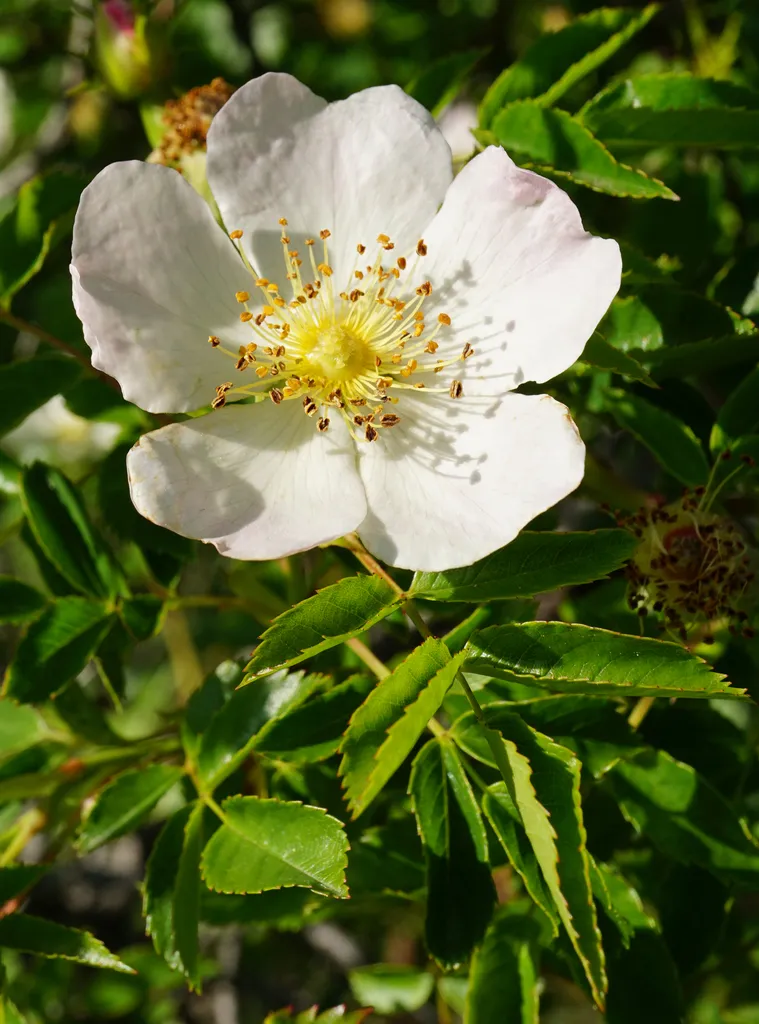
Wild roses are difficult to separate. Avoid ornamental shrubs with an unknown spray history.
Where it grows
| January | 209 |
|---|---|
| February | 161 |
| March | 155 |
| April | 573 |
| May | 2232 |
| June | 2167 |
| July | 328 |
| August | 695 |
| September | 1239 |
| October | 859 |
| November | 502 |
| December | 271 |
Research-grade iNaturalist records, snapshot Aug 27, 2026. The growing zone combines areas where different people have repeatedly verified it. Records show where people looked and found it, not current abundance or permission to gather.
01 / Learn to see
Arching branches with strongly hooked prickles.
Alternate compound leaves with toothed leaflets.
Five-petaled pink or white flowers followed by oval red hips.
These are study prompts, not a complete identification key. Confirm the full plant with a regional flora and an experienced local identifier.
02 / Resolve the differences
Downy roses and escaped garden species can resemble dog rose; check prickles, leaf hairs and hips.
Use the botanical sourceSelected comparisons only. Other lookalikes may occur locally.
03 / Meet the place
The cited field account covers Britain; use a regional flora for roses elsewhere.
Flowers in the local late spring or summer; hips only when fully ripe.
Stage guidance is not a local forecast. Check your climate, elevation and a regional source; no month-shift formula is used here.
04 / Gather with care
Parts discussed: Petal · Hip
Hips have a syrup use. Remove or carefully strain out the irritating internal hairs.
Leave plentiful hips for birds. Take only a small share from an abundant stand.
Preparation & storage essentials05 / A named folk-herbal lens
European folk herbalism and devotional flower lore
Love with thorns: beauty, grief, protection, and ripening.
Let flower and thorn be one teaching. Take without forcing your way through the living hedge.
Gather petals and hips in their separate seasons, leaving fruit for birds and seed.
This optional spiritual lens does not establish identity, edibility, dosage, lawful access, or medical safety. Follow a teaching more deeply through its named people and lineage rather than treating it as universal.
Open Ways of Gathering06 / Follow the evidence
Checked 9 September 2026. Original editorial synthesis; source institutions have not reviewed or endorsed this guide. Independent botanical field review is pending. Photos illustrate specimens; they do not certify the identity of a plant you find.
Suggest a correction