Ramps
Extra care neededRamps have smooth, flat leaves from the ground and smell strongly of onion.
Veratrum viride
Also found as Corn lily · Indian poke
A tall wetland lily with strongly pleated leaves that emerge in spring beside ramps and other edible greens.
Sources checked 27 September 2026 · Specialist field review pending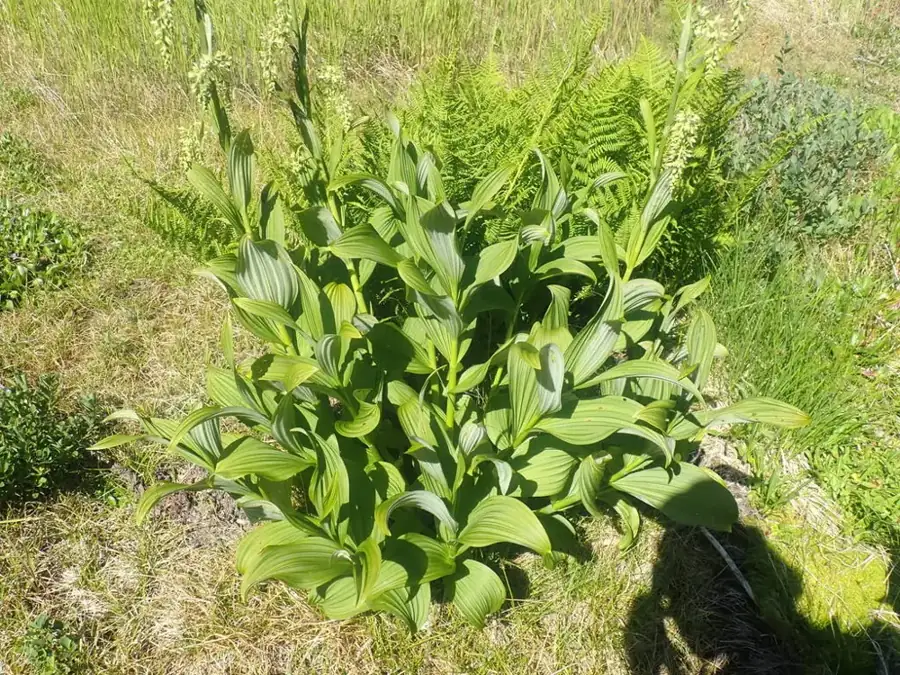
Highly toxic alkaloids cause vomiting, slowed heart rate and low blood pressure. Spring shoots have been mistaken for ramps and other greens.
Where it grows
| January | 4 |
|---|---|
| February | 5 |
| March | 175 |
| April | 4240 |
| May | 4606 |
| June | 3793 |
| July | 4311 |
| August | 3142 |
| September | 684 |
| October | 76 |
| November | 2 |
| December | 11 |
Research-grade iNaturalist records, snapshot Aug 27, 2026. The growing zone combines areas where different people have repeatedly verified it. Records show where people looked and found it, not current abundance or permission to gather.
01 / Learn to see
Large, oval, strongly pleated and ribbed leaves clasping a stout stem.
Tall branched clusters of star-shaped yellow-green flowers.
Grows in wet meadows and seeps.
These are study prompts, not a complete identification key. Confirm the full plant with a regional flora and an experienced local identifier.
02 / Resolve the differences
Ramps have smooth, flat leaves from the ground and smell strongly of onion.
Symplocarpus has broad unpleated leaves and a foul smell.
Use the botanical sourceSelected comparisons only. Other lookalikes may occur locally.
03 / Meet the place
Eastern and western North America in wet woods and meadows.
Hazard exists at every growth stage.
Stage guidance is not a local forecast. Check your climate, elevation and a regional source; no month-shift formula is used here.
04 / Gather with care
Do not eat, brew, taste or collect for the pantry.
Leave in place; it is part of wetland habitat.
Preparation & storage essentials05 / Follow the evidence
Checked 27 September 2026. Original editorial synthesis; source institutions have not reviewed or endorsed this guide. Independent botanical field review is pending. Photos illustrate specimens; they do not certify the identity of a plant you find.
Suggest a correction