Other wetland umbels
Several edible-looking wetland plants resemble Cicuta. Habitat and one vein feature are insufficient.
Use the botanical sourceCicuta maculata
Also found as Water hemlock
A highly poisonous North American wetland plant; other Cicuta species are also dangerous.
Sources checked 9 September 2026 · Specialist field review pending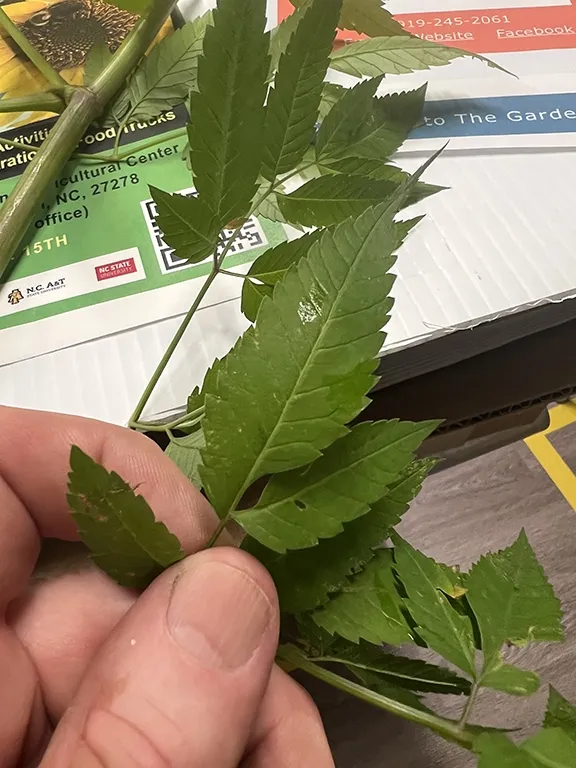
All parts are toxic and ingestion can be fatal. Seek urgent poison-service advice.
Where it grows
| January | 28 |
|---|---|
| February | 27 |
| March | 58 |
| April | 358 |
| May | 732 |
| June | 1653 |
| July | 2724 |
| August | 1033 |
| September | 332 |
| October | 99 |
| November | 25 |
| December | 22 |
Research-grade iNaturalist records, snapshot Aug 27, 2026. The growing zone combines areas where different people have repeatedly verified it. Records show where people looked and found it, not current abundance or permission to gather.
01 / Learn to see
Compound leaves with narrow, sharply toothed leaflets.
Leaflet veins commonly end in notches between the teeth.
White compound umbels and hollow, sometimes purple-marked stems.
These are study prompts, not a complete identification key. Confirm the full plant with a regional flora and an experienced local identifier.
02 / Resolve the differences
Several edible-looking wetland plants resemble Cicuta. Habitat and one vein feature are insufficient.
Use the botanical sourceAn aromatic herb name cannot rule out a poisonous umbellifer.
Selected comparisons only. Other lookalikes may occur locally.
03 / Meet the place
North America; this profile does not cover all regional water hemlocks.
Dangerous throughout its life cycle; a nonflowering plant is still hazardous.
Stage guidance is not a local forecast. Check your climate, elevation and a regional source; no month-shift formula is used here.
04 / Gather with care
Do not eat or collect. Do not dig roots or cut stems to attempt identification.
Observe and photograph from a safe position; protect wetland soils.
Preparation & storage essentials05 / Follow the evidence
Checked 9 September 2026. Original editorial synthesis; source institutions have not reviewed or endorsed this guide. Independent botanical field review is pending. Photos illustrate specimens; they do not certify the identity of a plant you find.
Suggest a correction