Poison hemlock
Toxic · do not eatPoison hemlock has smooth, purple-blotched, hollow stems and a musty smell; deadly.
Daucus carota
Also found as Queen Anne's lace
The wild ancestor of the carrot, with lacy white umbels, often a single dark central floret, and hairy stems.
Sources checked 27 September 2026 · Specialist field review pending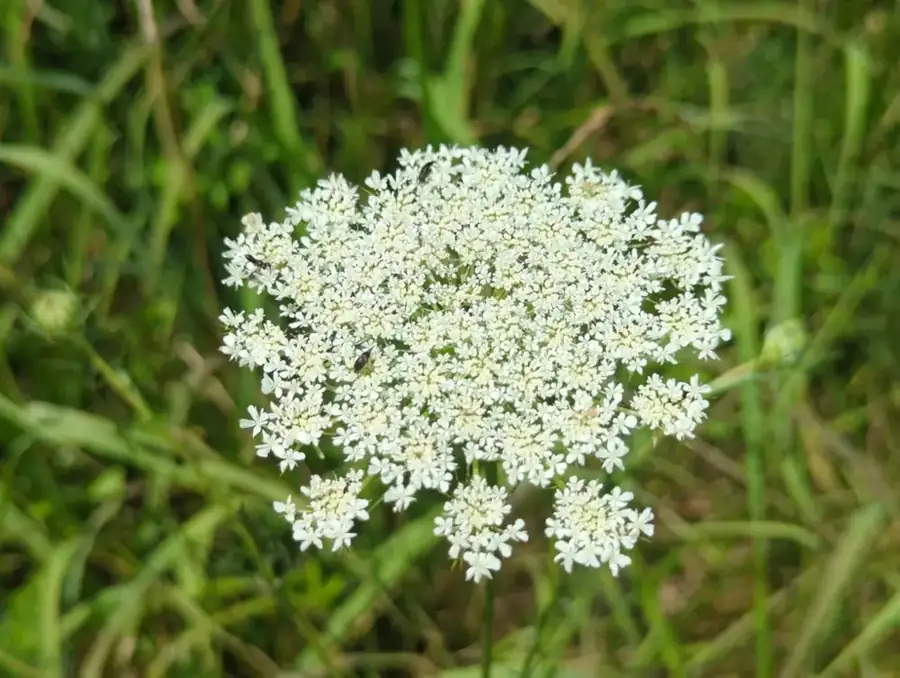
Deadly poison hemlock and water hemlock are close lookalikes. Hairy stems and carrot smell help but do not replace an expert check.
Where it grows
| January | 1306 |
|---|---|
| February | 1186 |
| March | 1834 |
| April | 5619 |
| May | 6843 |
| June | 14139 |
| July | 42169 |
| August | 26763 |
| September | 12581 |
| October | 5799 |
| November | 2581 |
| December | 1302 |
Research-grade iNaturalist records, snapshot Aug 27, 2026. The growing zone combines areas where different people have repeatedly verified it. Records show where people looked and found it, not current abundance or permission to gather.
01 / Learn to see
Hairy, solid stems without purple blotches.
Finely divided, feathery leaves smelling of carrot.
Flat white umbels, often with a dark red floret in the center, curling into a bird's nest when in seed.
These are study prompts, not a complete identification key. Confirm the full plant with a regional flora and an experienced local identifier.
02 / Resolve the differences
Poison hemlock has smooth, purple-blotched, hollow stems and a musty smell; deadly.
Aethusa cynapium has long drooping bracts under each small umbel; toxic.
Use the botanical sourceGiant hogweed is far larger and its sap burns skin.
Selected comparisons only. Other lookalikes may occur locally.
03 / Meet the place
Native to Europe and southwest Asia; naturalized widely.
Roots of first-year rosettes in autumn or early spring.
Stage guidance is not a local forecast. Check your climate, elevation and a regional source; no month-shift formula is used here.
04 / Gather with care
Parts discussed: Root · Seed
Only experts should collect it. First-year roots are woody and cooked.
Leave seed heads for insects.
Preparation & storage essentials05 / Follow the evidence
Checked 27 September 2026. Original editorial synthesis; source institutions have not reviewed or endorsed this guide. Independent botanical field review is pending. Photos illustrate specimens; they do not certify the identity of a plant you find.
Suggest a correction