The Living Fungi LibraryFungi LibraryMushroom Forage Map
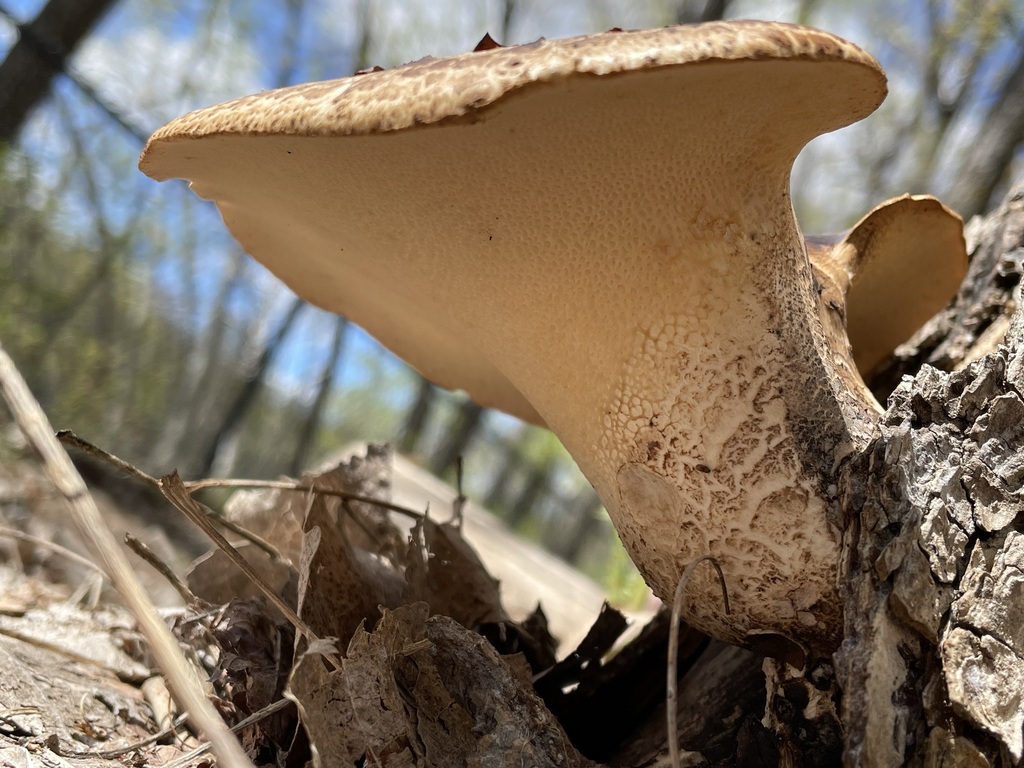
Cream dryad's saddle cap with brown scales and a pore surface on a stump
Ediblebeginner-friendly group

Dryad's Saddle

Cerioporus squamosus / Pheasant back

A large spring polypore with feathery brown scales, big angular pores, and a fresh watermelon-rind smell.

Photo: M. Squire, CC BY
Compiled by Mushroom Forage Map field deskExpert review pendingContent checked
Identification warning

Only young, tender edges are worth eating. Tough, older shelves are indigestible.

Season
Spring to early summer, sometimes autumn
Habitat
Living and dead hardwoods such as elm, maple, and box elder
Underside
Large, angular cream pores running down the stem
Spore evidence
White

Where it grows

Tracked records and known growing zone

Explore on the field map
Loading map…
Squares: where people recorded it, brighter where more people did
Verified records
57,320
People who recorded it
29,661
Most records (northern hemisphere)
Apr–Jun
Records span
1969–2026

Research-grade iNaturalist records, snapshot Aug 27, 2026. The growing zone combines areas where different people have repeatedly verified it. Records show where people looked and found it, not current abundance or permission to gather.

Observation season

When field records occur

Choose a hemisphere · All recorded years; not a current forecast.

Choose the hemisphere you want to study. Country detection is approximate and some countries span the equator.

Compare before concluding

Lookalikes to rule out

Hexagonal-pored polypore

harmless

Neofavolus alveolaris is smaller and orange with very large hexagonal pores.

Other scaly polypores

harmless

Few similar shelves combine large angular pores, a black stem base, and a cucumber smell.

Identification

The cap is a broad cream fan covered with concentric, feather-like brown scales, often growing in overlapping tiers. The short stem is off-center and blackish at the base. Underneath, the cream pores are large and angular, easily seen with the naked eye. The fresh flesh smells like watermelon rind or cucumber.

Uses and ecology

Dryad's saddle causes white rot in hardwoods and often appears in the same season as morels. Harvest the soft outer edge of young caps and slice thinly. It is widely distributed across the Northern Hemisphere.

Memorable fact

The cucumber-like smell is strong enough that some foragers find the mushroom by scent before sight.

Sources

Back to the fungi library