The Living Fungi LibraryFungi LibraryMushroom Forage Map
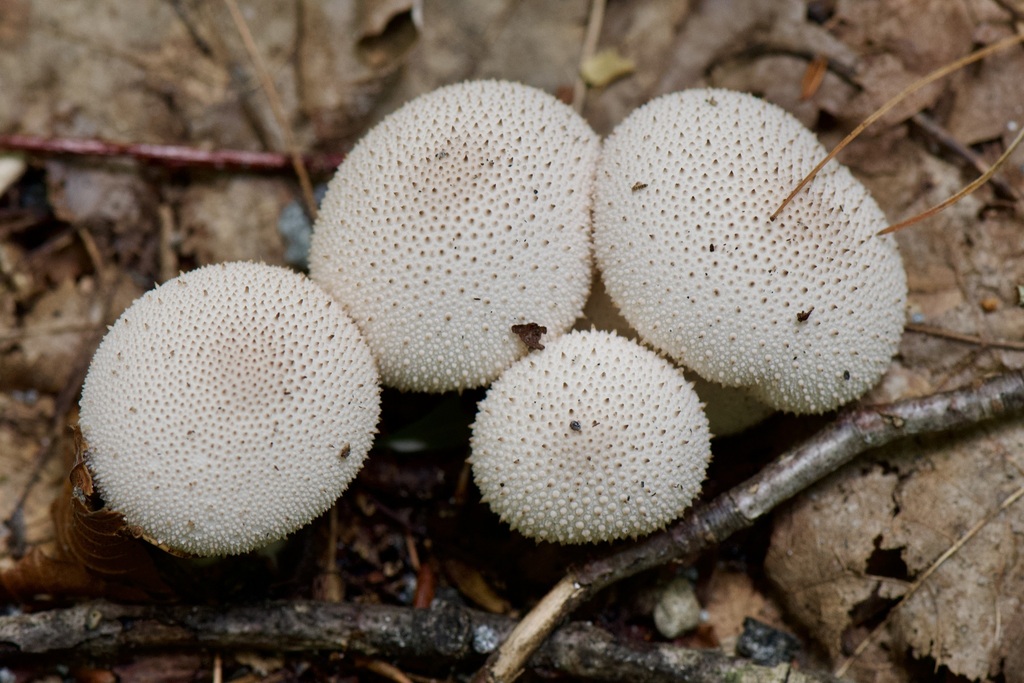
White gem-studded puffballs with small conical spines
Edibleintermediate

Gem-studded Puffball

Lycoperdon perlatum / Common puffball

A pear-shaped puffball with detachable cone-shaped spines and a mandatory pure-white slice test.

Photo: Michael Nerrie, CC BY
Compiled by Mushroom Forage Map field deskExpert review pendingContent checked
Identification warning

Slice every specimen top to bottom. Any internal cap, gills, stem, dark center, or yellowing rules it out for eating.

Season
Summer through fall
Habitat
Forest litter, trail edges, and disturbed ground
Underside
None; the fruiting body is enclosed
Spore evidence
Spores release from a pore when mature

Where it grows

Tracked records and known growing zone

Explore on the field map
Loading map…
Squares: where people recorded it, brighter where more people did
Verified records
19,556
People who recorded it
11,453
Most records (northern hemisphere)
Aug–Oct
Records span
1977–2026

Research-grade iNaturalist records, snapshot Aug 27, 2026. The growing zone combines areas where different people have repeatedly verified it. Records show where people looked and found it, not current abundance or permission to gather.

Observation season

When field records occur

Choose a hemisphere · All recorded years; not a current forecast.

Choose the hemisphere you want to study. Country detection is approximate and some countries span the equator.

Compare before concluding

Lookalikes to rule out

Amanita button

deadly

A vertical slice reveals a developing cap, gills, and stem instead of featureless white flesh.

Earthball

toxic

Scleroderma species have a tough rind and a firm purple-black interior rather than a homogeneous white center.

Mature puffball

sickener

Yellow, olive, or powdery flesh means the specimen is past the edible stage.

Identification

Gem-studded puffballs are white, golf-ball to pear shaped, and covered with tiny detachable cone spines. When the spines rub away they leave a net-like pattern. A vertical slice must show a uniform, pure-white interior with no internal outline or differentiated parts.

That slice test is not optional. A deadly Amanita enclosed in its universal veil can resemble a young puffball from the outside.

Uses and ecology

Only fresh, uniformly white specimens are considered edible, and they should be cooked. Older puffballs form a powdery spore mass. Deliberately inhaling that cloud can cause lycoperdonosis, a rare lung inflammation.

Memorable fact

The name Lycoperdon means "wolf fart," and mature puffballs use raindrop impacts to pump spores into the air.

Sources

Back to the fungi library