The Living Fungi LibraryFungi LibraryMushroom Forage Map
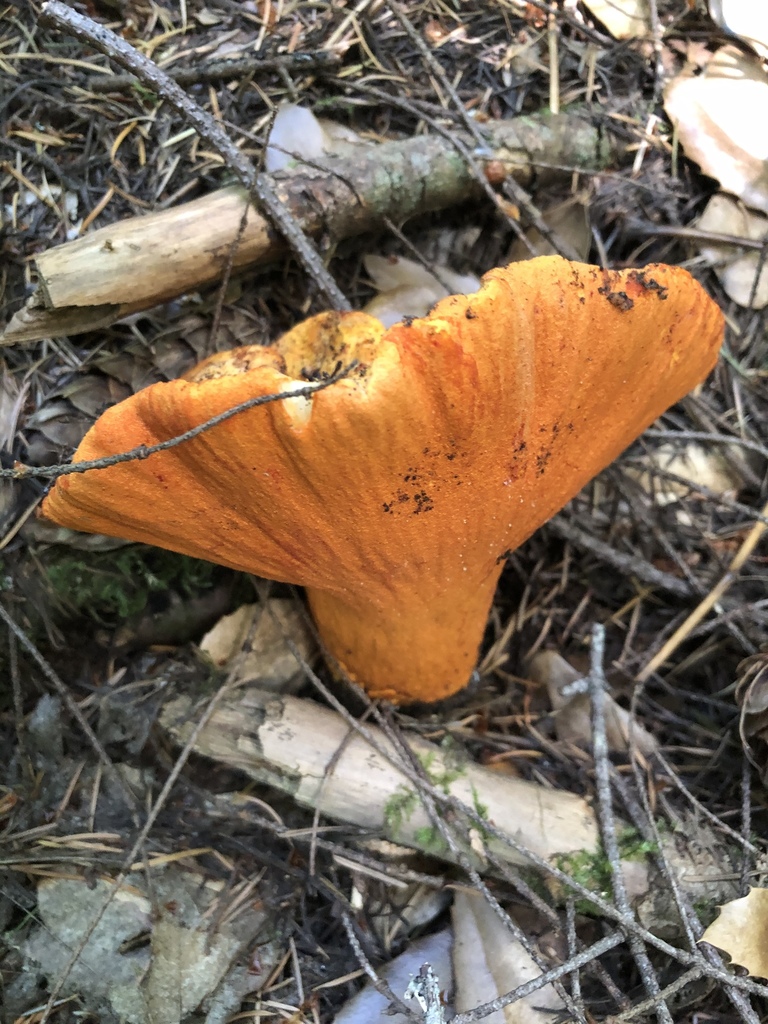
Bright red-orange lobster mushroom on the forest floor
Choice edibleintermediate

Lobster Mushroom

Hypomyces lactifluorum / Lobster fungus

A firm host mushroom transformed by a red-orange parasitic fungus that erases most of the original gills.

Photo: Matt D'Agrosa, CC BY
Compiled by Mushroom Forage Map field deskExpert review pendingUpdated Content checked
Identification warning

Reject soft, purple-tinged, foul, or badly decayed specimens because the original host can no longer be identified.

Season
Mid-summer through fall
Habitat
Conifer and mixed forest floor, often partly buried
Underside
Gills reduced to blunt ridges or fully covered
Spore evidence
Usually not practical once parasitized

Where it grows

Tracked records and known growing zone

Explore on the field map
Loading map…
Squares: where people recorded it, brighter where more people did
Verified records
11,785
People who recorded it
6,678
Most records (northern hemisphere)
Jul–Sep
Records span
1980–2026

Research-grade iNaturalist records, snapshot Aug 27, 2026. The growing zone combines areas where different people have repeatedly verified it. Records show where people looked and found it, not current abundance or permission to gather.

Observation season

When field records occur

Choose a hemisphere · All recorded years; not a current forecast.

Choose the hemisphere you want to study. Country detection is approximate and some countries span the equator.

Compare before concluding

Lookalikes to rule out

Old lobster mushroom

caution

Soft texture, purple discoloration, or a fishy odor indicate deterioration rather than a fresh specimen.

Unparasitized Russula or Lactarius

caution

Without the hard, finely pimpled red-orange crust, the host must be identified on its own merits.

Identification

This is a parasitic mold wrapped around another mushroom, usually Russula brevipes or Lactifluus piperatus. The result has a hard red-orange rind with a finely pimpled texture, dense white interior, and gills reduced to shallow ridges or covered entirely. It often pushes through forest duff half buried.

Uses and ecology

Fresh lobster mushrooms are firm and hold their texture in stews and sauteed dishes. The pigment can also be used in fabric dyeing. Evidence indicates that the parasite strongly favors non-dangerous hosts, but because the host is obscured, careful condition checks matter.

Memorable fact

The parasite turns notoriously bland hosts into a commercially sold delicacy.

Evidence and regional scope

Michael Kuo documents the orange parasitic coating, distorted host shape, and North American host ecology. Field description and cited specimen evidence. This source supports morphology and ecology, not edibility or preparation advice. Independent review of this profile remains pending.

Sources

Back to the fungi library