The Living Fungi LibraryFungi LibraryMushroom Forage Map
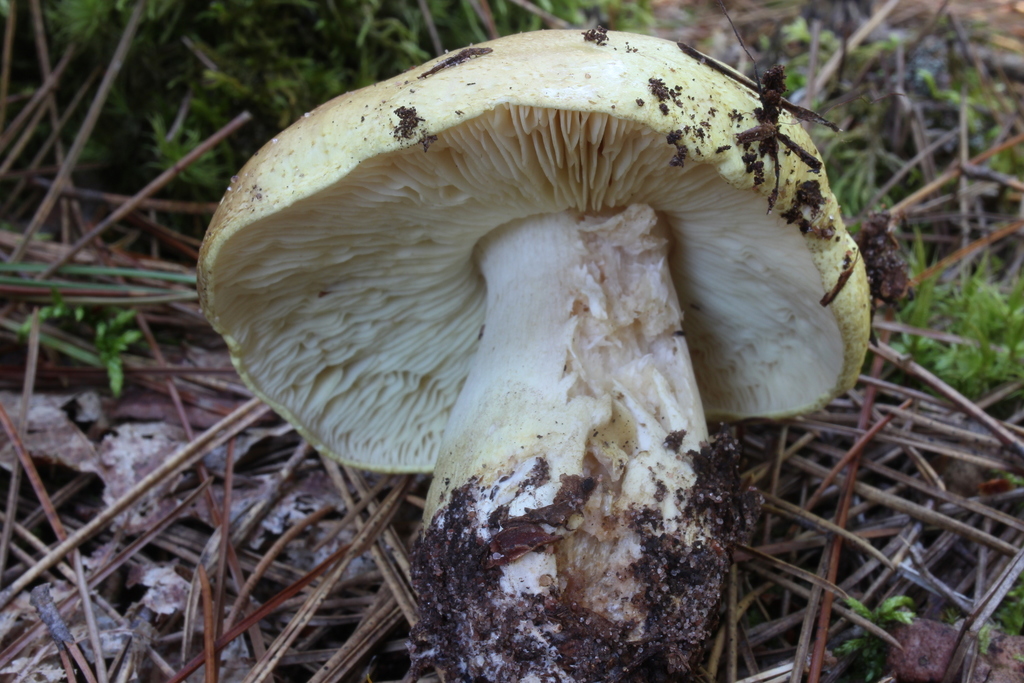
Yellow man on horseback mushroom with sulphur gills
Poisonousexpert-only

Man on Horseback

Tricholoma equestre / Yellow knight

A yellow knight mushroom of sandy pine forests once widely eaten, now linked to fatal muscle breakdown.

Photo: Garrett Taylor, CC0
Compiled by Mushroom Forage Map field deskExpert review pendingContent checked
Toxicity warning

Poisonous. Repeated meals have caused rhabdomyolysis and deaths in France and Poland.

Season
Autumn
Habitat
Sandy pine forests
Underside
Sulphur-yellow notched gills
Spore evidence
White

Where it grows

Tracked records and known growing zone

Explore on the field map
Loading map…
Squares: where people recorded it, brighter where more people did
Verified records
956
People who recorded it
662
Most records (northern hemisphere)
Sep–Nov
Records span
1987–2026

Research-grade iNaturalist records, snapshot Aug 27, 2026. The growing zone combines areas where different people have repeatedly verified it. Records show where people looked and found it, not current abundance or permission to gather.

Observation season

When field records occur

Choose a hemisphere · All recorded years; not a current forecast.

Choose the hemisphere you want to study. Country detection is approximate and some countries span the equator.

Compare before concluding

Lookalikes to rule out

Sulphur knight

toxic

Tricholoma sulphureum smells strongly of coal gas.

Aspen knight

caution

Tricholoma frondosae grows with aspen and is closely related.

Other yellow Tricholoma

caution

Several yellow knights overlap in appearance.

Identification

The cap is yellow with an olive to brownish center, often gritty with sand. Gills are sulphur yellow and notched where they meet the stem. The stem is yellow. It grows in sandy pine forests.

Why it matters

This mushroom was traditionally eaten in Europe until case series in France and Poland linked repeated meals to rhabdomyolysis, a breakdown of muscle tissue that can damage the heart and kidneys. Several countries now warn against it.

Memorable fact

It was sold in markets for generations before its toxicity was recognized in the early 2000s.

Sources

Back to the fungi library