The Living Fungi LibraryFungi LibraryMushroom Forage Map
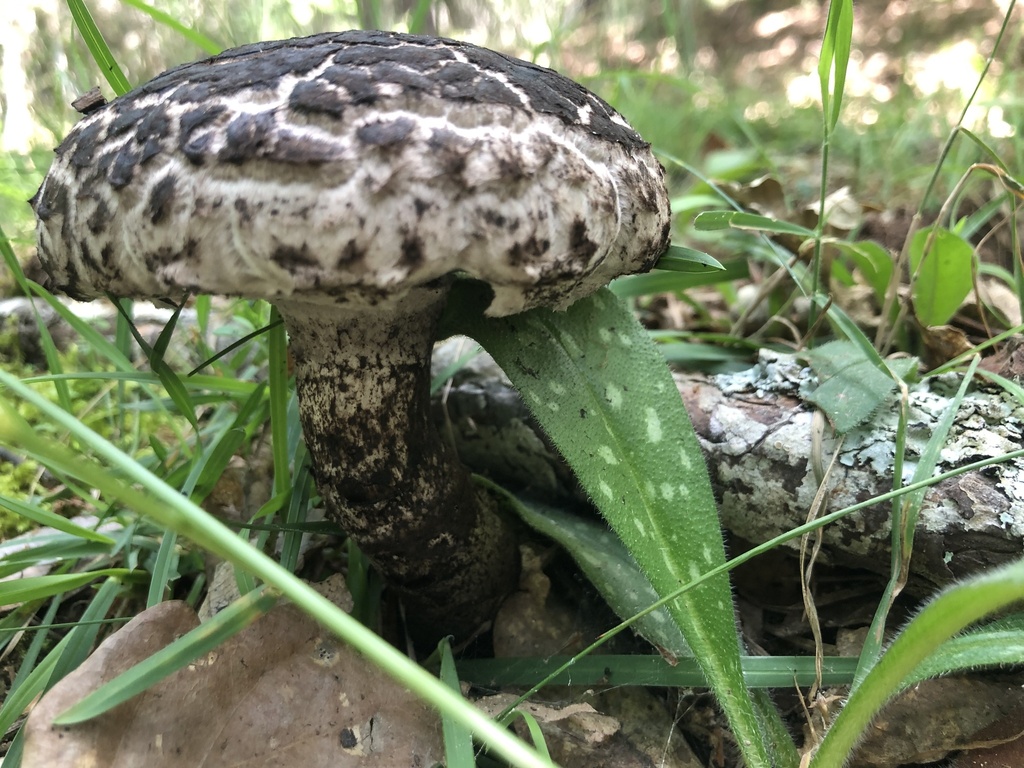
Shaggy black-and-gray old man of the woods bolete
Edibleintermediate

Old Man of the Woods

Strobilomyces strobilaceus

A shaggy gray-and-black bolete that looks like a pine cone, with gray pores bruising red then black.

Photo: Cenaida, CC BY
Compiled by Mushroom Forage Map field deskExpert review pendingContent checked
Identification warning

Edible but mediocre. Cook well, and confirm it is a bolete with pores.

Season
Summer to autumn
Habitat
Oak and mixed hardwood forests
Underside
Gray-white pores that bruise reddish, then black
Spore evidence
Black

Where it grows

Tracked records and known growing zone

Explore on the field map
Loading map…
Squares: where people recorded it, brighter where more people did
Verified records
4,962
People who recorded it
3,648
Most records (northern hemisphere)
Jul–Aug
Records span
1980–2026

Research-grade iNaturalist records, snapshot Aug 27, 2026. The growing zone combines areas where different people have repeatedly verified it. Records show where people looked and found it, not current abundance or permission to gather.

Observation season

When field records occur

Choose a hemisphere · All recorded years; not a current forecast.

Choose the hemisphere you want to study. Country detection is approximate and some countries span the equator.

Compare before concluding

Lookalikes to rule out

Strobilomyces confusus

harmless

A close relative with more pointed scales; also edible.

Shaggy Amanita

toxic

Some Amanita have gray warts but always have gills, not pores.

Scaly tooth fungi

harmless

Sarcodon species have teeth underneath instead of pores.

Identification

Coarse, woolly gray to black scales cover the cap, and a shaggy veil hangs from its edge. The pores are gray-white and bruise red, then black. The stem is shaggy below a ring zone. Cut flesh turns reddish and then black.

Uses and ecology

This distinctive bolete is mycorrhizal with oaks in eastern North America, Europe, and Asia. It is edible but blackens when cooked and is not highly rated.

Memorable fact

Its black spore print is unusual among boletes, most of which drop olive to brown spores.

Sources

Back to the fungi library