The Living Fungi LibraryFungi LibraryMushroom Forage Map
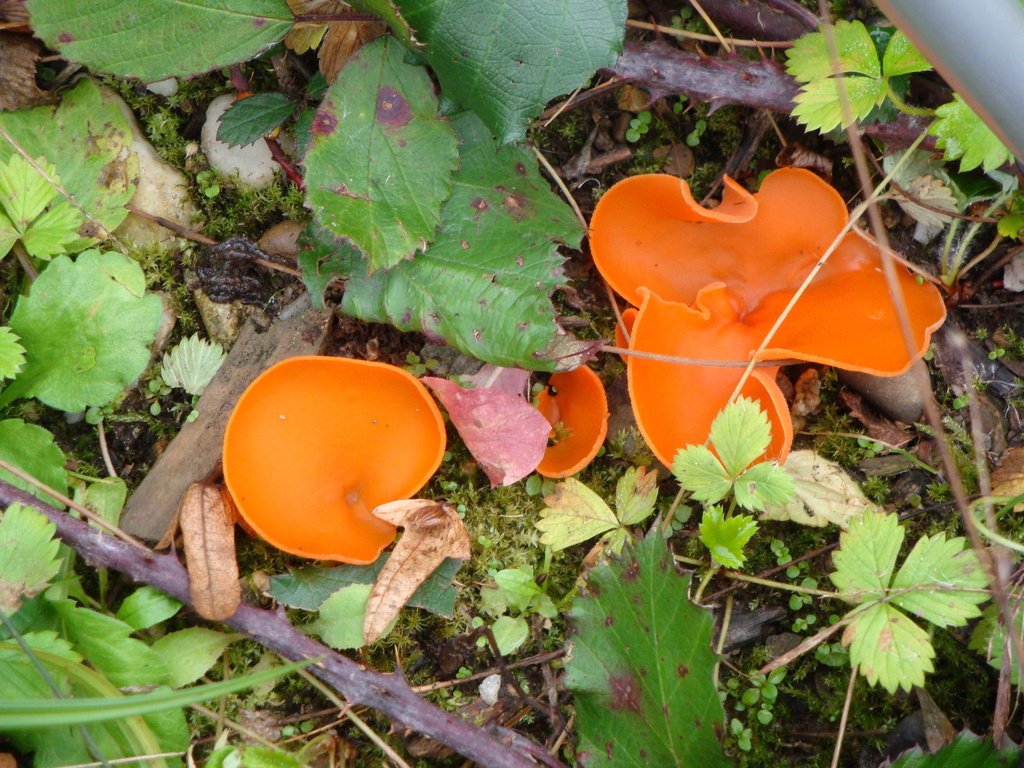
Bright orange peel fungus cups on bare soil
Edibleintermediate

Orange Peel Fungus

Aleuria aurantia

A bright orange cup fungus on bare, disturbed soil that looks like discarded orange peel.

Photo: A. Johann, CC BY
Compiled by Mushroom Forage Map field deskExpert review pendingContent checked
Identification warning

Small and fragile. Confirm it is on soil, not wood, and does not stain blue-green.

Season
Late summer to autumn
Habitat
Bare or disturbed soil, paths, and roadsides
Underside
Pale, downy outer surface; no gills or pores
Spore evidence
White

Where it grows

Tracked records and known growing zone

Explore on the field map
Loading map…
Squares: where people recorded it, brighter where more people did
Verified records
7,867
People who recorded it
5,784
Most records (northern hemisphere)
Sep–Nov
Records span
1966–2026

Research-grade iNaturalist records, snapshot Aug 27, 2026. The growing zone combines areas where different people have repeatedly verified it. Records show where people looked and found it, not current abundance or permission to gather.

Observation season

When field records occur

Choose a hemisphere · All recorded years; not a current forecast.

Choose the hemisphere you want to study. Country detection is approximate and some countries span the equator.

Compare before concluding

Lookalikes to rule out

Spring orange peel

caution

Caloscypha fulgens stains blue-green when bruised.

Eyelash cup

harmless

Scutellinia is tiny and fringed with dark hairs.

Identification

The cups are bright orange inside and pale, finely downy outside, becoming wavy and split with age. They grow in groups on bare soil, often along paths and gravel.

Uses and ecology

Orange peel fungus is a soil decomposer that colonizes disturbed ground. It is edible but thin; many foragers leave it for its color.

Memorable fact

Its bright orange comes from carotenoid pigments, the same family that colors carrots.

Sources

Back to the fungi library