The Living Fungi LibraryFungi LibraryMushroom Forage Map
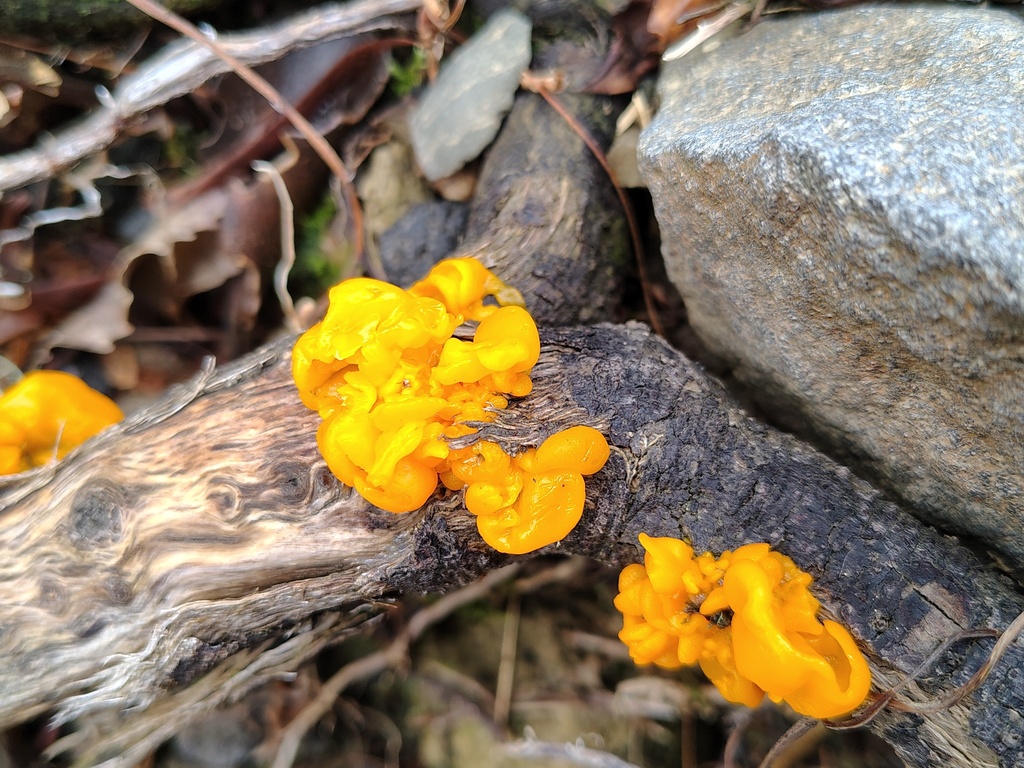
Bright yellow witches' butter jelly on a branch
Edibleintermediate

Witches' Butter

Tremella mesenterica / Yellow brain

A bright yellow, lobed jelly fungus on dead hardwood branches in cool, wet weather.

Photo: Kelvin Perrie, CC BY
Compiled by Mushroom Forage Map field deskExpert review pendingContent checked
Identification warning

Bland and gelatinous. Confirm a hardwood host.

Season
Year-round in wet weather, especially winter
Habitat
Dead hardwood branches, often still attached to the tree
Underside
Smooth folds; no gills or pores
Spore evidence
White to pale yellow

Where it grows

Tracked records and known growing zone

Explore on the field map
Loading map…
Squares: where people recorded it, brighter where more people did
Verified records
19,796
People who recorded it
11,424
Most records (northern hemisphere)
Nov–Mar
Records span
1977–2026

Research-grade iNaturalist records, snapshot Aug 27, 2026. The growing zone combines areas where different people have repeatedly verified it. Records show where people looked and found it, not current abundance or permission to gather.

Observation season

When field records occur

Choose a hemisphere · All recorded years; not a current forecast.

Choose the hemisphere you want to study. Country detection is approximate and some countries span the equator.

Compare before concluding

Lookalikes to rule out

Orange jelly spot

harmless

Dacrymyces chrysospermus grows on conifer wood and has a white attachment point.

Black witch's butter

harmless

Exidia glandulosa is black.

Wood Ear

harmless

Wood ear is brown and ear-shaped.

Identification

It forms a bright yellow to orange, wavy, brain-like mass of gelatinous lobes on dead hardwood branches. In dry weather it shrinks into a hard orange crust, then swells again after rain.

Uses and ecology

Witches' butter is a parasite of crust fungi (Peniophora) that grow on dead wood. It is edible but has little flavor and is mostly used for texture.

Memorable fact

It does not decay wood itself; it feeds on the crust fungi that do.

Sources

Back to the fungi library