Lookalikes to rule out
Black witch's butter
harmlessExidia species are black, lumpy, and brain-like rather than cup- or ear-shaped.
Brown cup fungi
cautionPeziza cups grow on soil or dung and are brittle, not rubbery.
Amber jelly roll
harmlessExidia recisa forms small amber, top-shaped blobs on willow and alder twigs.
Identification
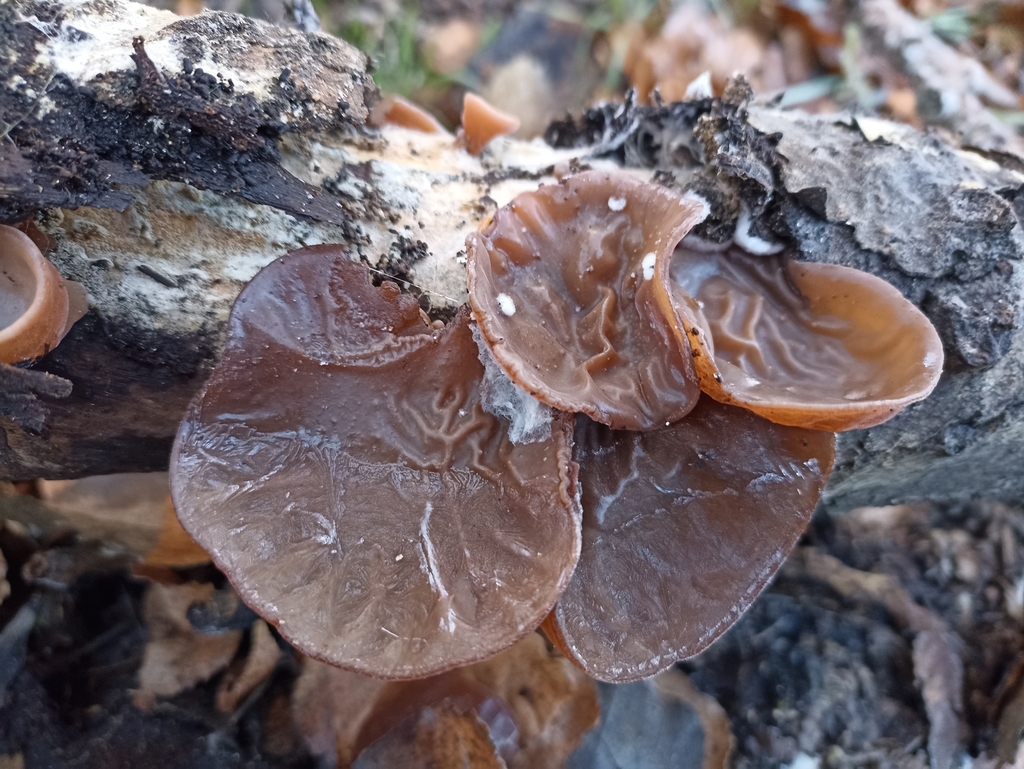
Wood ear is an ear- or cup-shaped jelly fungus, rubbery when wet and brittle when dry. The outer surface is finely velvety and tan to reddish brown; the inner surface is smoother and often veined like an ear. It grows directly from dead wood with no stem, often in rows. It revives after rain.
Uses and ecology
Closely related species are cultivated and eaten throughout East Asia for their crunchy texture. Wild wood ears decompose dead hardwood and are especially common on elder in Europe. North American records are often Auricularia americana on conifers or A. angiospermarum on hardwoods.
Memorable fact
A dried wood ear can soak back to its original shape within minutes, which helps it survive long dry spells on exposed branches.