Dandelion
Culinary referenceDandelion has hollow, leafless flower stalks and yellow flowers.
Cichorium intybus
Also found as Blue sailors · Succory
A roadside plant with sky-blue flowers that close by afternoon and bitter, dandelion-like basal leaves.
Sources checked 27 September 2026 · Specialist field review pending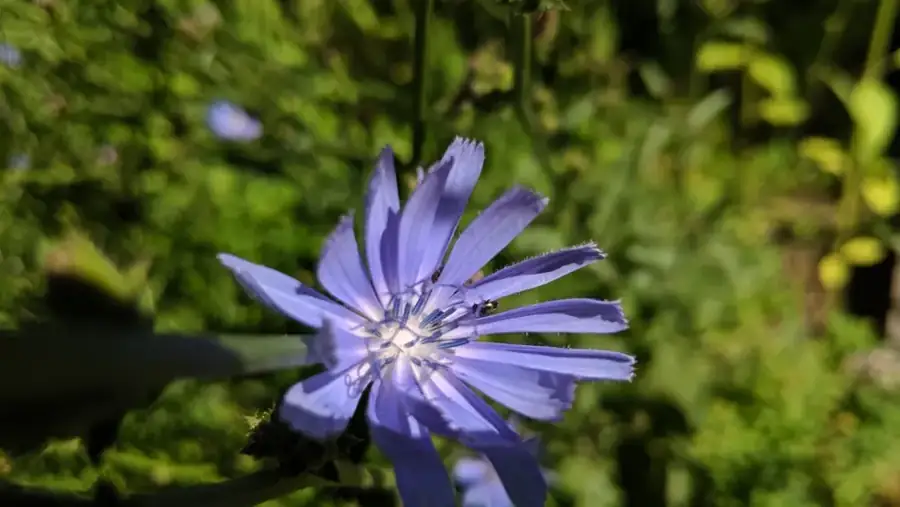
Roadside plants accumulate pollutants; gather away from traffic.
Where it grows
| January | 426 |
|---|---|
| February | 349 |
| March | 418 |
| April | 978 |
| May | 3194 |
| June | 19820 |
| July | 39338 |
| August | 27723 |
| September | 19381 |
| October | 9278 |
| November | 2004 |
| December | 383 |
Research-grade iNaturalist records, snapshot Aug 27, 2026. The growing zone combines areas where different people have repeatedly verified it. Records show where people looked and found it, not current abundance or permission to gather.
01 / Learn to see
Basal leaves toothed to lobed like dandelion, with hairs on the midrib.
Stiff, branching stems with small clasping leaves.
Sky-blue flower heads with square-tipped rays, open in the morning.
These are study prompts, not a complete identification key. Confirm the full plant with a regional flora and an experienced local identifier.
02 / Resolve the differences
Dandelion has hollow, leafless flower stalks and yellow flowers.
Selected comparisons only. Other lookalikes may occur locally.
03 / Meet the place
Native to Europe, western Asia and North Africa; widely naturalized.
Leaves in spring; flowers in summer.
Stage guidance is not a local forecast. Check your climate, elevation and a regional source; no month-shift formula is used here.
04 / Gather with care
Parts discussed: Leaf · Root · Flower
Blanch or cook young leaves. Roast roots as a coffee substitute. Flowers garnish salads.
Gather leaves from clean, abundant stands.
Preparation & storage essentials05 / Follow the evidence
Checked 27 September 2026. Original editorial synthesis; source institutions have not reviewed or endorsed this guide. Independent botanical field review is pending. Photos illustrate specimens; they do not certify the identity of a plant you find.
Suggest a correction