Foxglove
Toxic · do not eatHairy leaf rosettes can be confused; foxglove also poses a potentially fatal poisoning risk.
Symphytum officinale
Also found as Knitbone
A coarse perennial with a history of herbal use, included here as an observe-only plant.
Sources checked 9 September 2026 · Specialist field review pending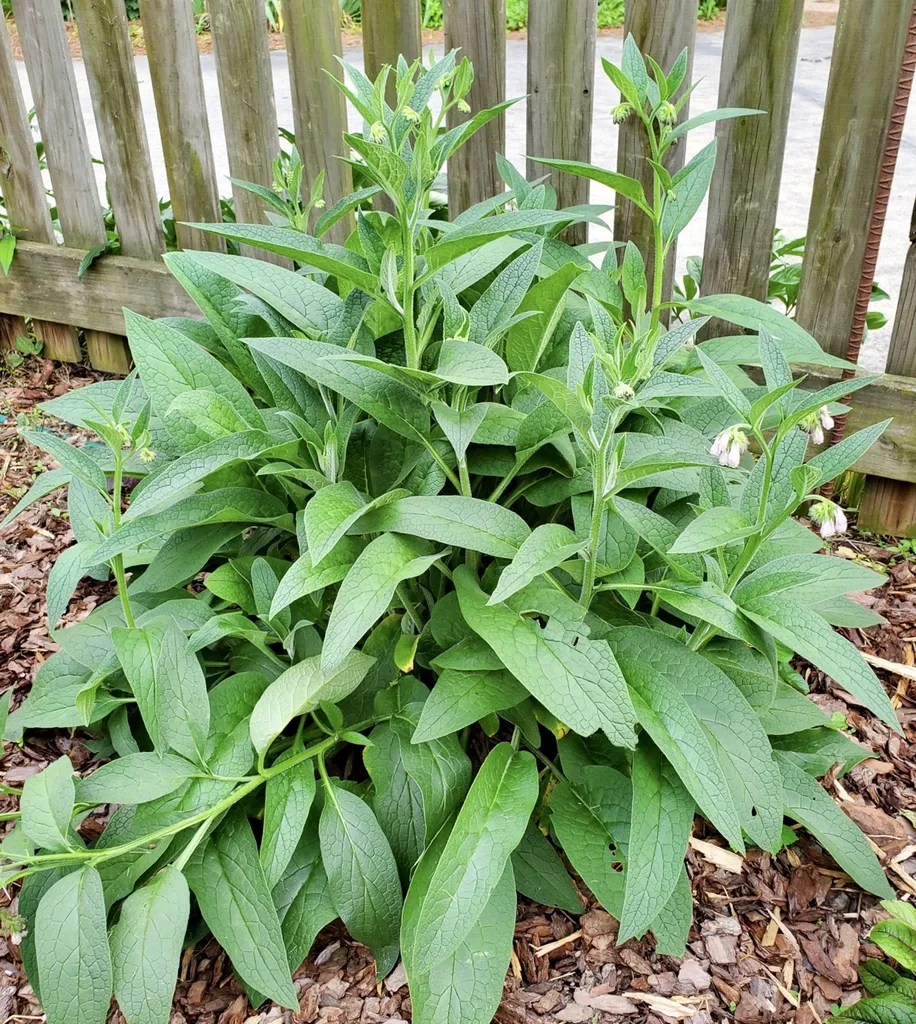
Ingestion can damage the liver. A history of medicinal use does not establish safety.
Where it grows
| January | 2 |
|---|---|
| February | 9 |
| March | 201 |
| April | 4152 |
| May | 7511 |
| June | 5882 |
| July | 2598 |
| August | 2105 |
| September | 1112 |
| October | 556 |
| November | 115 |
| December | 22 |
Research-grade iNaturalist records, snapshot Aug 27, 2026. The growing zone combines areas where different people have repeatedly verified it. Records show where people looked and found it, not current abundance or permission to gather.
01 / Learn to see
Large rough, hairy leaves.
Upper leaf bases extend down the stem as wings.
Drooping clusters of tubular purple to pale flowers.
These are study prompts, not a complete identification key. Confirm the full plant with a regional flora and an experienced local identifier.
02 / Resolve the differences
Hairy leaf rosettes can be confused; foxglove also poses a potentially fatal poisoning risk.
Selected comparisons only. Other lookalikes may occur locally.
03 / Meet the place
Europe and western Asia; cultivated and naturalized elsewhere.
Study flowering plants; rosettes can resemble poisonous foxglove.
Stage guidance is not a local forecast. Check your climate, elevation and a regional source; no month-shift formula is used here.
04 / Gather with care
Do not ingest or add to tea. This guide does not provide topical treatment instructions.
Observe a known garden specimen and keep all cut material out of the pantry.
Preparation & storage essentials05 / Follow the evidence
Checked 9 September 2026. Original editorial synthesis; source institutions have not reviewed or endorsed this guide. Independent botanical field review is pending. Photos illustrate specimens; they do not certify the identity of a plant you find.
Suggest a correction