Other Dysphania and goosefoots
Odor is not sufficient; flower, leaf and seed characters need a regional key.
Use the botanical sourceDysphania ambrosioides
Also found as Mexican tea · Chenopodium ambrosioides
A pungent tropical American herb with culinary history and important toxicity concerns.
Sources checked 9 September 2026 · Specialist field review pending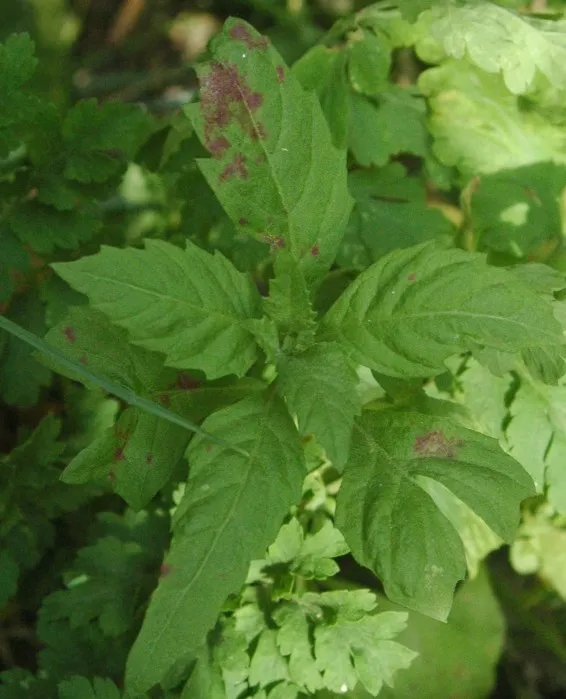
Seeds in quantity and concentrated preparations can be dangerous. This guide supplies no home remedy or dose.
Where it grows
| January | 47 |
|---|---|
| February | 27 |
| March | 78 |
| April | 236 |
| May | 246 |
| June | 258 |
| July | 411 |
| August | 408 |
| September | 414 |
| October | 313 |
| November | 155 |
| December | 78 |
| January | 67 |
|---|---|
| February | 89 |
| March | 111 |
| April | 140 |
| May | 118 |
| June | 27 |
| July | 23 |
| August | 16 |
| September | 25 |
| October | 48 |
| November | 47 |
| December | 44 |
Research-grade iNaturalist records, snapshot Aug 27, 2026. The growing zone combines areas where different people have repeatedly verified it. Records show where people looked and found it, not current abundance or permission to gather.
01 / Learn to see
Alternate elongated leaves with variable toothed or lobed margins.
Oil glands on foliage and largely hairless stems.
Tiny green flowers densely clustered along upper spikes.
These are study prompts, not a complete identification key. Confirm the full plant with a regional flora and an experienced local identifier.
02 / Resolve the differences
Odor is not sufficient; flower, leaf and seed characters need a regional key.
Use the botanical sourceSelected comparisons only. Other lookalikes may occur locally.
03 / Meet the place
Tropical Americas; introduced beyond its original range.
Study mature leaves and flowering shoots during warm-season growth.
Stage guidance is not a local forecast. Check your climate, elevation and a regional source; no month-shift formula is used here.
04 / Gather with care
Parts discussed: Leaf
Documented culinary leaf use does not justify making concentrated tea, essential oil or medicinal extracts.
Prefer a verified culinary source; avoid spreading seeds.
Preparation & storage essentials05 / Follow the evidence
Checked 9 September 2026. Original editorial synthesis; source institutions have not reviewed or endorsed this guide. Independent botanical field review is pending. Photos illustrate specimens; they do not certify the identity of a plant you find.
Suggest a correction