Other chamomiles and mayweeds
Similar white daisies require checking leaf, scent and receptacle characters together.
Use the botanical sourceMatricaria chamomilla
Also found as Matricaria recutita · Chamomilla recutita · Chamomile
An annual daisy used for flower tea, distinct from Roman chamomile and other similar daisies.
Sources checked 9 September 2026 · Specialist field review pending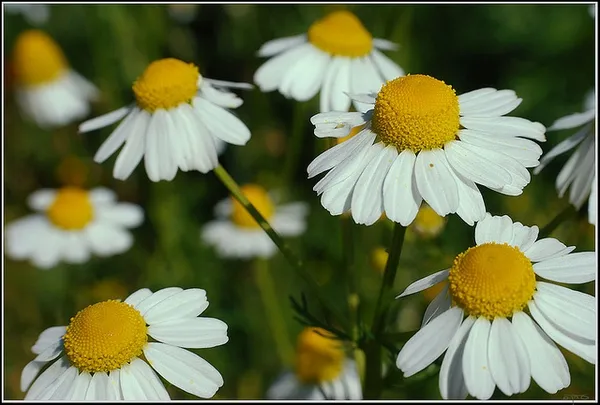
Allergic reactions can be severe, especially with daisy-family allergies. Medicine interactions are possible.
Where it grows
| January | 47 |
|---|---|
| February | 60 |
| March | 170 |
| April | 846 |
| May | 2711 |
| June | 3085 |
| July | 1782 |
| August | 895 |
| September | 396 |
| October | 216 |
| November | 73 |
| December | 43 |
| January | 31 |
|---|---|
| February | 40 |
| March | 21 |
| April | 95 |
| May | 42 |
| June | 13 |
| July | 24 |
| August | 35 |
| September | 97 |
| October | 162 |
| November | 95 |
| December | 36 |
Research-grade iNaturalist records, snapshot Aug 27, 2026. The growing zone combines areas where different people have repeatedly verified it. Records show where people looked and found it, not current abundance or permission to gather.
01 / Learn to see
Finely divided, threadlike leaf segments.
White rays surround a raised yellow central disc.
Confirm the hollow receptacle with a regional key.
These are study prompts, not a complete identification key. Confirm the full plant with a regional flora and an experienced local identifier.
02 / Resolve the differences
Similar white daisies require checking leaf, scent and receptacle characters together.
Use the botanical sourceSelected comparisons only. Other lookalikes may occur locally.
03 / Meet the place
Temperate Eurasia to Indochina; widely cultivated beyond this range.
Fully open flower heads in dry conditions during the local flowering season.
Stage guidance is not a local forecast. Check your climate, elevation and a regional source; no month-shift formula is used here.
04 / Gather with care
Parts discussed: Flower head
Use correctly identified flowers for ordinary food or tea preparations.
Grow a named culinary plant and leave some flower heads for seed.
Preparation & storage essentials05 / A named folk-herbal lens
European household and folk herbalism
Rest, solar warmth, and strength expressed without hardness.
Gather low to the earth and notice the many stages of bloom. Leave the field able to continue flowering.
Pick only open, dry heads and lay them in a single airy layer.
This optional spiritual lens does not establish identity, edibility, dosage, lawful access, or medical safety. Follow a teaching more deeply through its named people and lineage rather than treating it as universal.
Open Ways of Gathering06 / Follow the evidence
Checked 9 September 2026. Original editorial synthesis; source institutions have not reviewed or endorsed this guide. Independent botanical field review is pending. Photos illustrate specimens; they do not certify the identity of a plant you find.
Suggest a correction