Other pennyworts
Hydrocotyle species share the name. Compare leaf attachment, margins and reproductive characters.
Use the botanical sourceCentella asiatica
Also found as Indian pennywort · Pegaga
A creeping tropical herb with kidney-shaped leaves and documented regional food uses.
Sources checked 9 September 2026 · Specialist field review pending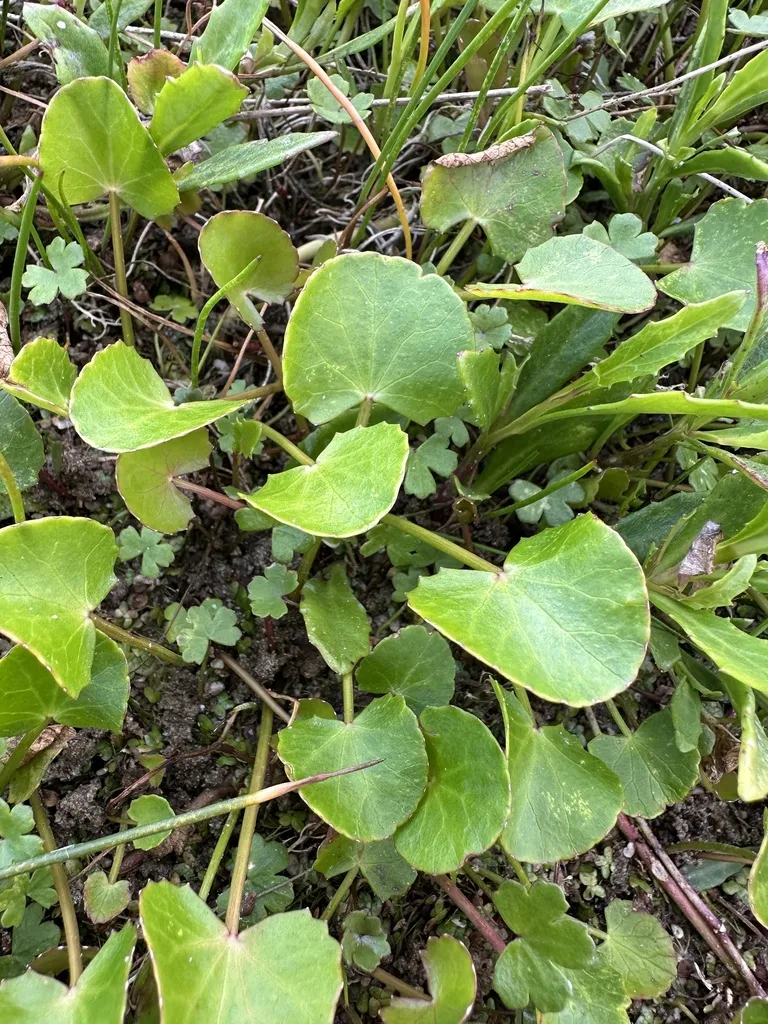
Wild wet-ground plants can be contaminated. Food use is not evidence for concentrated supplements or treatment claims.
Where it grows
| January | 182 |
|---|---|
| February | 205 |
| March | 348 |
| April | 665 |
| May | 360 |
| June | 229 |
| July | 201 |
| August | 174 |
| September | 146 |
| October | 195 |
| November | 185 |
| December | 165 |
| January | 225 |
|---|---|
| February | 222 |
| March | 229 |
| April | 345 |
| May | 224 |
| June | 233 |
| July | 182 |
| August | 173 |
| September | 154 |
| October | 265 |
| November | 260 |
| December | 226 |
Research-grade iNaturalist records, snapshot Aug 27, 2026. The growing zone combines areas where different people have repeatedly verified it. Records show where people looked and found it, not current abundance or permission to gather.
01 / Learn to see
Rounded to kidney-shaped leaves with shallow rounded teeth.
Long leaf stalks arise along creeping runners.
Small clustered flowers near the ground.
These are study prompts, not a complete identification key. Confirm the full plant with a regional flora and an experienced local identifier.
02 / Resolve the differences
Hydrocotyle species share the name. Compare leaf attachment, margins and reproductive characters.
Use the botanical sourceSelected comparisons only. Other lookalikes may occur locally.
03 / Meet the place
Tropical and subtropical Asia; the cited Singapore record lists regional native distribution.
Fresh healthy leaves during active moist-season growth; there is no universal northern calendar.
Stage guidance is not a local forecast. Check your climate, elevation and a regional source; no month-shift formula is used here.
04 / Gather with care
Parts discussed: Leaf
Leaves have food uses in parts of Asia. Prefer known cultivated material from clean soil.
Avoid wild wetland disturbance; cultivate a verified plant.
Preparation & storage essentials05 / Follow the evidence
Checked 9 September 2026. Original editorial synthesis; source institutions have not reviewed or endorsed this guide. Independent botanical field review is pending. Photos illustrate specimens; they do not certify the identity of a plant you find.
Suggest a correction