Wild celery
Apium graveolens smells strongly of celery.
Use the botanical sourceOenanthe crocata
Also found as Dead man's fingers
A stream-side umbellifer with celery-like leaves and pale tuberous roots, one of the most poisonous plants in Britain.
Sources checked 27 September 2026 · Specialist field review pending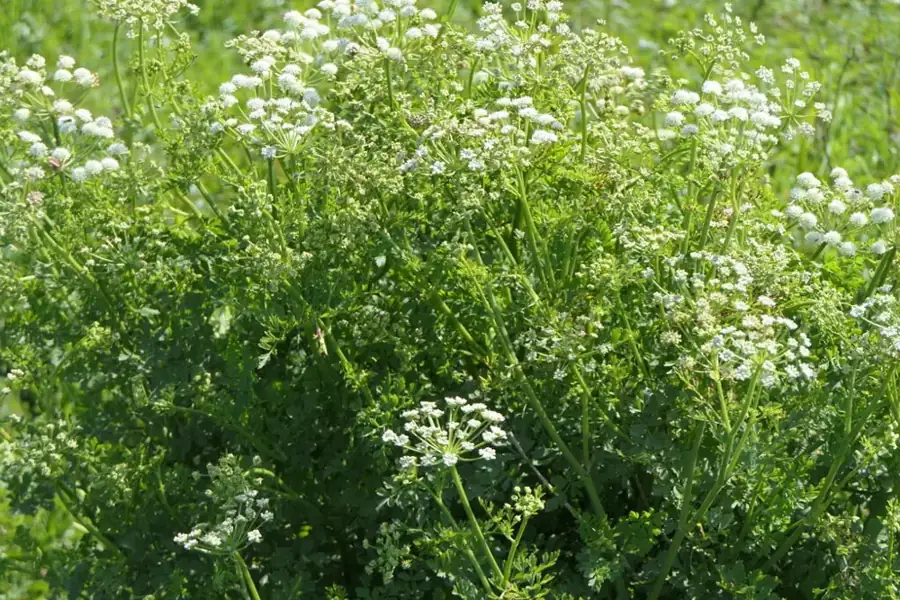
Contains oenanthotoxin, which causes seizures and death. Roots have been mistaken for wild parsnip or carrot, and leaves for celery.
Where it grows
| January | 99 |
|---|---|
| February | 188 |
| March | 388 |
| April | 996 |
| May | 1500 |
| June | 1025 |
| July | 365 |
| August | 134 |
| September | 24 |
| October | 22 |
| November | 36 |
| December | 57 |
Research-grade iNaturalist records, snapshot Aug 27, 2026. The growing zone combines areas where different people have repeatedly verified it. Records show where people looked and found it, not current abundance or permission to gather.
01 / Learn to see
Stout hollow stems with celery- or parsley-like leaves.
Large white umbels in early summer.
Pale, clustered tuberous roots like fingers, releasing yellow sap.
These are study prompts, not a complete identification key. Confirm the full plant with a regional flora and an experienced local identifier.
02 / Resolve the differences
Apium graveolens smells strongly of celery.
Use the botanical sourceBerula and Sium have once-divided leaves.
Use the botanical sourceA dry-ground umbellifer with hairy stems.
Selected comparisons only. Other lookalikes may occur locally.
03 / Meet the place
Western Europe and North Africa, along ditches, rivers and coasts.
Hazard exists at every growth stage.
Stage guidance is not a local forecast. Check your climate, elevation and a regional source; no month-shift formula is used here.
04 / Gather with care
Do not eat, brew, taste or collect for the pantry.
Never dig roots of wetland umbellifers.
Preparation & storage essentials05 / Follow the evidence
Checked 27 September 2026. Original editorial synthesis; source institutions have not reviewed or endorsed this guide. Independent botanical field review is pending. Photos illustrate specimens; they do not certify the identity of a plant you find.
Suggest a correction