Citronella grasses
Use a correctly named culinary plant; young grasses are difficult to distinguish.
Use the botanical sourceCymbopogon citratus
Also found as West Indian lemongrass · Sereh
A clump-forming tropical culinary grass with lemon-scented blades and thick overlapping leaf bases.
Sources checked 9 September 2026 · Specialist field review pending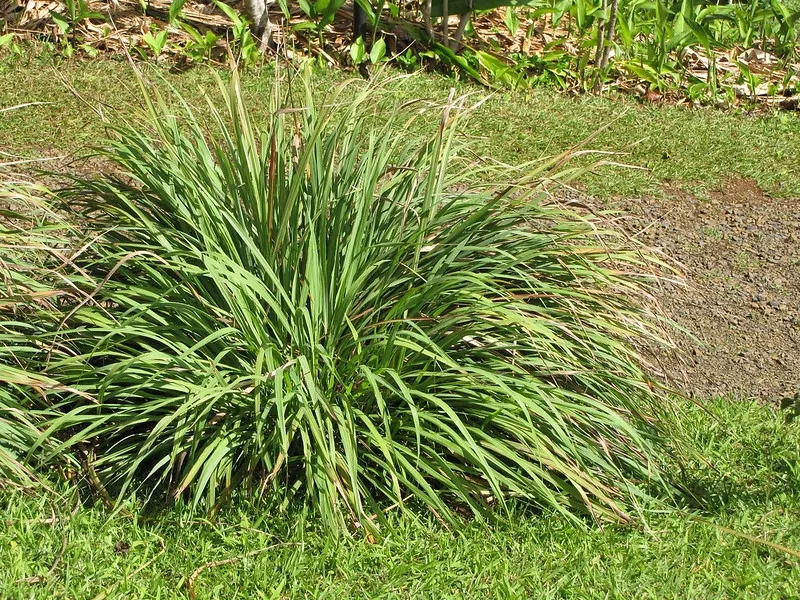
Other Cymbopogon species are grown for fragrance or oils. A lemon scent does not make them interchangeable.
Where it grows
| January | 18 |
|---|---|
| February | 29 |
| March | 25 |
| April | 128 |
| May | 67 |
| June | 24 |
| July | 22 |
| August | 20 |
| September | 21 |
| October | 23 |
| November | 54 |
| December | 21 |
| January | 11 |
|---|---|
| February | 18 |
| March | 9 |
| April | 8 |
| May | 12 |
| June | 4 |
| July | 12 |
| August | 4 |
| September | 4 |
| October | 12 |
| November | 15 |
| December | 4 |
Research-grade iNaturalist records, snapshot Aug 27, 2026. The growing zone combines areas where different people have repeatedly verified it. Records show where people looked and found it, not current abundance or permission to gather.
01 / Learn to see
Long straplike leaves with parallel veins.
Dense clumps; the apparent stalk is overlapping leaf sheaths.
Flowering is uncommon in cultivation.
These are study prompts, not a complete identification key. Confirm the full plant with a regional flora and an experienced local identifier.
02 / Resolve the differences
Use a correctly named culinary plant; young grasses are difficult to distinguish.
Use the botanical sourceSelected comparisons only. Other lookalikes may occur locally.
03 / Meet the place
Widely cultivated through the tropics; native origin is uncertain in the NParks account.
Active warm-season growth on an established cultivated clump.
Stage guidance is not a local forecast. Check your climate, elevation and a regional source; no month-shift formula is used here.
04 / Gather with care
Parts discussed: Leaf · Leaf base
Leaf blades flavor tea and broth; prepared leaf bases are used in cooking. Remove tough fibers as the recipe requires.
Take a few outer shoots without uprooting the whole clump.
Preparation & storage essentials05 / Follow the evidence
Checked 9 September 2026. Original editorial synthesis; source institutions have not reviewed or endorsed this guide. Independent botanical field review is pending. Photos illustrate specimens; they do not certify the identity of a plant you find.
Suggest a correction