Delphinium
Delphiniums have spurred flowers; also toxic.
Use the botanical sourceAconitum napellus
Also found as Aconite · Wolfsbane
A tall perennial with hooded blue-purple flowers and deeply cut leaves; one of the most toxic plants in Europe.
Sources checked 27 September 2026 · Specialist field review pending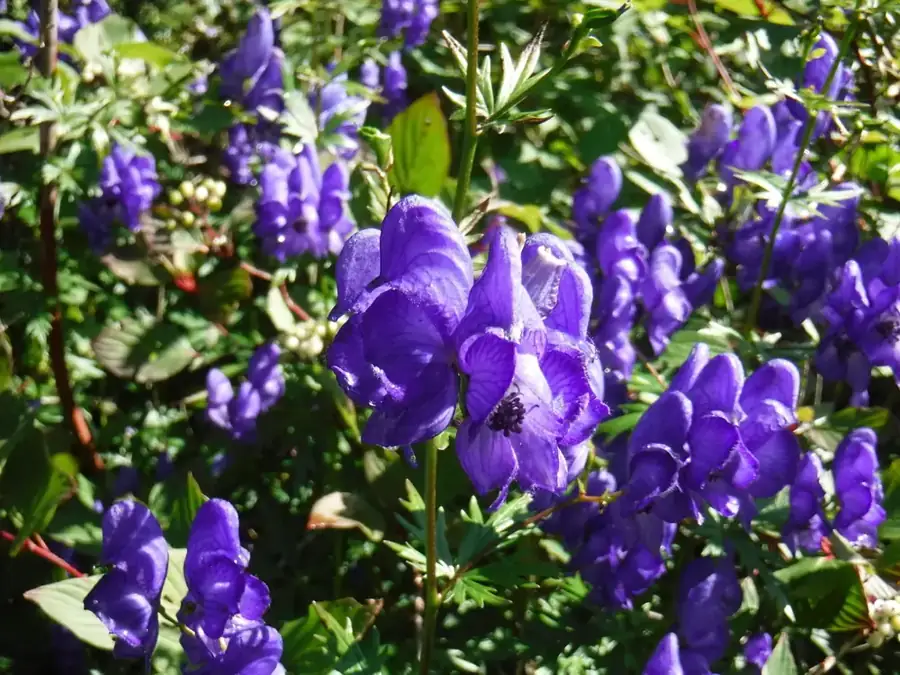
Contains aconitine, which can be absorbed through skin and causes fatal heart rhythm problems. Wear gloves in gardens and seek urgent care after exposure.
Where it grows
| January | 0 |
|---|---|
| February | 1 |
| March | 3 |
| April | 16 |
| May | 61 |
| June | 132 |
| July | 1072 |
| August | 1760 |
| September | 364 |
| October | 59 |
| November | 6 |
| December | 1 |
Research-grade iNaturalist records, snapshot Aug 27, 2026. The growing zone combines areas where different people have repeatedly verified it. Records show where people looked and found it, not current abundance or permission to gather.
01 / Learn to see
Palmately and deeply divided leaves.
Tall spikes of hooded, helmet-shaped blue to purple flowers.
Tuberous roots.
These are study prompts, not a complete identification key. Confirm the full plant with a regional flora and an experienced local identifier.
02 / Resolve the differences
Delphiniums have spurred flowers; also toxic.
Use the botanical sourceMonkshood roots have been mistaken for edible roots, with fatal results.
Use the botanical sourceSelected comparisons only. Other lookalikes may occur locally.
03 / Meet the place
Mountain meadows and stream banks of Europe; widely grown in gardens.
Hazard exists at every growth stage.
Stage guidance is not a local forecast. Check your climate, elevation and a regional source; no month-shift formula is used here.
04 / Gather with care
Do not eat, brew, taste or collect for the pantry.
Wear gloves when handling in gardens.
Preparation & storage essentials05 / Follow the evidence
Checked 27 September 2026. Original editorial synthesis; source institutions have not reviewed or endorsed this guide. Independent botanical field review is pending. Photos illustrate specimens; they do not certify the identity of a plant you find.
Suggest a correction