Purslane
Extra care neededPurslane has thick succulent leaves and stems; inspect the complete plant without tasting.
Euphorbia maculata
Also found as Chamaesyce maculata
A low mat-forming spurge with irritating milky sap, easily overlooked among purslane.
Sources checked 9 September 2026 · Specialist field review pending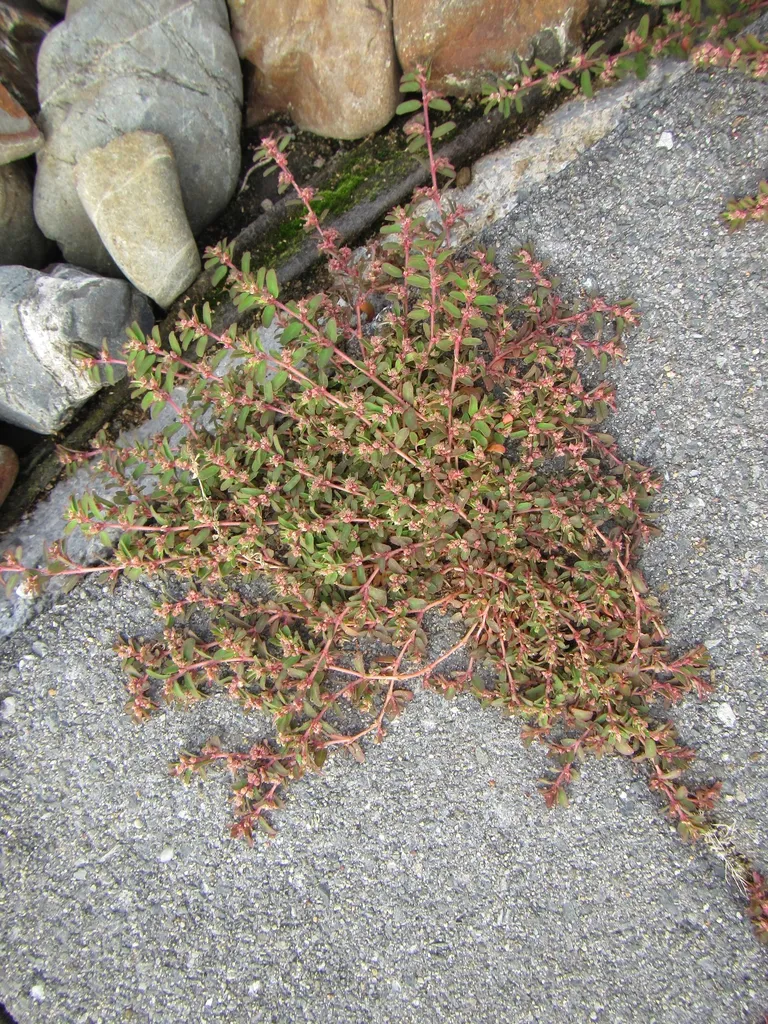
Sap can injure skin and eyes; ingestion irritates the mouth and digestive tract.
Where it grows
| January | 178 |
|---|---|
| February | 79 |
| March | 151 |
| April | 651 |
| May | 1530 |
| June | 2876 |
| July | 4924 |
| August | 5526 |
| September | 4894 |
| October | 3076 |
| November | 1062 |
| December | 375 |
Research-grade iNaturalist records, snapshot Aug 27, 2026. The growing zone combines areas where different people have repeatedly verified it. Records show where people looked and found it, not current abundance or permission to gather.
01 / Learn to see
Thin, often hairy, branching stems close to the ground.
Small opposite leaves, sometimes with a dark central blotch.
Milky latex in damaged tissue; do not break it deliberately to test.
These are study prompts, not a complete identification key. Confirm the full plant with a regional flora and an experienced local identifier.
02 / Resolve the differences
Purslane has thick succulent leaves and stems; inspect the complete plant without tasting.
Selected comparisons only. Other lookalikes may occur locally.
03 / Meet the place
American origin; introduced in many warm and temperate areas.
Warm-season growth; absence of a leaf blotch does not make a plant safe.
Stage guidance is not a local forecast. Check your climate, elevation and a regional source; no month-shift formula is used here.
04 / Gather with care
Do not eat or put in a mixed gathering.
Avoid sap contact. Keep it out of food baskets and wash after accidental handling.
Preparation & storage essentials05 / Follow the evidence
Checked 9 September 2026. Original editorial synthesis; source institutions have not reviewed or endorsed this guide. Independent botanical field review is pending. Photos illustrate specimens; they do not certify the identity of a plant you find.
Suggest a correction