The Living Fungi LibraryFungi LibraryMushroom Forage Map
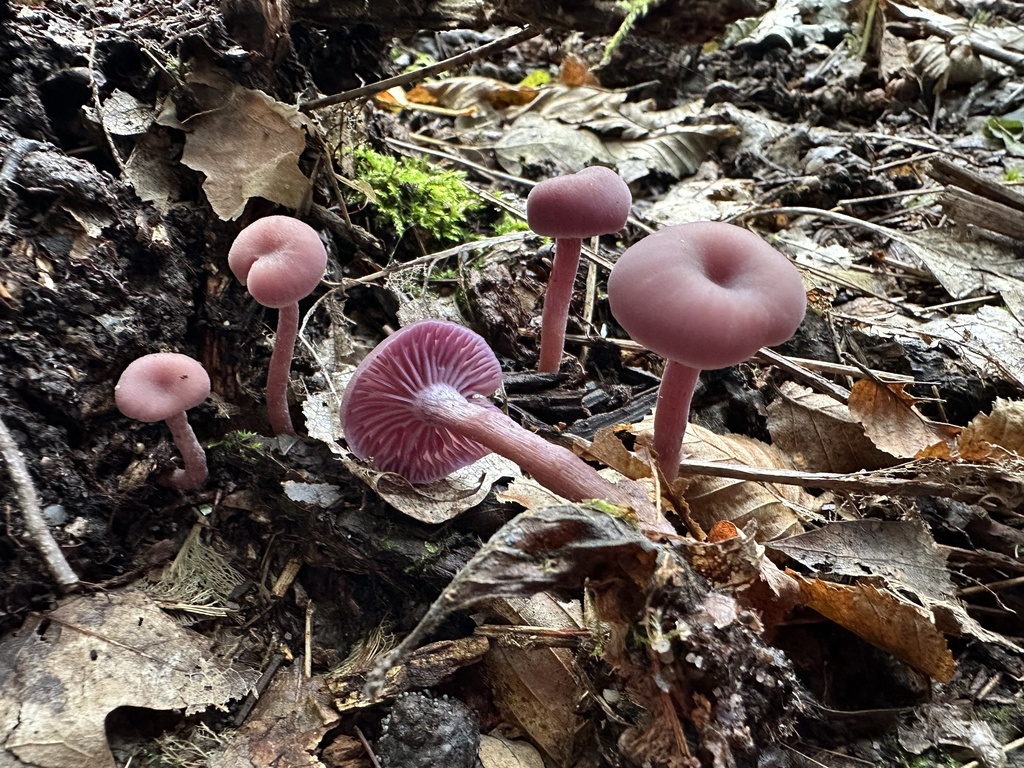
Violet amethyst deceiver mushrooms in leaf litter
Edibleintermediate

Amethyst Deceiver

Laccaria amethystina

A slender, intensely violet woodland mushroom with thick, widely spaced gills that fades when dry.

Photo: Katrin Simon, CC BY
Compiled by Mushroom Forage Map field deskExpert review pendingContent checked
Identification warning

It can accumulate arsenic from some soils. Lilac bonnet and lilac fibrecap are toxic lookalikes.

Season
Summer to autumn
Habitat
Leaf and needle litter in broadleaf and conifer woods
Underside
Thick, widely spaced violet gills
Spore evidence
White

Where it grows

Tracked records and known growing zone

Explore on the field map
Loading map…
Squares: where people recorded it, brighter where more people did
Verified records
10,295
People who recorded it
5,747
Most records (northern hemisphere)
Sep–Oct
Records span
1968–2026

Research-grade iNaturalist records, snapshot Aug 27, 2026. The growing zone combines areas where different people have repeatedly verified it. Records show where people looked and found it, not current abundance or permission to gather.

Observation season

When field records occur

Choose a hemisphere · All recorded years; not a current forecast.

Choose the hemisphere you want to study. Country detection is approximate and some countries span the equator.

Compare before concluding

Lookalikes to rule out

Lilac bonnet

toxic

Mycena pura smells of radish and has crowded gills; it contains muscarine.

Lilac fibrecap

toxic

Inocybe species have silky, fibrous caps and brown spores.

Violet webcaps

toxic

Cortinarius have a cobwebby veil and rusty-brown spores.

Identification

When fresh and moist, every part is a deep amethyst violet. The gills are thick and widely spaced, and the stem is tough and fibrous. As it dries, the cap fades to pale lilac or buff, which is how it deceives. Spores are white.

Uses and ecology

Amethyst deceivers are mycorrhizal with many trees. They are small but colorful in salads when cooked. Because some Laccaria accumulate arsenic, avoid collecting from mining or contaminated sites.

Memorable fact

The name deceiver comes from how much its color changes as the cap dries out.

Sources

Back to the fungi library