The Living Fungi LibraryFungi LibraryMushroom Forage Map
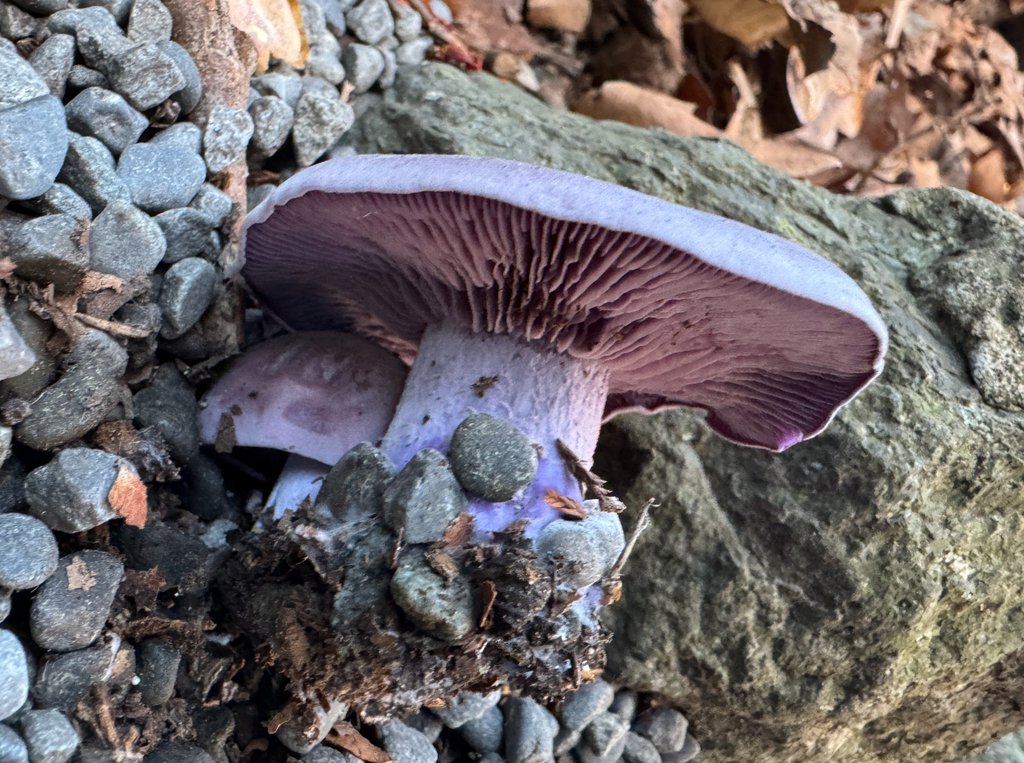
Lilac wood blewit showing violet gills and stem
Edible with cautionintermediate

Wood Blewit

Collybia nuda / Blewit; Clitocybe nuda

A lilac-violet mushroom of autumn leaf litter and compost with a fruity smell and a pinkish-buff spore print.

Photo: Frank Ashwood, CC BY
Compiled by Mushroom Forage Map field deskExpert review pendingContent checked
Toxicity warning

Always take a spore print: violet webcaps have rusty-brown spores and some are dangerous. Cook thoroughly; some people react even to cooked blewits.

Season
Late autumn to early winter
Habitat
Leaf litter, compost heaps, and woodland edges
Underside
Crowded lilac gills that fade to buff
Spore evidence
Pinkish buff

Where it grows

Tracked records and known growing zone

Explore on the field map
Loading map…
Squares: where people recorded it, brighter where more people did
Verified records
11,994
People who recorded it
6,491
Most records (northern hemisphere)
Jan, Oct–Nov
Records span
1986–2026

Research-grade iNaturalist records, snapshot Aug 27, 2026. The growing zone combines areas where different people have repeatedly verified it. Records show where people looked and found it, not current abundance or permission to gather.

Observation season

When field records occur

Choose a hemisphere · All recorded years; not a current forecast.

Choose the hemisphere you want to study. Country detection is approximate and some countries span the equator.

Compare before concluding

Lookalikes to rule out

Violet webcaps

toxic

Cortinarius have a cobweb-like veil when young and leave a rusty-brown spore print.

Lilac fibrecap

toxic

Inocybe species are smaller, fibrous-capped, and drop brown spores.

Amethyst deceiver is smaller and slender, with thick, widely spaced gills.

Identification

Young caps are violet to lilac and smooth, fading to tan with age. The gills are crowded and lilac, and the thick stem is often slightly bulbous and violet-tinged. The smell is fruity and sweet, like frozen orange juice. The decisive check is the spore print: pinkish buff, never rusty brown.

Uses and ecology

Blewits recycle leaf litter and compost, often fruiting in rings. They appear late in the season after frosts. They should always be cooked, and people trying them for the first time should eat a small amount.

Memorable fact

Blewits often fruit in the same compost heap year after year, sometimes after the first frost has ended most other mushroom seasons.

Sources

Back to the fungi library