The Living Fungi LibraryFungi LibraryMushroom Forage Map
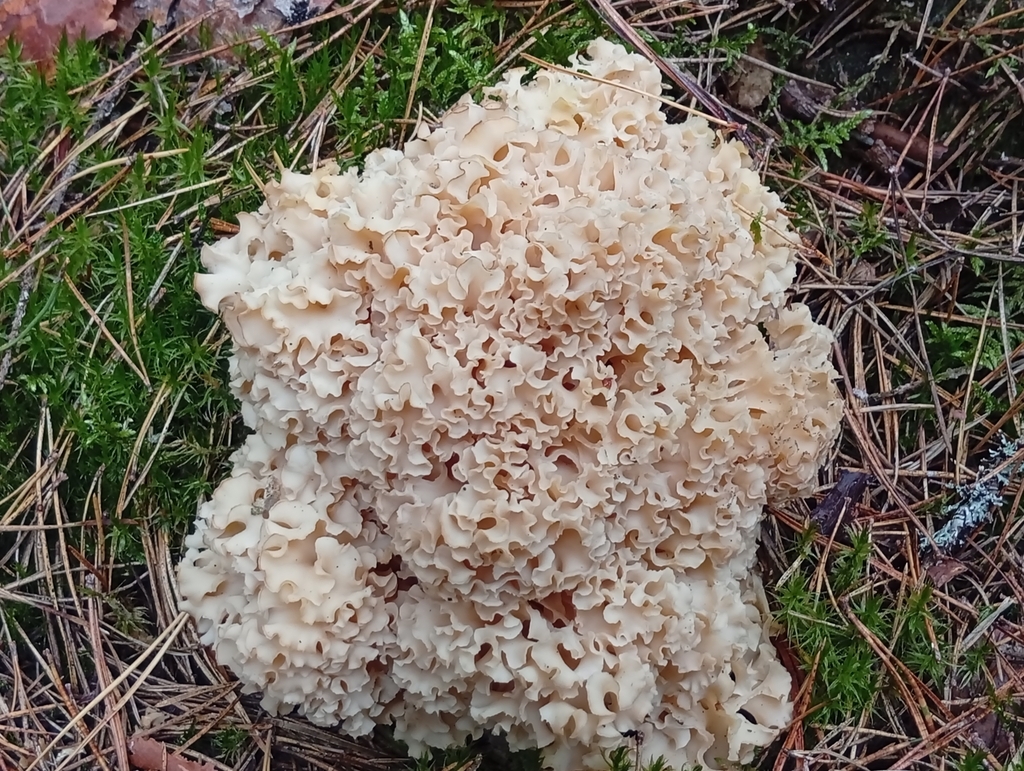
Cream cauliflower mushroom rosette with curly flattened lobes on the forest floor
Choice edibleintermediate

Cauliflower Mushroom

Sparassis crispa / Wood cauliflower

A large cream rosette of flat, curly lobes at the base of conifers, easy to recognize and prized when fresh.

Photo: Daniel Buczkiewicz, CC BY
Compiled by Mushroom Forage Map field deskExpert review pendingContent checked
Identification warning

Clean thoroughly and cook. Soft, discolored, or bitter specimens should be left.

Season
Late summer to autumn
Habitat
At the base of pines and other conifers, attached to roots
Underside
Smooth, flattened lobes with no gills, pores, or teeth
Spore evidence
White to cream

Where it grows

Tracked records and known growing zone

Explore on the field map
Loading map…
Squares: where people recorded it, brighter where more people did
Verified records
3,512
People who recorded it
2,325
Most records (northern hemisphere)
Sep–Oct
Records span
1979–2026

Research-grade iNaturalist records, snapshot Aug 27, 2026. The growing zone combines areas where different people have repeatedly verified it. Records show where people looked and found it, not current abundance or permission to gather.

Observation season

When field records occur

Choose a hemisphere · All recorded years; not a current forecast.

Choose the hemisphere you want to study. Country detection is approximate and some countries span the equator.

Compare before concluding

Lookalikes to rule out

Coral fungi

caution

Ramaria corals have rounded, upright branches rather than flat, ribbon-like lobes; several cause gastrointestinal upset.

Hen of the woods is gray-brown with spoon-shaped fronds and a pore surface underneath.

Other Sparassis species

harmless

Western and eastern North American cauliflower mushrooms are separate species with similar form.

Identification

The fruiting body is a compact to large rosette, often the size of a head of lettuce, made of many flattened, wavy lobes like egg noodles. Color is creamy white to pale yellow, browning at the edges with age. It rises from a single rooting base attached to a conifer root. There are no gills, pores, or teeth.

Uses and ecology

Cauliflower mushrooms cause a brown rot in the roots and butt of conifers and can return at the same tree for years. Cut above the base to leave the attachment intact. Soil and needles collect between the lobes, so clean carefully. Texture stays firm when cooked.

Memorable fact

A single rosette can weigh several kilograms, and the same tree may produce one for many consecutive years.

Sources

Back to the fungi library