The Living Fungi LibraryFungi LibraryMushroom Forage Map
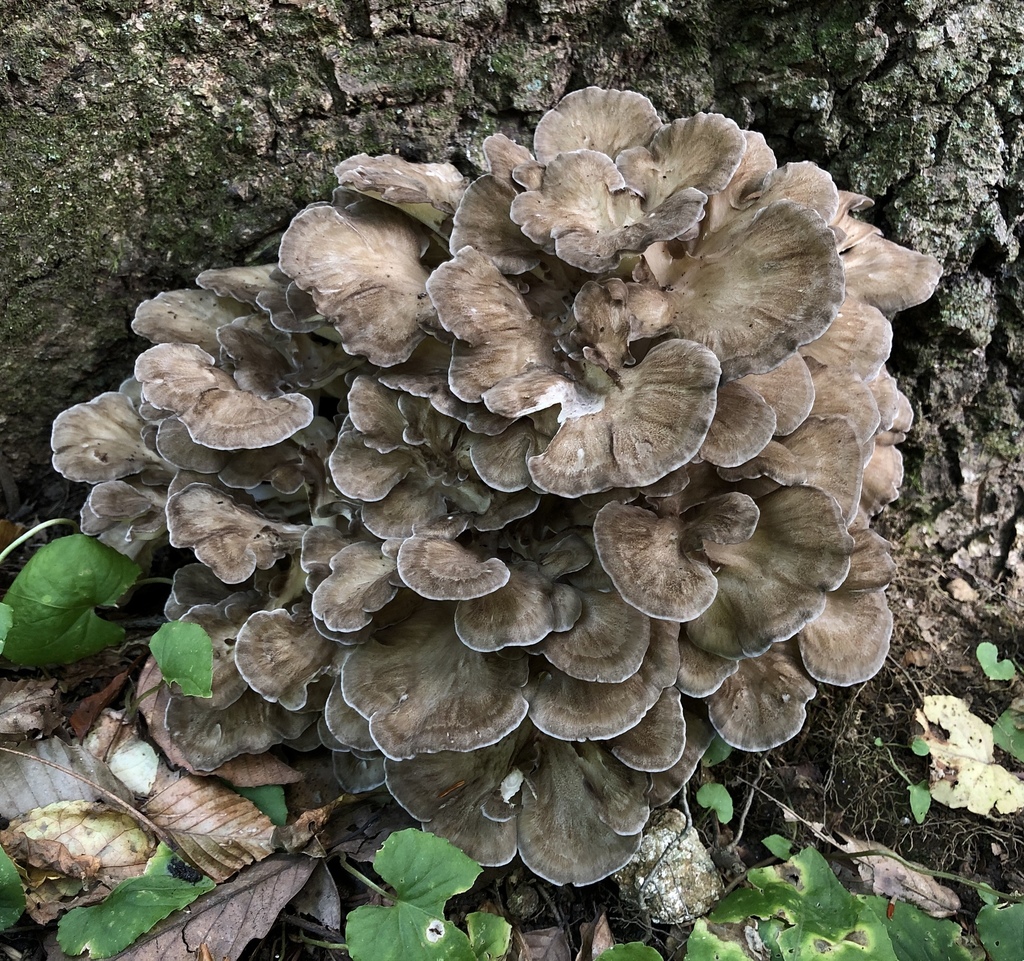
Dense gray-brown hen of the woods rosette at a hardwood base
Choice edibleintermediate

Hen of the Woods

Grifola frondosa / Maitake

A large gray-brown rosette of many spoon-shaped fronds joined to a branched base beside mature hardwoods.

Photo: Public domain, CC0
Compiled by Mushroom Forage Map field deskExpert review pendingContent checked
Identification warning

Use young, fresh fronds and confirm the white pore surface. Similar rosette polypores differ in staining, color, and texture.

Season
Late summer through fall
Habitat
At the base of mature oaks and other hardwoods, often recurring on the same tree
Underside
White pores extending down the branches
Spore evidence
White

Where it grows

Tracked records and known growing zone

Explore on the field map
Loading map…
Squares: where people recorded it, brighter where more people did
Verified records
7,931
People who recorded it
5,036
Most records (northern hemisphere)
Sep–Oct
Records span
1980–2026

Research-grade iNaturalist records, snapshot Aug 27, 2026. The growing zone combines areas where different people have repeatedly verified it. Records show where people looked and found it, not current abundance or permission to gather.

Observation season

When field records occur

Choose a hemisphere · All recorded years; not a current forecast.

Choose the hemisphere you want to study. Country detection is approximate and some countries span the equator.

Compare before concluding

Lookalikes to rule out

Black-staining Polypore

caution

Meripilus fronds rapidly bruise gray to black when rubbed or cut.

Berkeley's Polypore

caution

Bondarzewia berkeleyi makes fewer, much larger pale cream to tan caps.

Umbrella Polypore

caution

Polyporus umbellatus forms many round caps on distinct slender stems rather than overlapping spoon-shaped fronds.

Identification

Hen of the woods forms one branching cluster that can weigh many kilograms. Dozens of gray, brown, and cream fan-shaped caps arise from a thick shared base. The undersides are white and finely porous, and the pores continue down the branches. Fresh fronds are flexible with white, firm flesh.

Check for staining. A lookalike that darkens dramatically where handled points toward black-staining polypore, not maitake. Also inspect the tree association and attachment rather than identifying a detached market-style cluster.

Uses and ecology

Young outer fronds are valued when cooked; the dense central base and old edges become tough. Maitake is also cultivated. Supplement extracts are a separate product from a food identification, and health claims should not replace clinical care.

The fungus causes a root and butt rot in hardwoods. Its fruiting bodies may return near the same tree for many autumns, sometimes before the weakened root system is obvious.

Memorable fact

The Japanese name maitake is commonly translated as dancing mushroom, often linked to the delight of finding a valuable cluster.

Sources

Back to the fungi library