The Living Fungi LibraryFungi LibraryMushroom Forage Map
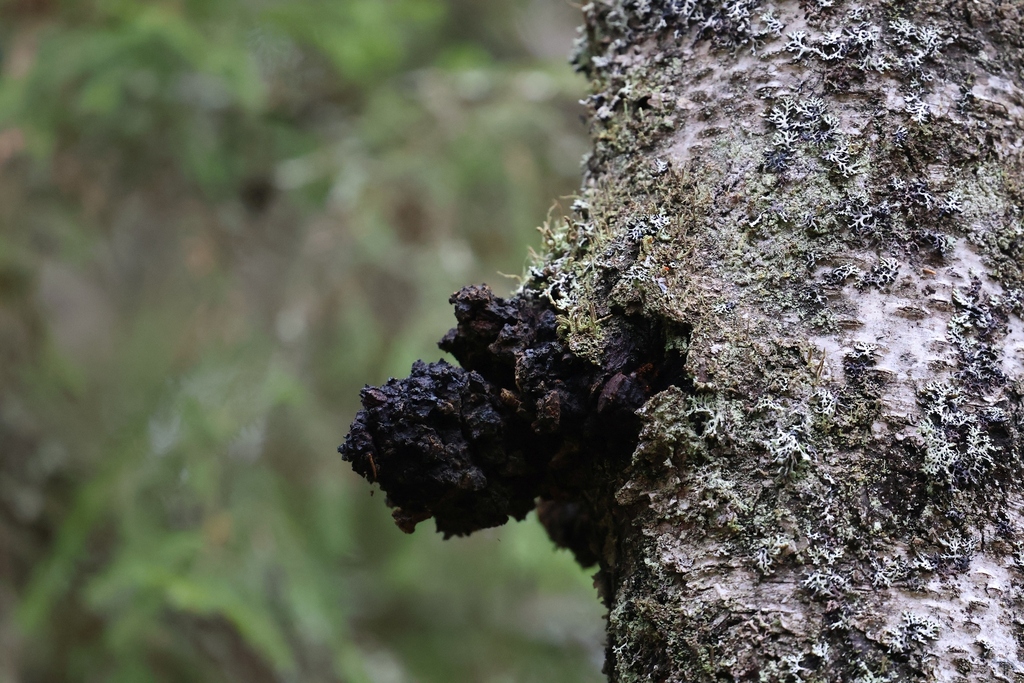
Black cracked chaga canker growing from a birch trunk
Not a food mushroomintermediate

Chaga

Inonotus obliquus / Clinker polypore

A black, cracked, charcoal-like canker on birch trunks whose rusty orange interior is used for tea.

Photo: Andrejus Gaidamavičius, CC BY
Compiled by Mushroom Forage Map field deskExpert review pendingContent checked
Identification warning

Not a food mushroom. Heavy, long-term chaga tea use has been linked to oxalate kidney injury.

Season
Visible year-round
Habitat
Living and dying birch in boreal and cool temperate forests of the Northern Hemisphere
Underside
No pores on the visible canker; the true fruiting layer forms under bark after the tree dies
Spore evidence
Rarely obtained; the sterile canker does not release spores

Where it grows

Tracked records and known growing zone

Explore on the field map
Loading map…
Squares: where people recorded it, brighter where more people did
Verified records
7,876
People who recorded it
3,163
Most records (northern hemisphere)
Apr–May, Jul–Oct
Records span
2004–2026

Research-grade iNaturalist records, snapshot Aug 27, 2026. The growing zone combines areas where different people have repeatedly verified it. Records show where people looked and found it, not current abundance or permission to gather.

Observation season

When field records occur

Choose a hemisphere · All recorded years; not a current forecast.

Choose the hemisphere you want to study. Country detection is approximate and some countries span the equator.

Compare before concluding

Lookalikes to rule out

Birch burls

harmless

Burls are woody bark swellings with no orange, corky interior.

Tinder fungus is a gray, hoof-shaped bracket with a pore surface underneath.

Black knot

harmless

Black knot forms swollen black galls on cherry and plum branches, not on birch trunks.

Identification

Chaga is a sterile growth rather than a typical mushroom. It bursts from a birch trunk as a hard, deeply cracked black mass that looks like burnt charcoal. Break a fragment and the inside is a rusty yellow-orange cork. It is almost always on birch; the same appearance on another tree calls for caution.

Uses and ecology

Chaga is a long-lived parasite of birch that slowly decays the heartwood. It is simmered as tea across northern Europe and Asia. Growth is slow, so harvest only a portion, never cut into the tree, and avoid trees on protected land. Case reports describe kidney injury from large daily amounts because chaga is very high in oxalate.

Memorable fact

The true spore-bearing stage appears only after the host tree dies, as a thin crust hidden under loosened bark.

Sources

Back to the fungi library