The Living Fungi LibraryFungi LibraryMushroom Forage Map
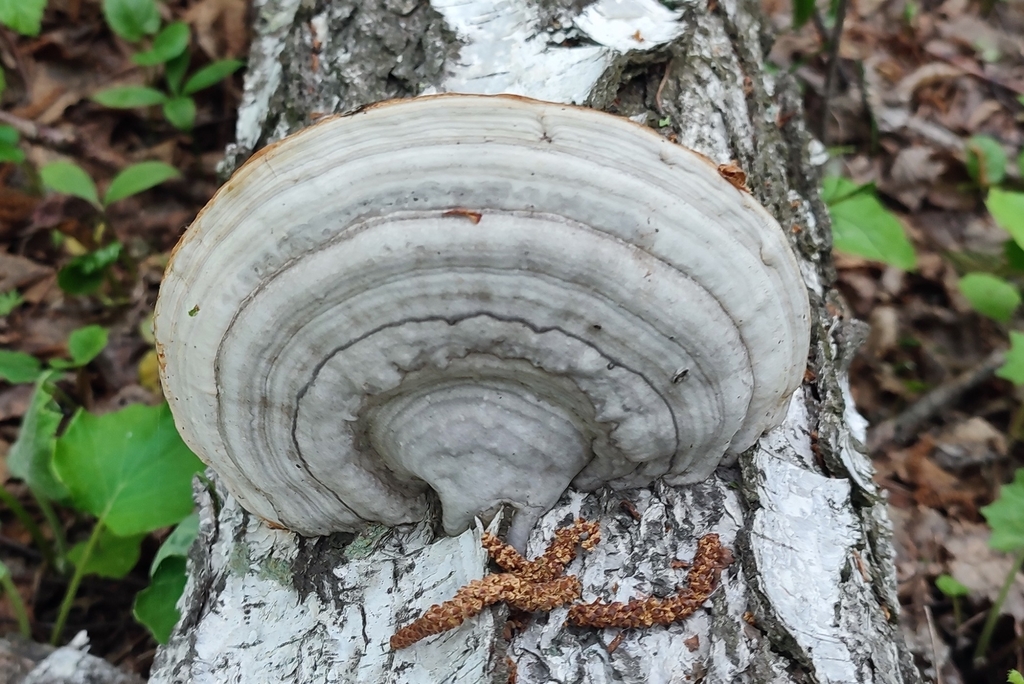
Gray hoof-shaped tinder fungus bracket on a birch
Not a food mushroombeginner-friendly group

Tinder Fungus

Fomes fomentarius / Hoof fungus

A gray, hoof-shaped perennial bracket on birch and beech, used for millennia to carry fire.

Photo: Yurii Basov, CC BY
Compiled by Mushroom Forage Map field deskExpert review pendingContent checked
Identification warning

Woody and not a food mushroom.

Season
Year-round; perennial
Habitat
Birch, beech, and other hardwoods
Underside
Brown pore surface
Spore evidence
White

Where it grows

Tracked records and known growing zone

Explore on the field map
Loading map…
Squares: where people recorded it, brighter where more people did
Verified records
27,221
People who recorded it
9,914
Most records (northern hemisphere)
Mar–May, Aug–Oct
Records span
1983–2026

Research-grade iNaturalist records, snapshot Aug 27, 2026. The growing zone combines areas where different people have repeatedly verified it. Records show where people looked and found it, not current abundance or permission to gather.

Observation season

When field records occur

Choose a hemisphere · All recorded years; not a current forecast.

Choose the hemisphere you want to study. Country detection is approximate and some countries span the equator.

Compare before concluding

Lookalikes to rule out

Artist's conk has a flat shape and a white pore surface that bruises brown.

Willow bracket

harmless

Phellinus igniarius is darker, cracked, and very hard.

Birch polypore is smooth, white, and soft by comparison.

Identification

The bracket is shaped like a horse's hoof, gray to brown with concentric ridges marking years of growth. The underside is a brown pore surface. Inside, a soft felty layer sits under the hard crust.

Uses and ecology

Tinder fungus decays birch and beech. Its inner layer, called amadou, was processed into a felt used to catch sparks and carry fire, and for hats and wound dressings.

Memorable fact

Ötzi the Iceman carried tinder fungus as part of a fire-starting kit.

Sources

Back to the fungi library