The Living Fungi LibraryFungi LibraryMushroom Forage Map
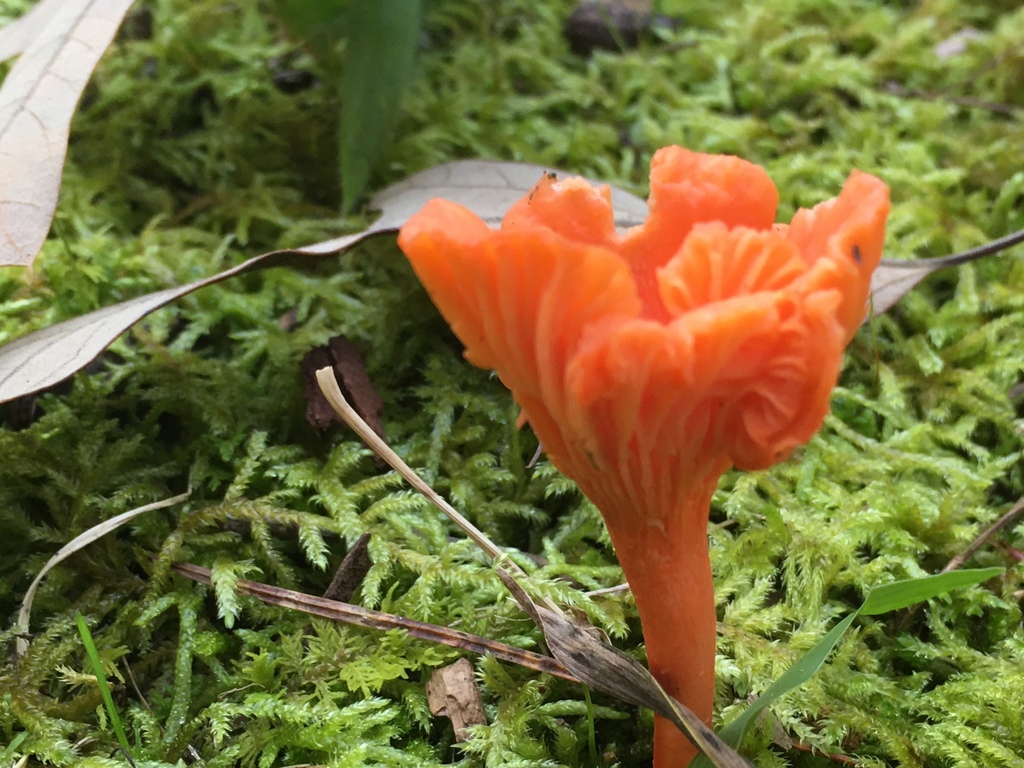
Small cinnabar-red chanterelle with blunt ridges in moss
Edibleintermediate

Cinnabar Chanterelle

Cantharellus cinnabarinus / Red chanterelle

A small, brilliant red-pink chanterelle of eastern North American hardwood forests.

Photo: Becky Dill, CC0
Compiled by Mushroom Forage Map field deskExpert review pendingContent checked
Identification warning

Small red mushrooms include waxcaps and other species. Confirm blunt ridges rather than true gills.

Season
Summer to autumn
Habitat
Soil and moss in oak and mixed hardwood forests of eastern North America
Underside
Pinkish, blunt, forked false gills
Spore evidence
Pinkish white

Where it grows

Tracked records and known growing zone

Explore on the field map
Loading map…
Squares: where people recorded it, brighter where more people did
Verified records
5,159
People who recorded it
3,529
Most records (northern hemisphere)
Jul–Aug
Records span
2001–2026

Research-grade iNaturalist records, snapshot Aug 27, 2026. The growing zone combines areas where different people have repeatedly verified it. Records show where people looked and found it, not current abundance or permission to gather.

Observation season

When field records occur

Choose a hemisphere · All recorded years; not a current forecast.

Choose the hemisphere you want to study. Country detection is approximate and some countries span the equator.

Compare before concluding

Lookalikes to rule out

Waxcaps have thick, waxy, true gills and usually grow in grassland.

Jack-o'-lanterns are larger, orange, clustered on wood, and have true gills.

Red Russula species

toxic

Russulas have brittle white gills and a chalky stem that snaps.

Identification

Cinnabar chanterelles are small, rarely wider than a few centimeters, and vivid cinnabar red to pink. The underside has shallow, blunt, forked ridges in a similar color that run down the stem. Flesh is firm and white inside. They often fruit in large numbers along trails after summer rain.

Uses and ecology

These mycorrhizal mushrooms associate mainly with oaks. Their color survives cooking better than most, but their size means collecting many for a meal. Take a modest share from each patch.

Memorable fact

The red color comes from canthaxanthin, a carotenoid also used as a food coloring.

Sources

Back to the fungi library