The Living Fungi LibraryFungi LibraryMushroom Forage Map
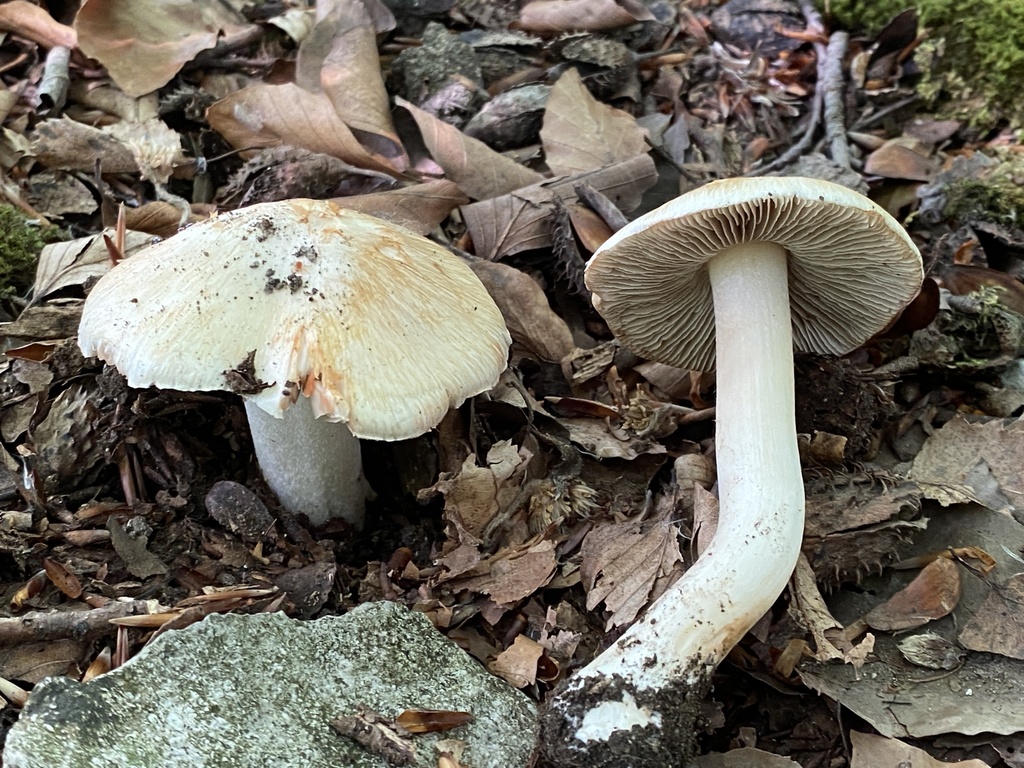
Cream deadly fibrecap with a splitting, fibrous cap
Deadlyexpert-only

Deadly Fibrecap

Inosperma erubescens / Inocybe erubescens; red-staining inocybe

A cream fibrous-capped spring mushroom that reddens with age and has caused fatal muscarine poisoning.

Photo: Enrico Tomschke, CC BY
Compiled by Mushroom Forage Map field deskExpert review pendingContent checked
Toxicity warning

Potentially fatal. Contains high levels of muscarine. Often confused with St George's mushroom.

Season
Late spring to summer
Habitat
Beech and other broadleaf woods, parks, and path edges, often on chalk
Underside
Crowded gills, pale then olive brown, reddening
Spore evidence
Dull brown

Where it grows

Tracked records and known growing zone

Explore on the field map
Loading map…
Squares: where people recorded it, brighter where more people did
Verified records
84
People who recorded it
60
Most records (northern hemisphere)
May–Jun
Records span
2008–2026

Research-grade iNaturalist records, snapshot Aug 27, 2026. The growing zone combines areas where different people have repeatedly verified it. Records show where people looked and found it, not current abundance or permission to gather.

Observation season

When field records occur

Choose a hemisphere · All recorded years; not a current forecast.

Choose the hemisphere you want to study. Country detection is approximate and some countries span the equator.

Compare before concluding

Lookalikes to rule out

St George's mushroom has a smooth cap, white spores, a mealy smell, and does not redden.

The miller

deadly

The miller smells of meal and has pink spores.

Other fibrecaps

toxic

Most Inocybe contain muscarine; none are suitable for eating.

Identification

The cap is conical to bell-shaped and cream to white, with radiating fibers and a margin that often splits. With age or bruising, cap, gills, and stem turn brick red. The spore print is dull brown.

Why it matters

Muscarine poisoning causes sweating, salivation, tears, and a dangerously slow heart rate. Deaths have followed meals of this species, usually after confusion with spring edibles.

Memorable fact

It fruits in the same weeks and places as St George's mushroom, which is why it is often called its deadly double.

Sources

Back to the fungi library