The Living Fungi LibraryFungi LibraryMushroom Forage Map
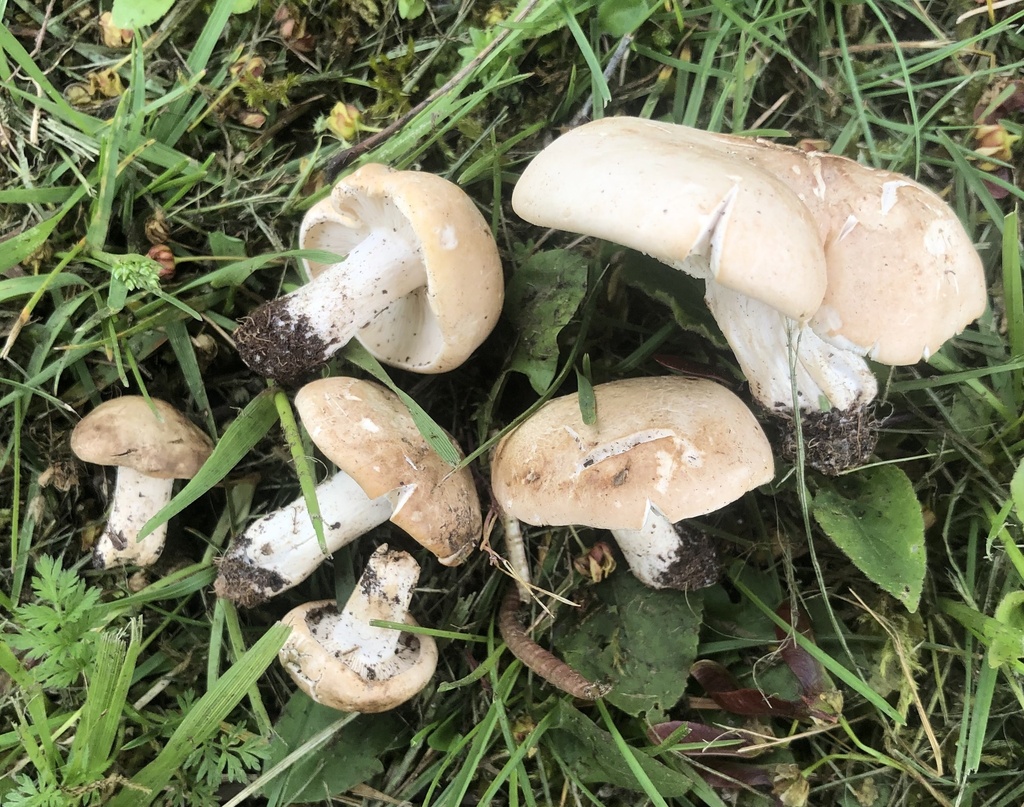
Stout white St George's mushrooms in grass
Edibleexpert-only

St George's Mushroom

Calocybe gambosa

A stocky white spring mushroom of grassland and hedgerows with crowded white gills and a strong mealy smell.

Photo: Lucian Clanet, CC BY
Compiled by Mushroom Forage Map field deskExpert review pendingContent checked
Identification warning

The deadly fibrecap and livid pinkgill also fruit in spring. Confirm a white spore print, mealy smell, and no reddening.

Season
Spring, around late April and May in Europe
Habitat
Grassland edges, hedgerows, and woodland margins, often in rings
Underside
Crowded white to cream gills
Spore evidence
White

Where it grows

Tracked records and known growing zone

Explore on the field map
Loading map…
Squares: where people recorded it, brighter where more people did
Verified records
1,767
People who recorded it
1,094
Most records (northern hemisphere)
Apr–May
Records span
2004–2026

Research-grade iNaturalist records, snapshot Aug 27, 2026. The growing zone combines areas where different people have repeatedly verified it. Records show where people looked and found it, not current abundance or permission to gather.

Observation season

When field records occur

Choose a hemisphere · All recorded years; not a current forecast.

Choose the hemisphere you want to study. Country detection is approximate and some countries span the equator.

Compare before concluding

Lookalikes to rule out

Deadly fibrecap has a fibrous, splitting cap, brown spores, and flesh that reddens with age.

Livid pinkgill drops a pink spore print and its gills turn pink.

Fool's funnel is small with decurrent gills and a frosty cap.

Identification

Caps are white to cream, thick-fleshed, and often irregular. The gills are very crowded and white. The stout stem has no ring or volva. The smell is strongly mealy, like fresh flour or cucumber. It fruits in spring, often in rings in grass.

Uses and ecology

St George's mushroom is a traditional spring edible in Europe, named for its appearance near St George's Day on 23 April. Its spring timing overlaps with dangerous white mushrooms, so every specimen needs checking.

Memorable fact

Rings of this mushroom can persist in the same pasture for decades.

Sources

Back to the fungi library