The Living Fungi LibraryFungi LibraryMushroom Forage Map
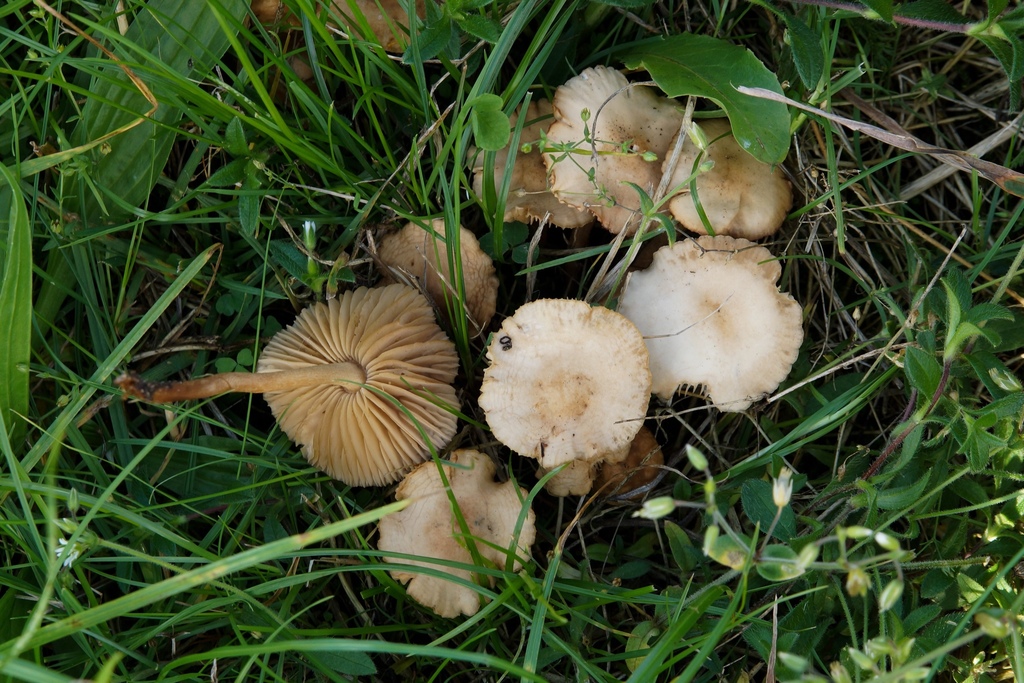
Tan fairy ring mushrooms scattered in a lawn
Edibleexpert-only

Fairy Ring Mushroom

Marasmius oreades / Scotch bonnet

A small tan lawn mushroom with widely spaced gills and a tough, bendable stem, growing in rings.

Photo: Kasper Malmberg, CC BY
Compiled by Mushroom Forage Map field deskExpert review pendingContent checked
Identification warning

The fool's funnel grows in the same lawns and is poisonous. Check gill spacing and attachment on every specimen.

Season
Late spring to autumn after rain
Habitat
Lawns, pastures, and short grass
Underside
Widely spaced, pale gills, barely attached
Spore evidence
White

Where it grows

Tracked records and known growing zone

Explore on the field map
Loading map…
Squares: where people recorded it, brighter where more people did
Verified records
6,697
People who recorded it
4,190
Most records (northern hemisphere)
Jun–Aug, Oct
Records span
1978–2026

Research-grade iNaturalist records, snapshot Aug 27, 2026. The growing zone combines areas where different people have repeatedly verified it. Records show where people looked and found it, not current abundance or permission to gather.

Observation season

When field records occur

Choose a hemisphere · All recorded years; not a current forecast.

Choose the hemisphere you want to study. Country detection is approximate and some countries span the equator.

Compare before concluding

Lookalikes to rule out

Fool's funnel has crowded, decurrent gills and a frosty white cap.

Small brown lawn mushrooms with rusty-brown spores can contain amatoxins.

Other lawn mushrooms

caution

Collect only where every specimen has been checked; lawns host many small species.

Identification

Caps are tan to buff with a broad central bump, drying paler. The gills are well spaced and barely attached to the stem. The thin stem is tough: twist it and it bends rather than snaps. They grow in rings or arcs, often at the edge of a band of darker grass.

Uses and ecology

Fairy ring mushrooms dry on the lawn and revive after rain, which makes them easy to dry for cooking. Only the caps are used. Avoid lawns treated with chemicals.

Memorable fact

Rings expand outward each year, and some in old pastures are estimated to be centuries old.

Sources

Back to the fungi library