The Living Fungi LibraryFungi LibraryMushroom Forage Map
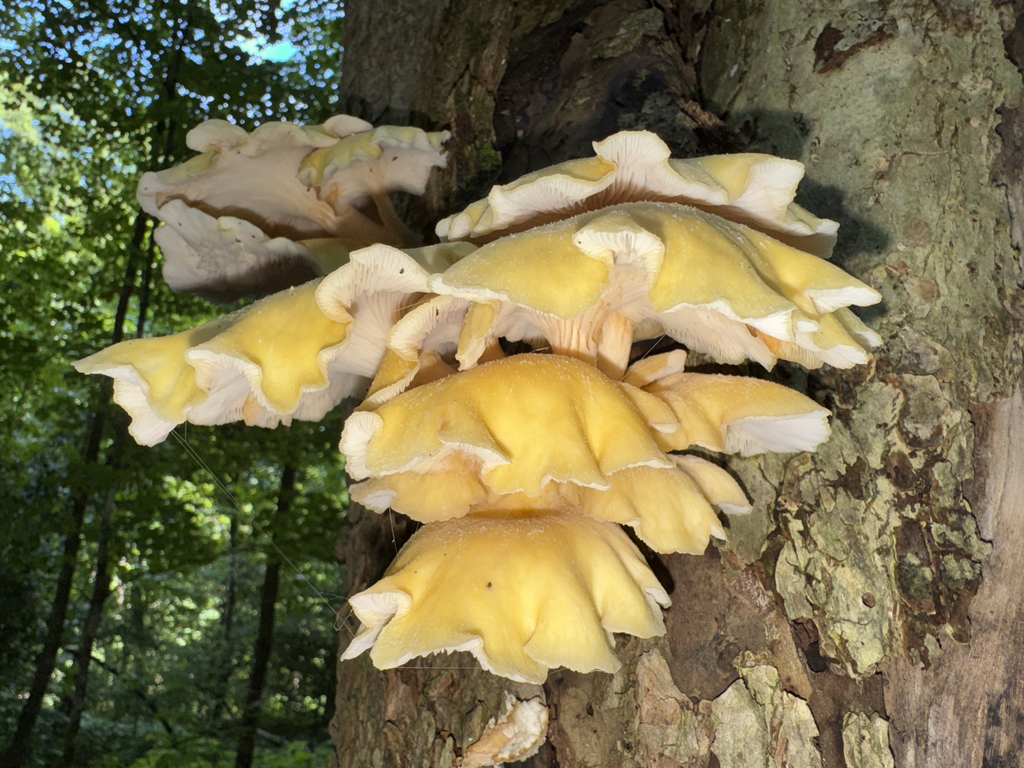
Clusters of bright yellow golden oyster mushrooms on a log
Ediblebeginner-friendly group

Golden Oyster

Pleurotus citrinopileatus

Bright yellow clusters of oyster mushrooms on hardwood; native to East Asia and invasive in North American forests.

Photo: Nick T., CC BY-SA
Compiled by Mushroom Forage Map field deskExpert review pendingContent checked
Identification warning

Check host wood and gill attachment, and confirm the white to pale lilac spore print.

Season
Summer to early autumn
Habitat
Dead elm and other hardwoods; escaped from cultivation in North America
Underside
White gills running down the stem
Spore evidence
White to pale lilac

Where it grows

Tracked records and known growing zone

Explore on the field map
Loading map…
Squares: where people recorded it, brighter where more people did
Verified records
10,915
People who recorded it
5,963
Most records (northern hemisphere)
May–Jul
Records span
2006–2026

Research-grade iNaturalist records, snapshot Aug 27, 2026. The growing zone combines areas where different people have repeatedly verified it. Records show where people looked and found it, not current abundance or permission to gather.

Observation season

When field records occur

Choose a hemisphere · All recorded years; not a current forecast.

Choose the hemisphere you want to study. Country detection is approximate and some countries span the equator.

Compare before concluding

Lookalikes to rule out

Sulphur tuft has greenish-yellow gills that are not decurrent, and purple-brown spores.

Golden Pholiota

caution

Pholiota species are scaly and drop brown spores.

Identification

Golden oysters grow in dense, bouquet-like clusters of bright lemon-yellow caps. The gills are white and run down short, often off-center stems. The flesh is thin and delicate.

Uses and ecology

Golden oysters are cultivated and were first reported wild in North America in the 2010s. Research suggests they can displace native wood-decay fungi, so eating wild ones and not spreading spawn outdoors both help.

Memorable fact

It has spread across much of eastern North America within about two decades of escaping cultivation.

Sources

Back to the fungi library