The Living Fungi LibraryFungi LibraryMushroom Forage Map
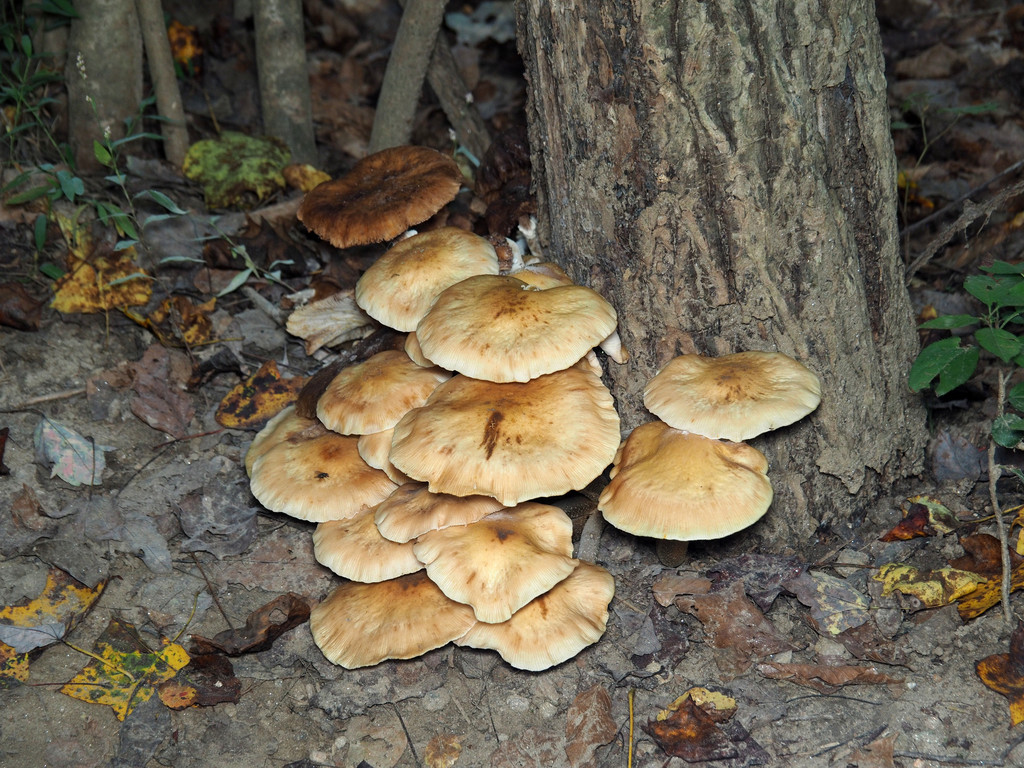
Cluster of honey mushrooms with yellow-brown caps at the base of a tree
Edible with cautionexpert-only

Honey Mushroom

Armillaria mellea / Honey fungus

Dense clusters of honey-colored caps on wood and roots, linked by black bootlace strands under bark.

Photo: Katja Schulz, CC BY
Compiled by Mushroom Forage Map field deskExpert review pendingContent checked
Toxicity warning

Always cook thoroughly; raw or undercooked honey mushrooms cause vomiting. Deadly Galerina grows on the same wood.

Season
Late summer to autumn
Habitat
Stumps, roots, and living trees in hardwood and mixed forests
Underside
White to cream gills, slightly running down the stem
Spore evidence
White

Where it grows

Tracked records and known growing zone

Explore on the field map
Loading map…
Squares: where people recorded it, brighter where more people did
Verified records
9,593
People who recorded it
5,966
Most records (northern hemisphere)
Sep–Oct, Dec
Records span
1997–2026

Research-grade iNaturalist records, snapshot Aug 27, 2026. The growing zone combines areas where different people have repeatedly verified it. Records show where people looked and found it, not current abundance or permission to gather.

Observation season

When field records occur

Choose a hemisphere · All recorded years; not a current forecast.

Choose the hemisphere you want to study. Country detection is approximate and some countries span the equator.

Compare before concluding

Lookalikes to rule out

Galerina leaves a rusty-brown spore print; honey mushrooms leave white.

Sulphur tuft has greenish-yellow gills and a purple-brown spore print.

Jack-o'-lanterns are bright orange throughout and lack a ring.

Identification

Look for dense clusters of honey-yellow to brown caps, often with tiny dark hairs near the center. Gills are white to cream and slightly decurrent. The stem has a white, cottony ring. Peel back bark nearby and you may find flat black bootlace-like strands. The spore print is white, often dusting lower caps.

Uses and ecology

Armillaria species are serious tree pathogens that spread through bootlace rhizomorphs and can kill weakened trees. Many species look alike, and their edibility reputations differ. Cook well and try small amounts.

Memorable fact

Related Armillaria colonies in Oregon cover several square kilometers and are among the largest organisms on Earth.

Sources

Back to the fungi library