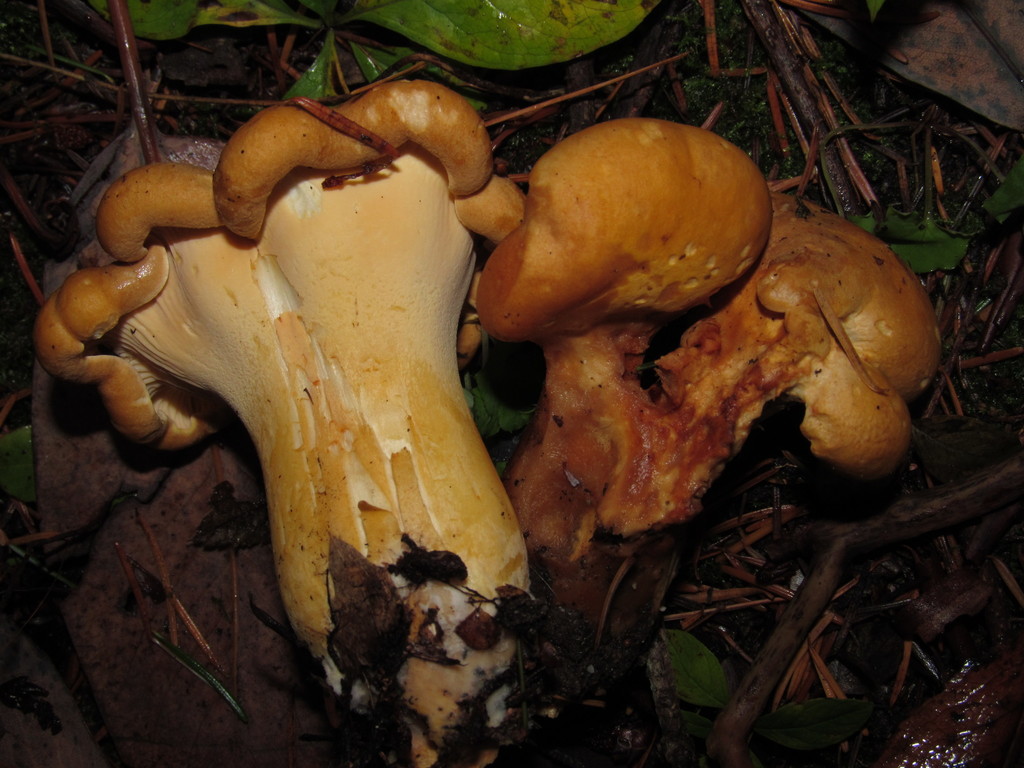
Lookalikes to rule out
False Chanterelle
cautionFalse chanterelle has thin, crowded, true gills that fork repeatedly and a soft orange cap.
Jack-o'-lantern
toxicJack-o'-lanterns grow in clusters from wood and have sharp, true gills.
Woolly chanterelle
toxicTurbinellus floccosus is a scaly, hollow orange vase that causes gastrointestinal illness.
Identification
The cap is orange-yellow and often wavy, with an inrolled margin when young. Underneath, the blunt ridges fork and cross-connect, and often have a faint pinkish cast. The flesh is solid, pale, and stringy when torn, with a mild fruity smell. It grows singly or scattered from soil, not in dense clusters on wood.
Uses and ecology
This chanterelle partners with Douglas-fir and hemlock and supports a large commercial harvest in Oregon, Washington, and British Columbia. Cut rather than rake, and leave small buttons.
Memorable fact
It is the official state mushroom of Oregon.