The Living Fungi LibraryFungi LibraryMushroom Forage Map
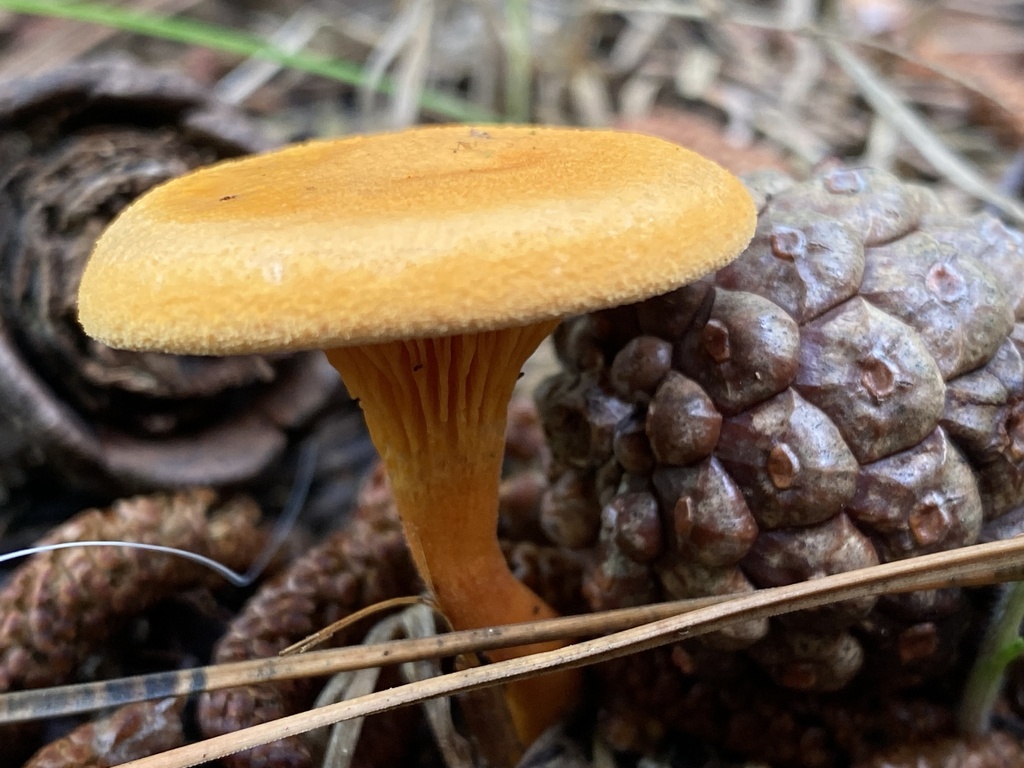
Orange false chanterelle with crowded forked gills
Not a food mushroomintermediate

False Chanterelle

Hygrophoropsis aurantiaca

An orange mushroom with thin, crowded, repeatedly forked true gills, often mistaken for a chanterelle.

Photo: Wendy Herniman, CC BY
Compiled by Mushroom Forage Map field deskExpert review pendingContent checked
Identification warning

Not recommended; it can cause digestive upset. Its main danger is teaching the wrong chanterelle features.

Season
Autumn
Habitat
Conifer litter and rotting wood
Underside
Thin, crowded, true orange gills that fork repeatedly
Spore evidence
White

Where it grows

Tracked records and known growing zone

Explore on the field map
Loading map…
Squares: where people recorded it, brighter where more people did
Verified records
8,312
People who recorded it
4,600
Most records (northern hemisphere)
Sep–Nov
Records span
1997–2026

Research-grade iNaturalist records, snapshot Aug 27, 2026. The growing zone combines areas where different people have repeatedly verified it. Records show where people looked and found it, not current abundance or permission to gather.

Observation season

When field records occur

Choose a hemisphere · All recorded years; not a current forecast.

Choose the hemisphere you want to study. Country detection is approximate and some countries span the equator.

Compare before concluding

Lookalikes to rule out

True chanterelles have blunt, shallow ridges and solid, stringy white flesh.

Identification

The cap is orange, soft, and felty, often darker in the center. The gills are thin, crowded, bright orange, and fork many times. The flesh is thin and soft rather than solid and stringy. It grows on conifer litter or rotting wood.

Why it matters

False chanterelle is not seriously poisonous, but it causes gastrointestinal upset in some people. Learning to separate its true gills from a chanterelle's blunt ridges is basic training for chanterelle hunters.

Memorable fact

Its gills fork so often that the underside can look like a net of orange veins.

Sources

Back to the fungi library