The Living Fungi LibraryFungi LibraryMushroom Forage Map
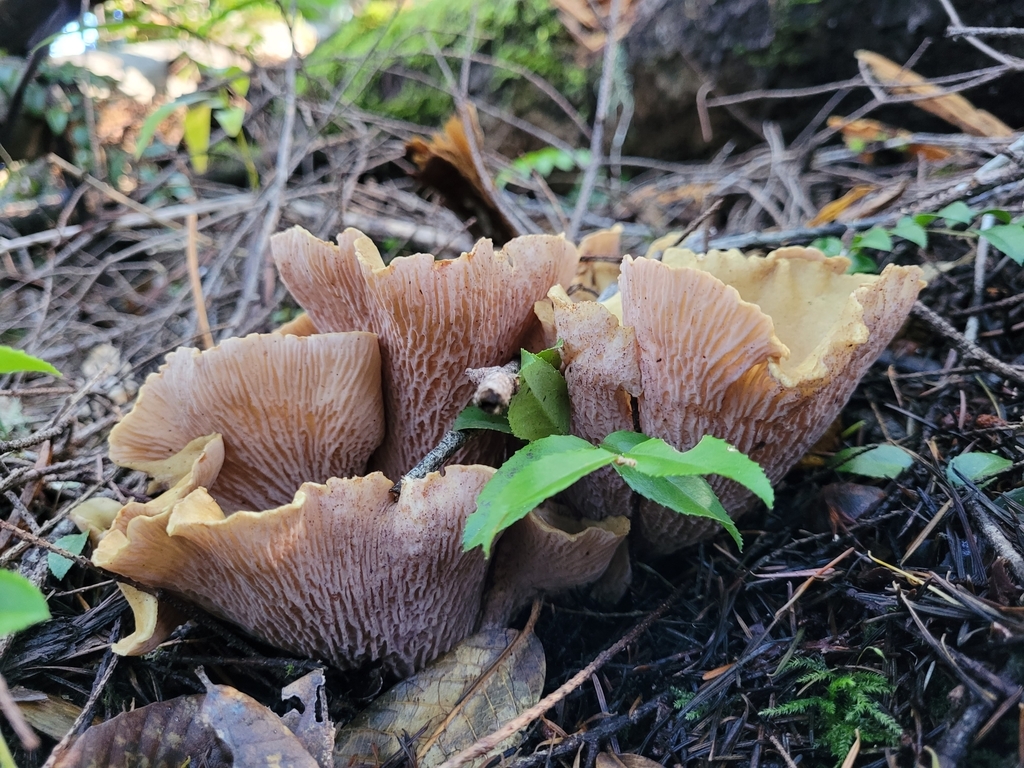
Purple-tan pig's ear fungus with wrinkled underside
Edibleintermediate

Pig's Ear

Gomphus clavatus

A purple, club-shaped relative of chanterelles with a wrinkled, veined underside, declining in parts of Europe.

Photo: Mandy Hackney, CC BY
Compiled by Mushroom Forage Map field deskExpert review pendingContent checked
Identification warning

Protected or red-listed in several European countries. The scaly vase chanterelle is a toxic lookalike.

Season
Summer to autumn
Habitat
Old conifer forests, often in deep needle litter
Underside
Wrinkled, vein-like violet ridges
Spore evidence
Ochre yellow

Where it grows

Tracked records and known growing zone

Explore on the field map
Loading map…
Squares: where people recorded it, brighter where more people did
Verified records
1,364
People who recorded it
918
Most records (northern hemisphere)
Aug–Nov
Records span
1991–2026

Research-grade iNaturalist records, snapshot Aug 27, 2026. The growing zone combines areas where different people have repeatedly verified it. Records show where people looked and found it, not current abundance or permission to gather.

Observation season

When field records occur

Choose a hemisphere · All recorded years; not a current forecast.

Choose the hemisphere you want to study. Country detection is approximate and some countries span the equator.

Compare before concluding

Lookalikes to rule out

Woolly chanterelle

toxic

Turbinellus floccosus is orange with coarse scales and a hollow vase.

Black trumpet is thin, hollow, and charcoal gray.

Violet corals

caution

Coral fungi branch upward and lack the flat-topped cap.

Identification

Young fruiting bodies are purple clubs that widen into flat-topped, lopsided vases with tan to lilac tops. The underside is covered in wrinkled, vein-like violet ridges running down the stem. Several often fuse at the base. The flesh is firm and white.

Uses and ecology

Pig's ear depends on old, undisturbed conifer forest and has declined in much of Europe. Where it is common, as in parts of western North America, harvest lightly. Where it is listed, leave it.

Memorable fact

It is one of the few mushrooms on the European Red List of threatened fungi that is also a traditional edible.

Sources

Back to the fungi library