The Living Fungi LibraryFungi LibraryMushroom Forage Map
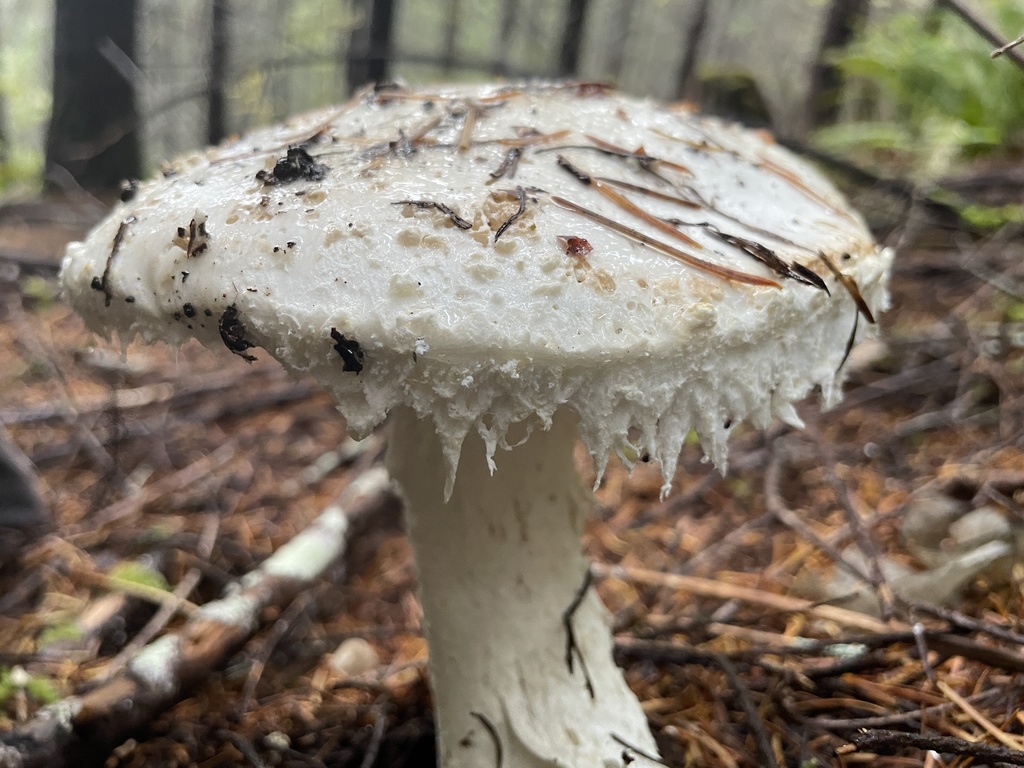
Shaggy white Smith's amanita with cottony stem
Poisonousexpert-only

Smith's Amanita

Amanita smithiana

A shaggy white Amanita of Pacific Northwest conifer forests that causes delayed kidney failure.

Photo: Hilary Rose Dawson, CC BY
Compiled by Mushroom Forage Map field deskExpert review pendingContent checked
Toxicity warning

Poisonous. Causes delayed kidney injury that can require dialysis. It is often mistaken for matsutake.

Season
Autumn
Habitat
Conifer and mixed forests of the Pacific Northwest
Underside
Crowded white gills
Spore evidence
White

Where it grows

Tracked records and known growing zone

Explore on the field map
Loading map…
Squares: where people recorded it, brighter where more people did
Verified records
185
People who recorded it
137
Most records (northern hemisphere)
Oct–Nov
Records span
2002–2026

Research-grade iNaturalist records, snapshot Aug 27, 2026. The growing zone combines areas where different people have repeatedly verified it. Records show where people looked and found it, not current abundance or permission to gather.

Observation season

When field records occur

Choose a hemisphere · All recorded years; not a current forecast.

Choose the hemisphere you want to study. Country detection is approximate and some countries span the equator.

Compare before concluding

Lookalikes to rule out

Matsutake has a spicy odor, a sheathing ring, and no scaly, rooting base.

Matsutake

deadly

The Asian and European matsutake shares the same field test: odor and stem base.

Catathelasma

caution

Catathelasma is larger and has a double ring and decurrent gills.

Identification

The cap and stem are white and covered with cottony to shaggy veil fragments. The stem tapers into a rooting base with bands of scales. It has a bleach-like or chlorine smell. It lacks the spicy, cinnamon odor of matsutake.

Why it matters

Smith's amanita contains an amino acid that damages the kidneys. Early gastrointestinal symptoms can seem mild, but kidney failure can follow days later. Most reported cases involved people seeking matsutake.

Memorable fact

The kidney toxin in this mushroom is chemically unrelated to the amatoxins in death caps.

Sources

Back to the fungi library