The Living Fungi LibraryFungi LibraryMushroom Forage Map
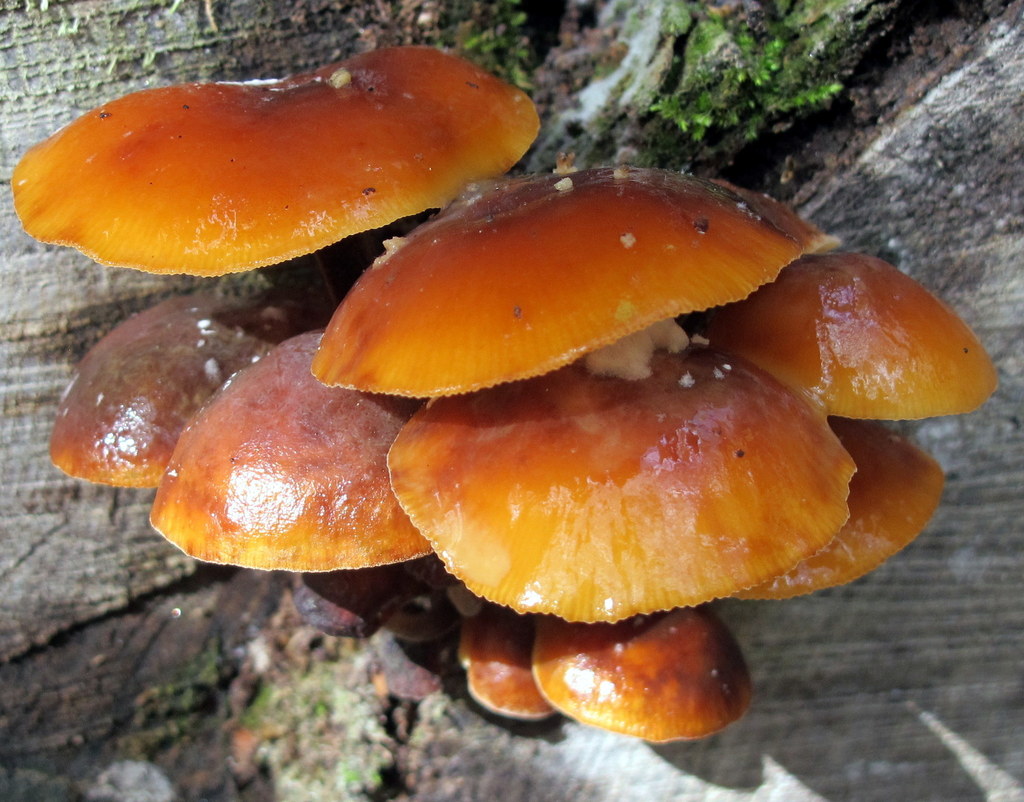
Glossy orange velvet shank caps in a cluster on a log
Edibleexpert-only

Velvet Shank

Flammulina velutipes / Wild enoki; velvet foot

A cold-season cluster of sticky orange-brown caps on dead hardwood, with a velvety dark stem.

Photo: mycowalt, CC BY-SA
Compiled by Mushroom Forage Map field deskExpert review pendingContent checked
Identification warning

Deadly Galerina grows on wood in the same cold months. Check for a white spore print and the absence of a ring.

Season
Late autumn through winter, even after frost
Habitat
Dead or dying hardwood, especially elm, willow, and ash
Underside
Pale yellow to cream gills
Spore evidence
White

Where it grows

Tracked records and known growing zone

Explore on the field map
Loading map…
Squares: where people recorded it, brighter where more people did
Verified records
6,951
People who recorded it
3,658
Most records (northern hemisphere)
Oct–Jan
Records span
1980–2026

Research-grade iNaturalist records, snapshot Aug 27, 2026. The growing zone combines areas where different people have repeatedly verified it. Records show where people looked and found it, not current abundance or permission to gather.

Observation season

When field records occur

Choose a hemisphere · All recorded years; not a current forecast.

Choose the hemisphere you want to study. Country detection is approximate and some countries span the equator.

Compare before concluding

Lookalikes to rule out

Galerina has a ring or ring zone and a rusty-brown spore print.

Sulphur tuft has greenish-yellow gills and a purple-brown spore print.

Identification

Caps are glossy, sticky, and orange to tawny brown, darker in the center. The gills are pale yellow. The stem is the key feature: pale near the cap and dark brown and velvety toward the base. It grows in tight clusters on wood in cold weather and has no ring.

Uses and ecology

Velvet shank decays dead hardwood and tolerates freezing. The white, long-stemmed enoki sold in stores is grown from related strains in dark, carbon-dioxide-rich conditions, which is why it looks so different.

Memorable fact

Fruiting bodies can freeze solid and thaw to keep releasing spores.

Sources

Back to the fungi library