The Living Fungi LibraryFungi LibraryMushroom Forage Map
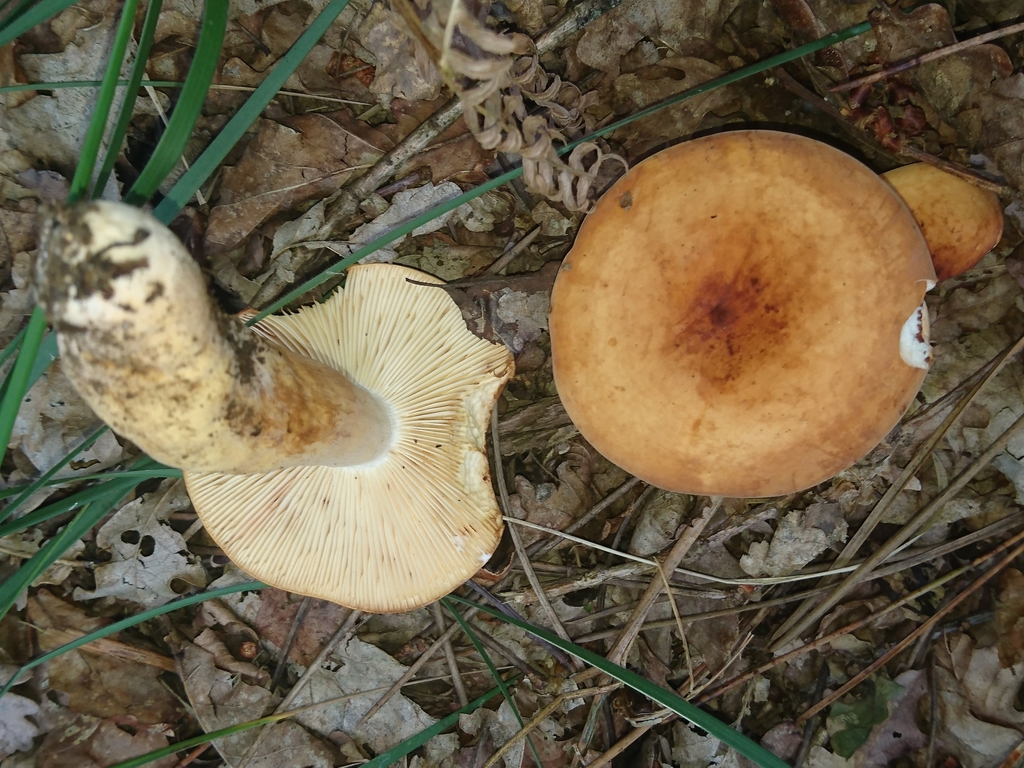
Orange-brown weeping milk cap beside a cut specimen
Edibleintermediate

Weeping Milk Cap

Lactifluus volemus / Voluminous-latex milky

An orange-brown milk cap that releases abundant white latex staining brown, with a fishy smell.

Photo: Jose Castro, CC BY
Compiled by Mushroom Forage Map field deskExpert review pendingContent checked
Identification warning

Other orange milk caps release acrid latex. Confirm mild, abundant white latex that stains brown.

Season
Summer
Habitat
Hardwood and mixed forests
Underside
Crowded cream gills bruising brown
Spore evidence
White

Where it grows

Tracked records and known growing zone

Explore on the field map
Loading map…
Squares: where people recorded it, brighter where more people did
Verified records
1,596
People who recorded it
952
Most records (northern hemisphere)
Jul–Aug
Records span
1986–2026

Research-grade iNaturalist records, snapshot Aug 27, 2026. The growing zone combines areas where different people have repeatedly verified it. Records show where people looked and found it, not current abundance or permission to gather.

Observation season

When field records occur

Choose a hemisphere · All recorded years; not a current forecast.

Choose the hemisphere you want to study. Country detection is approximate and some countries span the equator.

Compare before concluding

Lookalikes to rule out

Woolly milk cap is pinkish with a bearded margin and acrid latex.

Corrugated milk cap

harmless

Lactifluus corrugis has a wrinkled cap and is also edible.

Red-hot milk cap

toxic

Lactarius rufus has sparse, very acrid latex.

Identification

The cap is orange-brown to tawny and velvety. Cut the gills and white latex pours out, staining brown as it dries. The flesh smells fishy, especially as it ages. The stem is colored like the cap.

Uses and ecology

This milk cap partners with hardwoods and conifers in Europe, Asia, and North America. It is widely eaten and fries well.

Memorable fact

A single cut can produce enough latex to drip, which is how it earned the name weeping.

Sources

Back to the fungi library