The Living Fungi LibraryFungi LibraryMushroom Forage Map
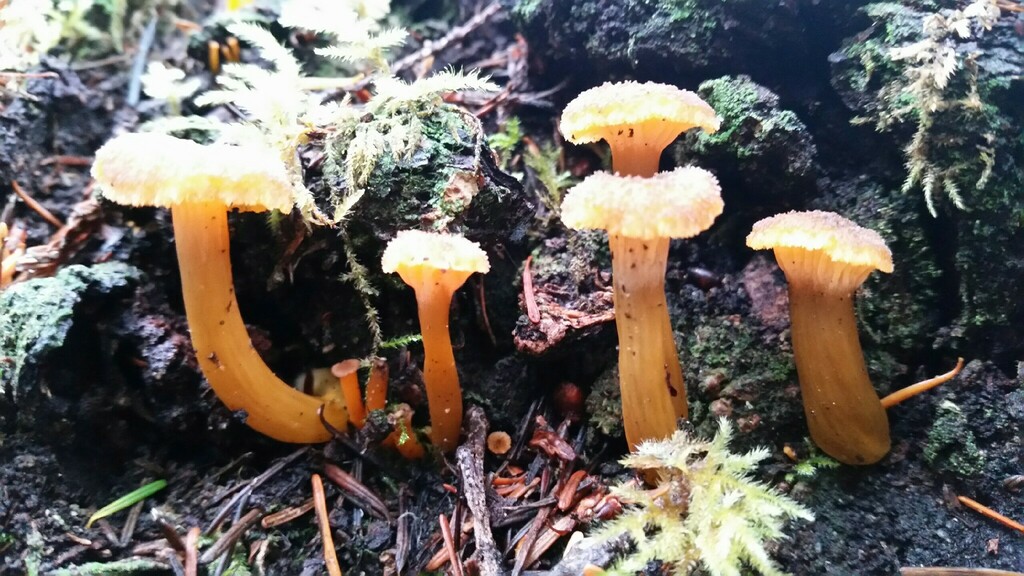
Clustered yellowfoot mushrooms with brown caps and yellow stems
Choice edibleintermediate

Yellowfoot

Craterellus tubaeformis / Winter chanterelle; funnel chanterelle

A slender brown-capped chanterelle relative with a hollow yellow stem and gray forked ridges, fruiting late into winter.

Photo: Alex, CC BY
Compiled by Mushroom Forage Map field deskExpert review pendingContent checked
Identification warning

Small brown mushrooms with true gills, including deadly webcaps, grow in the same moss. Check for hollow stems and blunt ridges.

Season
Autumn to winter
Habitat
Moss, rotting wood, and needle litter in wet conifer forests
Underside
Grayish to yellowish blunt, forked ridges
Spore evidence
White to cream

Where it grows

Tracked records and known growing zone

Explore on the field map
Loading map…
Squares: where people recorded it, brighter where more people did
Verified records
6,852
People who recorded it
3,429
Most records (northern hemisphere)
Sep–Nov
Records span
1994–2026

Research-grade iNaturalist records, snapshot Aug 27, 2026. The growing zone combines areas where different people have repeatedly verified it. Records show where people looked and found it, not current abundance or permission to gather.

Observation season

When field records occur

Choose a hemisphere · All recorded years; not a current forecast.

Choose the hemisphere you want to study. Country detection is approximate and some countries span the equator.

Compare before concluding

Lookalikes to rule out

Deadly webcaps have true rusty-brown gills, a solid stem, and rusty-brown spores; confusion has caused kidney failure.

Golden trumpet

harmless

Craterellus lutescens has a more orange stem and paler, almost smooth underside.

False chanterelle has thin, crowded, true orange gills and a solid stem.

Identification

Yellowfoot has a thin brown cap, often perforated in the center, above a hollow, flattened yellow to orange stem. The underside has gray to yellowish, blunt, forked ridges rather than true gills. It grows in large troops in moss and rotting wood. Break the stem: it is hollow.

Uses and ecology

Yellowfoot fruits after most other mushrooms have finished, making it a late-season favorite in Europe and the Pacific Northwest. It dries well. It is mycorrhizal with conifers in wet forests.

Memorable fact

Fruiting can continue under light snow, which is why many foragers call it the winter chanterelle.

Sources

Back to the fungi library