Comfrey
Study firstComfrey has bell-shaped flowers and also contains liver-toxic alkaloids.
Borago officinalis
Also found as Starflower
A bristly annual with bright blue star-shaped flowers that taste of cucumber.
Sources checked 27 September 2026 · Specialist field review pending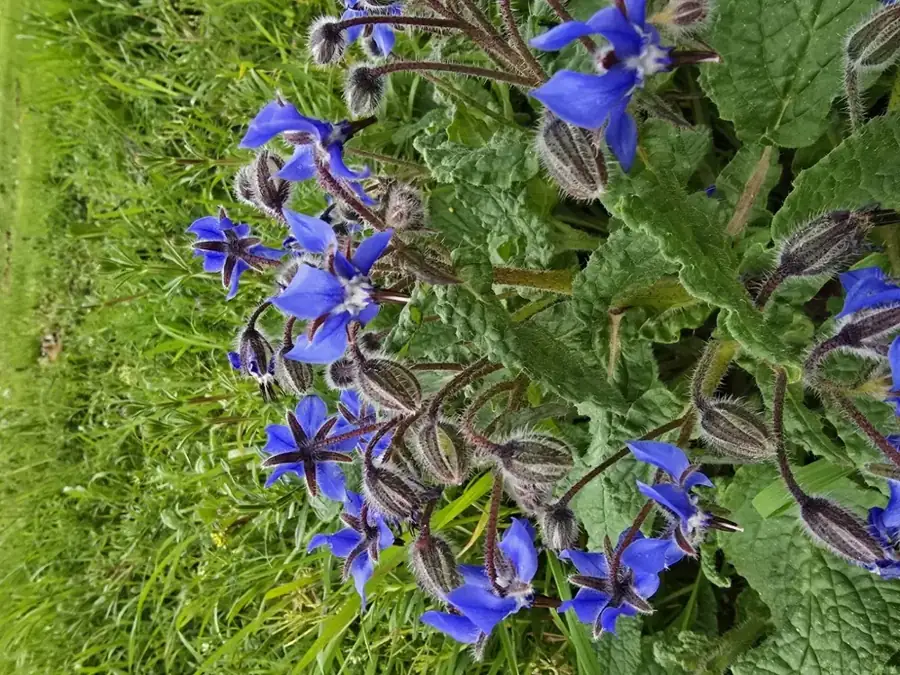
Contains pyrrolizidine alkaloids that can harm the liver. Avoid regular use of leaves, and avoid in pregnancy.
Where it grows
| January | 362 |
|---|---|
| February | 929 |
| March | 2221 |
| April | 4311 |
| May | 2651 |
| June | 1770 |
| July | 2109 |
| August | 1388 |
| September | 917 |
| October | 714 |
| November | 445 |
| December | 321 |
Research-grade iNaturalist records, snapshot Aug 27, 2026. The growing zone combines areas where different people have repeatedly verified it. Records show where people looked and found it, not current abundance or permission to gather.
01 / Learn to see
Stems and leaves covered in stiff, bristly hairs.
Bright blue five-pointed star flowers with a black cone of stamens.
Nodding flower clusters.
These are study prompts, not a complete identification key. Confirm the full plant with a regional flora and an experienced local identifier.
02 / Resolve the differences
Comfrey has bell-shaped flowers and also contains liver-toxic alkaloids.
Foxglove leaves are softer and grow in a rosette; highly toxic.
Selected comparisons only. Other lookalikes may occur locally.
03 / Meet the place
Native to the Mediterranean; naturalized from gardens widely.
Flowers from spring to autumn.
Stage guidance is not a local forecast. Check your climate, elevation and a regional source; no month-shift formula is used here.
04 / Gather with care
Parts discussed: Flower · Young leaf
Use flowers raw as garnish. Young leaves are cooked in small amounts.
Self-seeds readily in gardens.
Preparation & storage essentials05 / Follow the evidence
Checked 27 September 2026. Original editorial synthesis; source institutions have not reviewed or endorsed this guide. Independent botanical field review is pending. Photos illustrate specimens; they do not certify the identity of a plant you find.
Suggest a correction