The Living Fungi LibraryFungi LibraryMushroom Forage Map
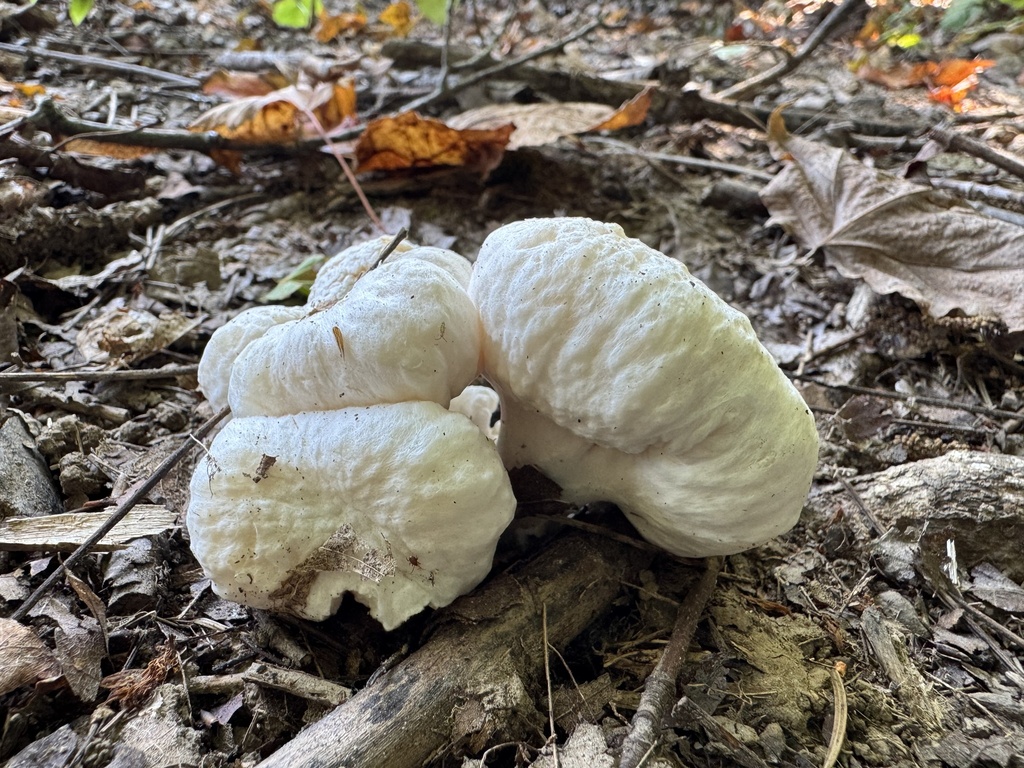
White lumpy aborted entoloma masses on the forest floor
Edibleexpert-only

Aborted Entoloma

Entoloma abortivum / Shrimp of the woods

Whitish, lumpy masses beside gray gilled Entoloma mushrooms, formed where Entoloma and honey mushrooms interact.

Photo: Cullen Hanks, CC BY
Compiled by Mushroom Forage Map field deskExpert review pendingContent checked
Identification warning

Only the lumpy form is widely eaten. Cut every lump: it must have uniform flesh without internal gills.

Season
Autumn
Habitat
Near rotting hardwood and buried wood in eastern North America
Underside
Lumpy form has no gills; gilled form has gray gills turning pink
Spore evidence
Pink

Where it grows

Tracked records and known growing zone

Explore on the field map
Loading map…
Squares: where people recorded it, brighter where more people did
Verified records
5,640
People who recorded it
3,200
Most records (northern hemisphere)
Sep–Oct
Records span
1993–2026

Research-grade iNaturalist records, snapshot Aug 27, 2026. The growing zone combines areas where different people have repeatedly verified it. Records show where people looked and found it, not current abundance or permission to gather.

Observation season

When field records occur

Choose a hemisphere · All recorded years; not a current forecast.

Choose the hemisphere you want to study. Country detection is approximate and some countries span the equator.

Compare before concluding

Lookalikes to rule out

Gilled Entoloma species include toxic ones; do not eat the gilled form without expert help.

Puffballs

harmless

Puffballs are round with smooth skin and uniform white interior.

Identification

Two forms grow together. The gilled form has a gray cap and gills that turn pink, dropping pink spores. Nearby are white to pinkish, irregular lumps with a marbled interior. These lumps form when the fungus and honey mushrooms interact.

Uses and ecology

Recent research suggests Entoloma parasitizes honey mushroom fruiting bodies to make the lumps. The lumps are firm and eaten by experienced foragers.

Memorable fact

For years the lumps were thought to be deformed Entoloma; studies now indicate they are mostly altered honey mushrooms.

Sources

Back to the fungi library