The Living Fungi LibraryFungi LibraryMushroom Forage Map
Pale livid pinkgill with yellowish gills
Poisonousexpert-only

Livid Pinkgill

Entoloma sinuatum

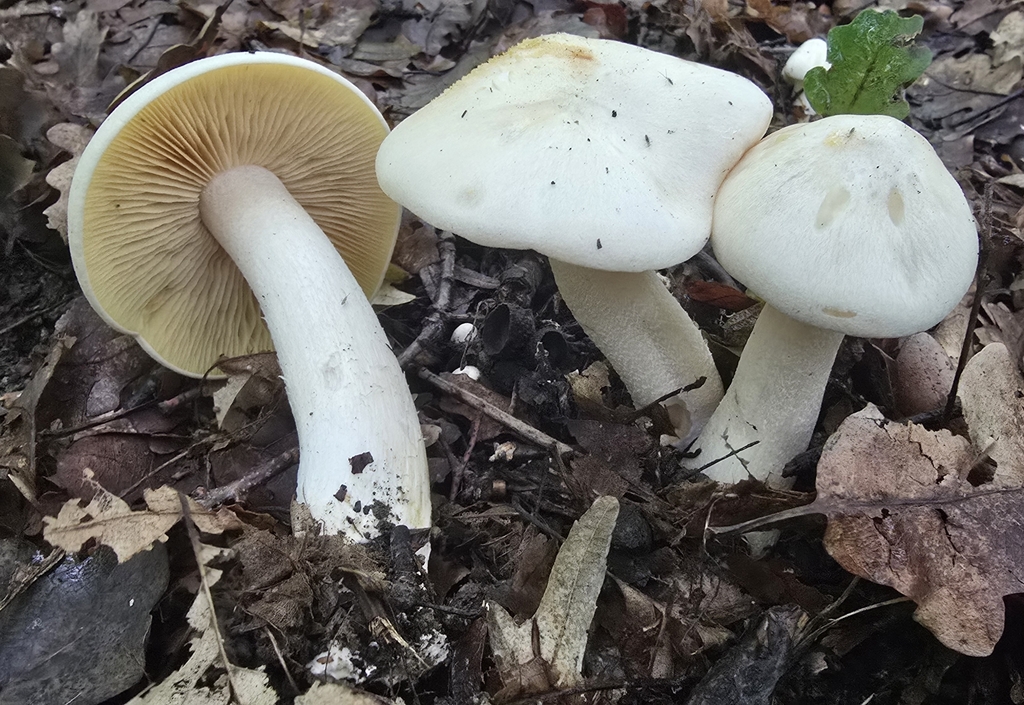
A large pale gray-buff mushroom with yellowish gills that turn pink, a mealy smell, and a pink spore print.

Photo: Paula Nimigean, CC BY
Compiled by Mushroom Forage Map field deskExpert review pendingContent checked
Toxicity warning

Poisonous. Causes severe, prolonged vomiting and diarrhea and has caused hospitalizations.

Season
Late summer to autumn
Habitat
Broadleaf woods, often on clay or chalk
Underside
Notched gills, yellowish when young, turning pink
Spore evidence
Salmon pink

Where it grows

Tracked records and known growing zone

Explore on the field map
Loading map…
Squares: where people recorded it, brighter where more people did
Verified records
171
People who recorded it
115
Most records (northern hemisphere)
Sep–Oct
Records span
1999–2026

Research-grade iNaturalist records, snapshot Aug 27, 2026. The growing zone combines areas where different people have repeatedly verified it. Records show where people looked and found it, not current abundance or permission to gather.

Observation season

When field records occur

Choose a hemisphere · All recorded years; not a current forecast.

Choose the hemisphere you want to study. Country detection is approximate and some countries span the equator.

Compare before concluding

Lookalikes to rule out

Clouded agaric

toxic

Clitocybe nebularis is gray with white spores and decurrent gills.

The miller

caution

The miller is smaller with decurrent gills.

Identification

The cap is large, pale gray to buff, with a silky surface. Young gills are yellowish, turning salmon pink as spores mature. The smell is mealy. The spore print is pink, the decisive check.

Why it matters

This species is responsible for a large share of mushroom poisonings in parts of Europe. It causes severe gastrointestinal illness that can last days.

Memorable fact

Its pleasant, mealy smell resembles several edibles, which adds to its danger.

Sources

Back to the fungi library