The Living Fungi LibraryFungi LibraryMushroom Forage Map
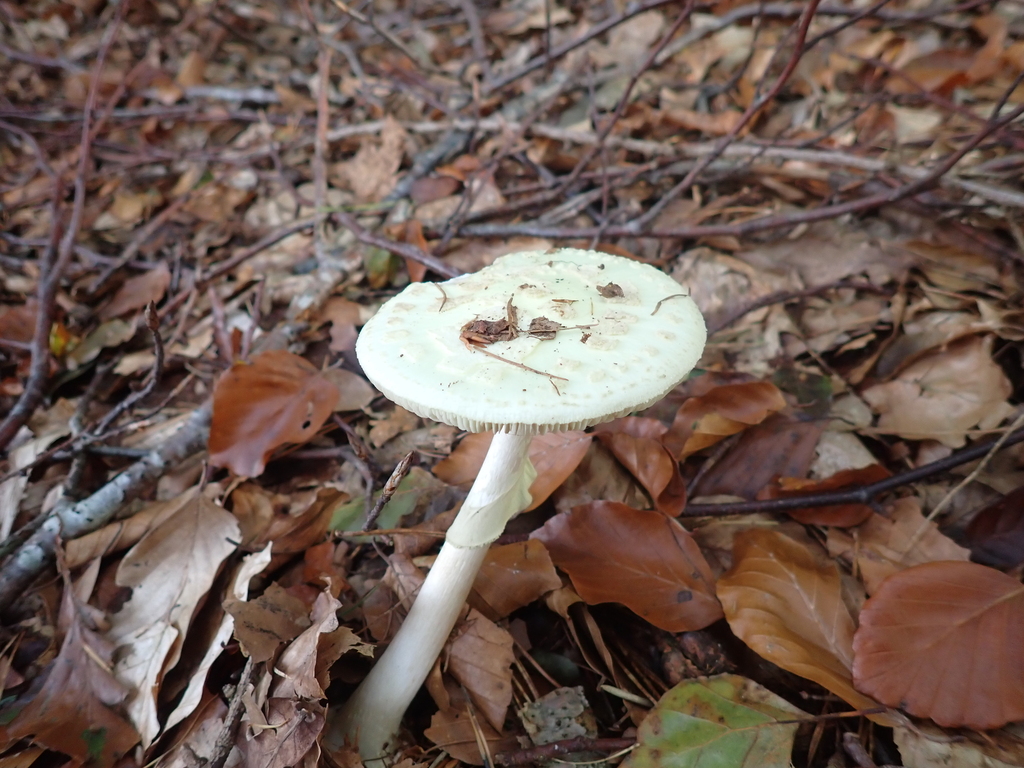
Pale yellow false death cap with patchy veil remnants
Not a food mushroomintermediate

False Death Cap

Amanita citrina / Citron amanita

A pale lemon to white Amanita with a large rimmed bulb and a raw-potato smell, easily confused with the death cap.

Photo: Stuart, CC0
Compiled by Mushroom Forage Map field deskExpert review pendingContent checked
Identification warning

Not a food mushroom. Its main danger is confusion with the death cap and other deadly Amanita.

Season
Summer to autumn
Habitat
Broadleaf and conifer woods on acidic soil
Underside
Free white gills
Spore evidence
White

Where it grows

Tracked records and known growing zone

Explore on the field map
Loading map…
Squares: where people recorded it, brighter where more people did
Verified records
9,430
People who recorded it
4,530
Most records (northern hemisphere)
Sep–Oct
Records span
1983–2026

Research-grade iNaturalist records, snapshot Aug 27, 2026. The growing zone combines areas where different people have repeatedly verified it. Records show where people looked and found it, not current abundance or permission to gather.

Observation season

When field records occur

Choose a hemisphere · All recorded years; not a current forecast.

Choose the hemisphere you want to study. Country detection is approximate and some countries span the equator.

Compare before concluding

Lookalikes to rule out

Death Cap

deadly

Death cap has a loose, sac-like volva rather than a rimmed bulb, and lacks the potato smell.

Identification

The cap is pale lemon yellow to white, often with flat patches of veil. Gills are white. The ring is skirt-like. The stem ends in a large, rounded bulb with a sharp rim where it meets the stem. Crushed flesh smells of raw potato.

Why it matters

False death cap is not considered seriously toxic, but it teaches the most important Amanita lesson: always examine the stem base. It is one of the most common Amanita in European woods.

Memorable fact

The white form, var. alba, is even easier to confuse with the destroying angels.

Sources

Back to the fungi library