The Living Fungi LibraryFungi LibraryMushroom Forage Map
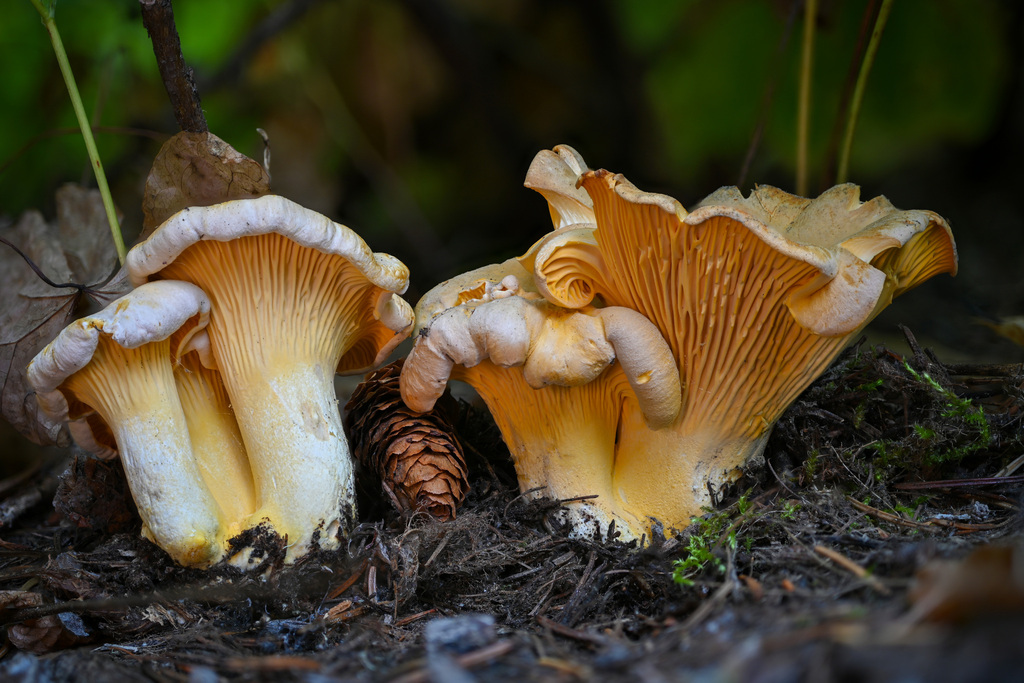
Golden rainbow chanterelles emerging from forest duff
Choice edibleintermediate

Rainbow Chanterelle

Cantharellus roseocanus / Rainbow chanterelle

A western chanterelle with blunt forked ridges, solid pale flesh, and a young pinkish cap bloom.

Photo: Alan Rockefeller, CC BY
Compiled by Mushroom Forage Map field deskExpert review pendingContent checked
Identification warning

True gills or growth in dense clusters on wood point away from chanterelles and toward possible toxic lookalikes.

Season
Late summer through fall
Habitat
Moist spruce and other conifer forest
Underside
Blunt, forked false gills running down the stem
Spore evidence
Pale cream to yellow

Where it grows

Tracked records and known growing zone

Explore on the field map
Loading map…
Squares: where people recorded it, brighter where more people did
Verified records
644
People who recorded it
340
Most records (northern hemisphere)
Aug–Sep
Records span
2008–2026

Research-grade iNaturalist records, snapshot Aug 27, 2026. The growing zone combines areas where different people have repeatedly verified it. Records show where people looked and found it, not current abundance or permission to gather.

Observation season

When field records occur

Choose a hemisphere · All recorded years; not a current forecast.

Choose the hemisphere you want to study. Country detection is approximate and some countries span the equator.

Compare before concluding

Lookalikes to rule out

False Chanterelle

caution

Hygrophoropsis aurantiaca has thin, crowded, blade-like true gills and is orange through the flesh.

Jack-o'-lantern

toxic

Omphalotus forms dense clusters on wood and has sharp true gills; chanterelles grow separately from soil.

Woolly Chanterelle

sickener

Turbinellus floccosus has a scaly orange vase shape and can cause gastrointestinal illness.

Identification

The underside carries blunt, forking ridges that run down the stem. They are folds in the mushroom's flesh, not separate gill blades. The flesh is solid, pale, and often pulls apart like string cheese. Young caps may carry a pinkish bloom over orange, although rain and age can wash that clue away.

An apricot-like odor is helpful supporting evidence, never a verdict on its own.

Uses and ecology

Rainbow chanterelles partner with conifers. They occur with Sitka spruce near the Pacific coast and Engelmann spruce in the Rockies. They are choice edibles when positively identified and thoroughly cooked; a dry saute helps drive off moisture. Like other mycorrhizal mushrooms, they are not practically cultivated.

Memorable fact

The rainbow-colored bloom is temporary, so mushrooms from one patch can look plainly golden after a week of rain.

Sources

Back to the fungi library