Lookalikes to rule out
Jack-o'-lantern
toxicJack-o'-lanterns grow in dense clusters from wood and have sharp, crowded true gills.
False Chanterelle
cautionHygrophoropsis aurantiaca has thin, crowded, repeatedly forked gills and softer orange flesh.
Rainbow Chanterelle
harmlessThe western rainbow chanterelle may have a pinkish cap bloom and is associated with western conifers.
Identification
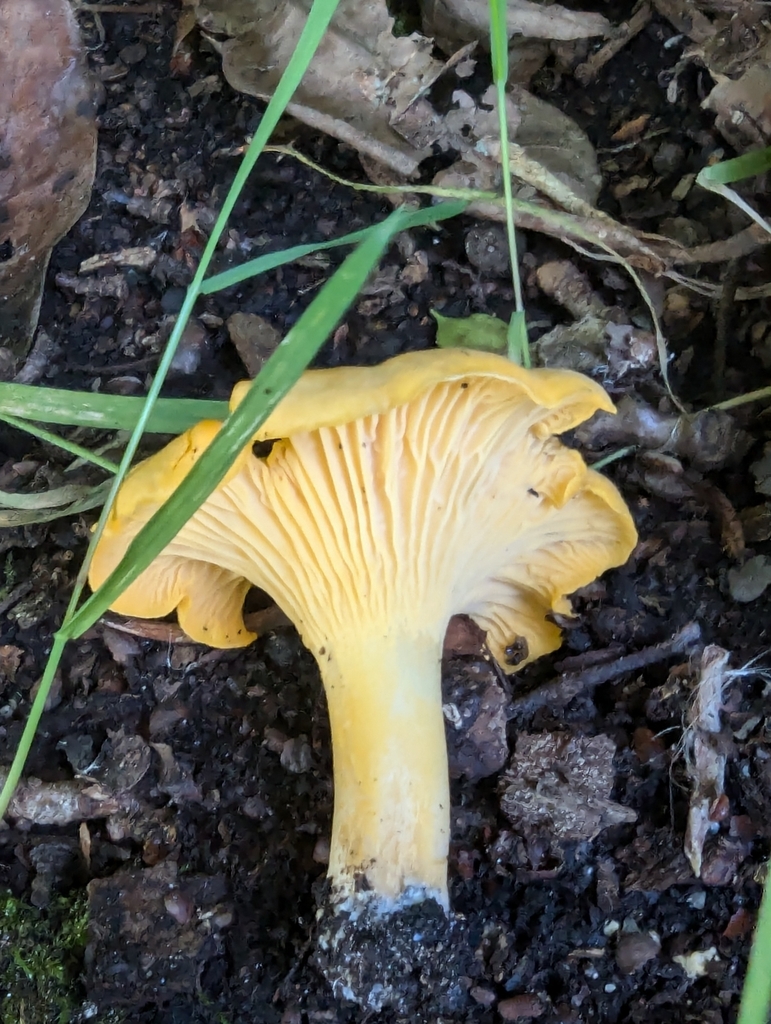
The cap is egg-yellow to deep gold, becoming wavy and funnel shaped with age. Underneath are thick, blunt ridges that fork and cross-connect as they descend the stem. They are folds of the mushroom's flesh, not separate blades. The interior is solid, pale, and often peels into fibrous strips.
A fruity odor can support an identification, but scent varies and is never sufficient. Substrate is critical: true chanterelles arise from soil as mycorrhizal partners, even when buried wood makes the setting confusing.
Uses and ecology
Golden chanterelles are prized cooked mushrooms with a firm texture. The European name C. cibarius has historically been applied too broadly. North America, Asia, and other regions contain related golden species, so a photograph and common name should not be treated as a worldwide species determination.
Chanterelles exchange soil nutrients and water with living trees. That partnership is why they appear in recurring forest patches but resist ordinary farm-style cultivation.
Memorable fact
The false gills are not attached structures; they are wrinkles molded from the cap's own flesh.
Evidence and regional scope
Michael Kuo explains false gills and the regional naming problem: the European species should not be assumed to identify North American chanterelles. Field description and cited specimen evidence. This source supports morphology and ecology, not edibility or preparation advice. Independent review of this profile remains pending.
Sources
MushroomExpert: cantharellus cibarius — morphology, ecology and regional species limits.