The Living Fungi LibraryFungi LibraryMushroom Forage Map
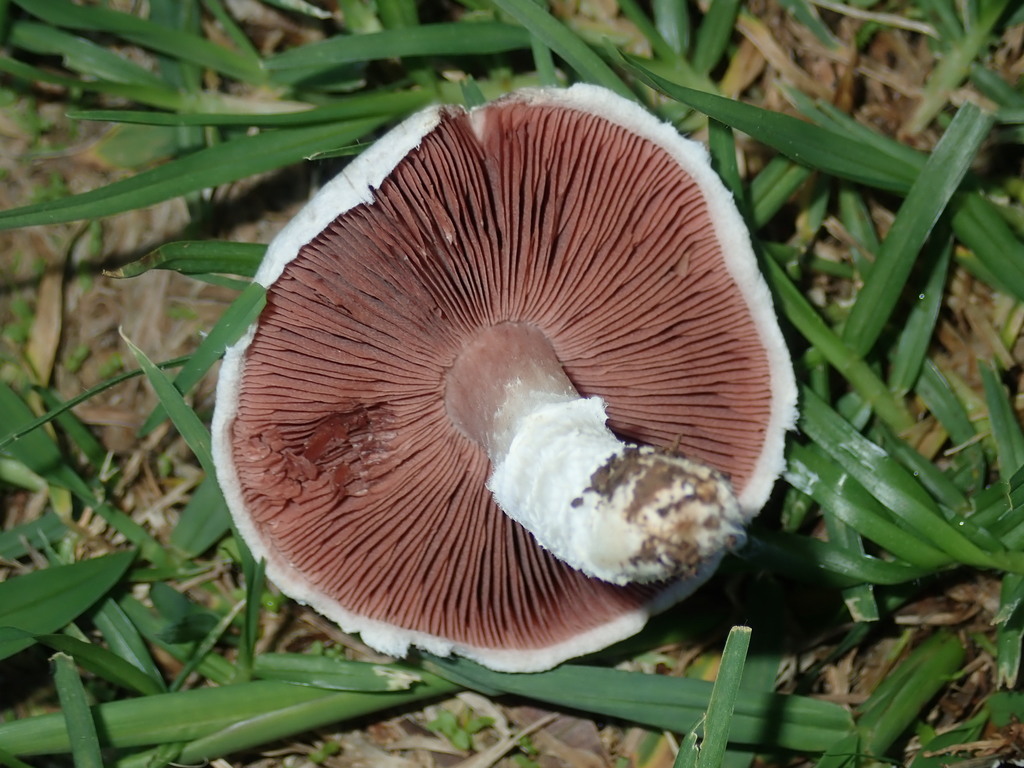
Meadow mushroom turned over to show mature chocolate-brown gills
Edibleexpert-only

Meadow Mushroom

Agaricus campestris / Field mushroom

A white grassland Agaricus whose free gills mature from pink to chocolate brown and whose base has no volva.

Photo: Thomas Mesaglio, CC BY
Compiled by Mushroom Forage Map field deskExpert review pendingContent checked
Identification warning

White lawn mushrooms are a high-consequence identification problem. Dig the entire base and rule out deadly Amanita and yellow-staining Agaricus.

Season
Spring through fall after rain
Habitat
Lawns, pastures, playing fields, and other grassy soil
Underside
Free gills changing pink to dark chocolate brown
Spore evidence
Chocolate brown

Where it grows

Tracked records and known growing zone

Explore on the field map
Loading map…
Squares: where people recorded it, brighter where more people did
Verified records
2,328
People who recorded it
1,767
Most records (northern hemisphere)
Jul–Oct
Records span
1980–2026

Research-grade iNaturalist records, snapshot Aug 27, 2026. The growing zone combines areas where different people have repeatedly verified it. Records show where people looked and found it, not current abundance or permission to gather.

Observation season

When field records occur

Choose a hemisphere · All recorded years; not a current forecast.

Choose the hemisphere you want to study. Country detection is approximate and some countries span the equator.

Compare before concluding

Lookalikes to rule out

Destroying angels retain white gills and white spores and rise from a sack-like volva at the buried base.

Yellow Stainer

toxic

Agaricus xanthodermus flashes chrome yellow, especially at the stem base, and often smells phenolic or medicinal.

Mature specimens develop gray-green gills and leave a green spore print rather than chocolate brown.

Identification

Meadow mushrooms have smooth white to cream caps, short stems with a thin ring, and gills that are free from the stem. Young gills are distinctly pink, then darken through brown to chocolate as the spores mature. The flesh is white and should smell mild and mushroom-like.

Excavate the base. There must be no cup, sack, or other volva. Check the youngest and oldest specimens in a group because gill color changes with age. Strong yellow staining or an inky, antiseptic odor points away from this species.

Uses and ecology

Correctly identified meadow mushrooms are cooked edibles, but lawn habitat exposes them to herbicides, pet waste, road runoff, and a dangerous cast of lookalikes. Avoid treated or contaminated ground. The genus Agaricus is difficult, and local expert confirmation is appropriate before any culinary use.

Fairy rings form as underground mycelium expands outward and fruits near its active edge.

Memorable fact

The store-bought button mushroom is a close relative, but resemblance to a cultivated mushroom is never enough to identify a wild one.

Sources

Back to the fungi library