The Living Fungi LibraryFungi LibraryMushroom Forage Map
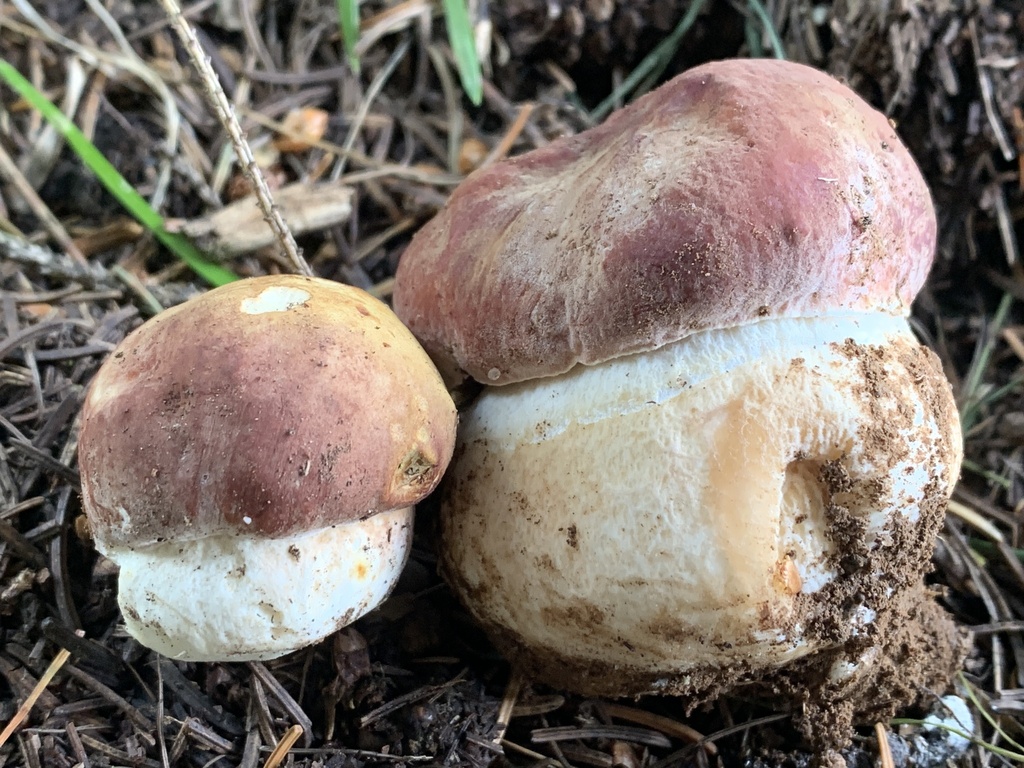
Two stout pine boletes with wine-red caps and pale stems
Choice edibleintermediate

Pine Bolete

Boletus pinophilus / Pinewood king bolete

A porcini with a wine-red to mahogany cap, found under pines and spruce across Europe.

Photo: Manuela Fiorini, CC BY
Compiled by Mushroom Forage Map field deskExpert review pendingContent checked
Identification warning

Rule out bitter and red-pored boletes. Taste a tiny raw piece and spit it out; bitterness means bitter bolete.

Season
Summer to autumn
Habitat
Pine and spruce forests on acidic soil
Underside
White pores turning yellow-olive, not bruising blue
Spore evidence
Olive brown

Where it grows

Tracked records and known growing zone

Explore on the field map
Loading map…
Squares: where people recorded it, brighter where more people did
Verified records
1,162
People who recorded it
722
Most records (northern hemisphere)
Aug–Sep
Records span
1998–2026

Research-grade iNaturalist records, snapshot Aug 27, 2026. The growing zone combines areas where different people have repeatedly verified it. Records show where people looked and found it, not current abundance or permission to gather.

Observation season

When field records occur

Choose a hemisphere · All recorded years; not a current forecast.

Choose the hemisphere you want to study. Country detection is approximate and some countries span the equator.

Compare before concluding

Lookalikes to rule out

Bitter bolete has pinkish pores, a dark brown net, and a very bitter taste.

King Bolete

harmless

King bolete has a paler brown cap and often a different host tree.

Devil's bolete has red pores and a pale, whitish cap.

Identification

The cap is dark wine red to mahogany with a slightly wrinkled, often frosted surface. The stem is stout and swollen, covered with a fine white to reddish net. Pores are white when young, turning yellowish olive, and do not bruise blue. The flesh is white and firm.

Uses and ecology

Pine boletes are part of the porcini group and are cooked and dried like king boletes. They form partnerships with pines and spruces, often on sandy or rocky soil.

Memorable fact

Porcini markets in Europe mix several species, including pine, summer, and king boletes.

Sources

Back to the fungi library